

Budget $6,000–$28,000: Ducted Aircon Costs in the US
A whole-home ducted air conditioning installation in the US generally costs several thousand dollars for a mid-size property, with basic single-zone jobs starting lower and complex, high-efficiency, multi-zone retrofits costing significantly more. Retrofitting into an existing home usually adds a notable premium on top of new-build pricing because of the extra work needed to route ductwork through finished walls and ceilings. Start by getting three written quotes from ACCA-listed contractors and checking the ENERGY STAR rebate finder before you sign anything.
TL;DR:
- Retrofit ducted air conditioning typically costs 20% to 40% more than new installation due to routing and structural challenges in finished homes.
- A mid-range system for most homes costs between $9,000 and $16,000, while high-efficiency, multi-zone setups can reach $20,000 to $28,000 or more.
- Final costs are heavily influenced by house size, duct routing complexity, zone count, and regional labor rates, with new build projects generally cheaper than retrofits.
- Proper sizing based on a detailed load calculation and sealed, tested ductwork are crucial to ensuring long-term efficiency and avoiding higher operating costs.
- Always obtain three fixed-price quotes based on a full site survey to prevent surprises and verify contractor credentials and warranty coverage before signing.
Table of Contents
- What does ducted aircon cost in the US right now?
- What actually makes up your ducted aircon installation cost
- What pushes your quote higher or lower
- Real budget examples: small, medium, and large homes
- What ducted aircon actually costs to run and maintain
- Getting quotes you can actually compare
- Why a proper survey beats a rough estimate
- Correct sizing beats the cheapest quote every time
- Get a fixed-price survey instead of guessing at numbers
- Where to check rebates, installers, and pricing benchmarks
- Sources
What does ducted aircon cost in the US right now?
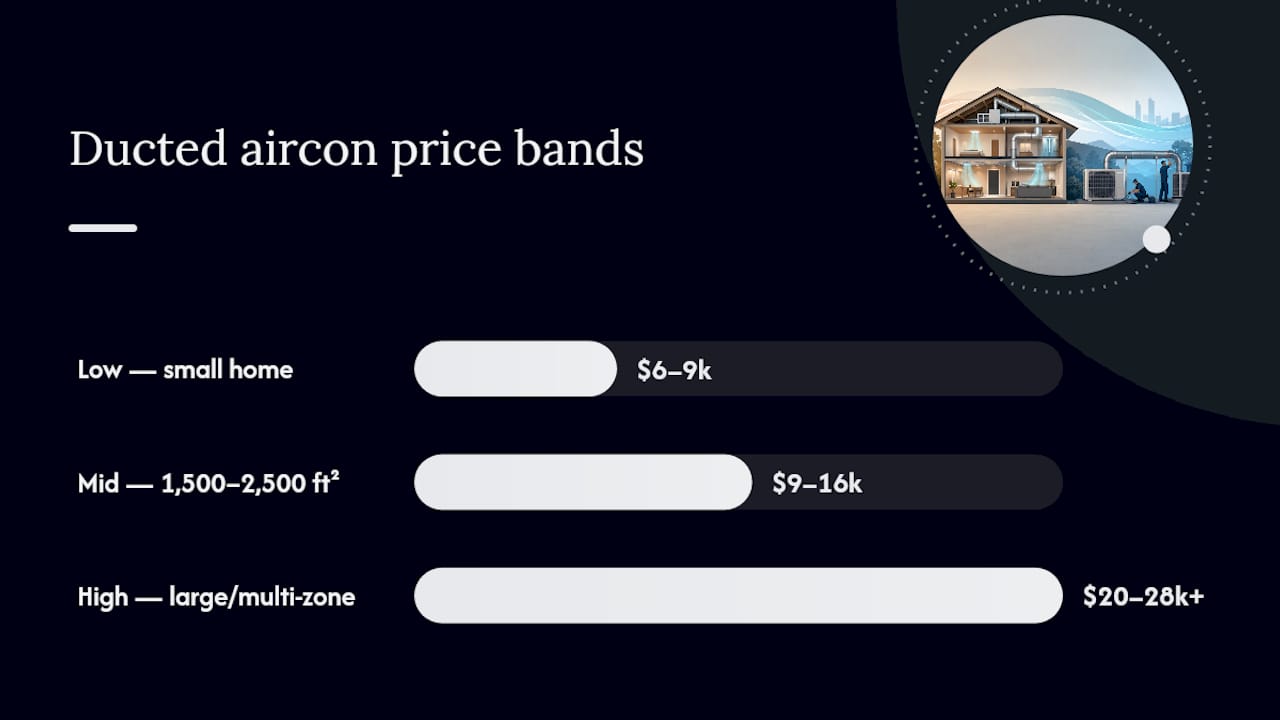
Three price bands cover most residential jobs. A low-range installation, usually a smaller home with easy attic access and a single zone, lands around $6,000 to $9,000. A mid-range job, the kind most 1,500 to 2,500 square foot homes need, sits between $9,000 and $16,000. A high-range installation, covering large homes, multiple zones, or SEER2-rated high-efficiency equipment, can reach $20,000 to $28,000 or more.
Carrier’s own guidance puts central air system costs at roughly $3,000 to $15,000 including installation for standard setups, while Bryant’s broader HVAC pricing guide shows complete system replacements ranging from about $5,000 to $28,000 nationally once ductwork, zoning, and higher-efficiency units enter the picture. The gap between those figures and the higher-end estimates above comes down to scope: a bare unit swap costs far less than tearing out old ducts and running a full zoned system through a two-storey house.
Most quotes include:
- The outdoor condenser and indoor air handler or coil
- Ductwork materials and installation labour
- A basic thermostat and standard commissioning
Most quotes exclude:
- Major electrical panel upgrades or new circuits
- Structural repairs to ceilings, roofs, or soffits after duct routing
- Asbestos removal or attic remediation in older homes
Higher-efficiency SEER2 units add a noticeable premium upfront, usually several hundred to a couple of thousand dollars more than baseline equipment, though they claw some of that back through lower summer energy bills.
What actually makes up your ducted aircon installation cost
A written quote should break down into distinct line items, and understanding each one helps you spot where a “cheap” bid is actually cutting corners.
Equipment is the outdoor condenser, the indoor air handler, and the evaporator coil. Together these typically account for $3,500 to $8,000 of a mid-size job, depending on tonnage and SEER2 rating. A larger home needs a bigger compressor, and that alone can shift the equipment line by $1,000 or more.
Ductwork covers sheet metal or flexible duct runs, insulation wrap, and the diffusers or grilles at each outlet. This is where retrofit jobs diverge sharply from new-build pricing. Running ducts through a finished attic with tight joist spacing takes far longer than laying them into open framing. Expect $500 to $1,200 per additional outlet once you go beyond a basic four or five-register layout.
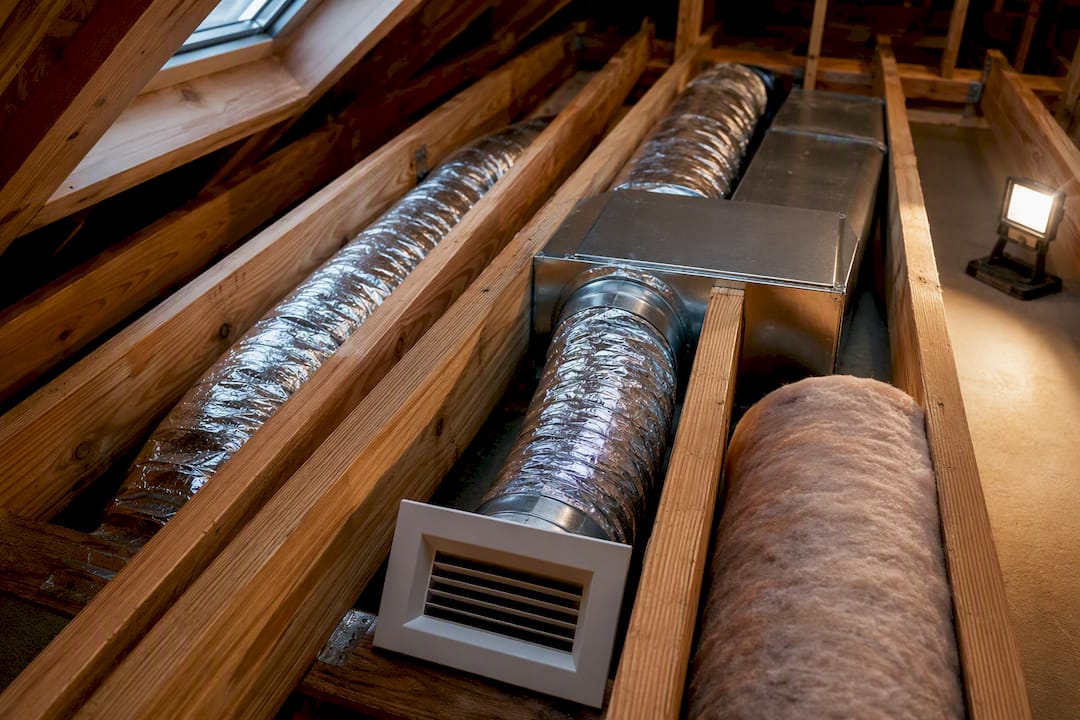
Labour generally runs two to five days for a full residential retrofit, involving HVAC installers and sometimes an electrician for dedicated circuits.
Controls and zoning add cost fast. A single programmable thermostat is cheap, but motorised dampers and a proper zoning panel for a two-zone or three-zone system can add $1,500 to $4,000.
Electrical and structural extras — a new dedicated circuit, added attic insulation, or patching ceilings after duct installation — are the line items most likely to appear as change orders if they weren’t scoped upfront.
Cost snapshot: Bryant’s pricing guide puts full HVAC system replacement, including ductwork and controls, between $5,000 and $28,000 nationally, with system type, SEER rating, and installation complexity driving most of that spread.
What pushes your quote higher or lower
Your final number depends less on the brand of equipment you choose and more on a handful of structural realities in your house.
- Retrofit vs new build. Adding ducted air to an existing home typically costs 20% to 40% more than installing during new construction or a renovation, since crews have to work around finished ceilings, tight joist bays, and load-bearing walls rather than open framing.
- Home size and cooling load. Square footage, ceiling height, insulation quality, and window orientation all feed into the load calculation that determines compressor size, and an undersized or oversized unit will run inefficiently for the life of the system.
- Access and routing complexity. A walkable attic with generous joist depth is straightforward. A cramped roof void, a single-storey home with no attic at all, or a multi-level layout requiring vertical chases can add days of labour.
- Number of zones and outlets. Every additional register, damper, and thermostat zone adds material and commissioning time, and balancing a multi-zone system properly takes longer than most homeowners expect.
- Efficiency rating. A SEER2 unit at the higher end of the efficiency scale costs more to buy but less to run. NerdWallet’s central air cost guide frames this as a genuine trade-off rather than an automatic upgrade, worth running the numbers on for your specific climate and usage.
- Regional labour and material rates. Coastal metros and areas with high construction demand routinely run 15% to 25% above national averages for the same scope of work.
Pro Tip: Ask your installer for the cooling load calculation, not just the quote total. If nobody ran one, they’re guessing at your compressor size, and that guess will show up on your energy bill for the next fifteen years.
Real budget examples: small, medium, and large homes
Matching your situation to a realistic scenario is more useful than staring at a single national average.
- Small single-storey home, 1 to 2 bedrooms. A single-zone system with four to six outlets typically costs $6,500 to $10,000. The main caveat is access: a bungalow with a shallow roof void can push costs up if crews need to open ceiling sections to route ducts.
- Mid-size family home, around 2,000 square feet. New-build installation during a renovation runs $10,000 to $15,000. The same job as a retrofit into a finished home climbs to $13,000 to $19,000, largely due to duct routing through existing ceilings and two-zone control setups that most families in this size range choose.
- Large or multi-level home, 3,000+ square feet. Multi-zone systems with eight or more outlets across two storeys typically land between $18,000 and $28,000, and sometimes higher where SEER2 equipment, extra electrical circuits, or structural patching are needed.
Beyond these baselines, budget roughly $500 to $1,200 per additional supply outlet and $300 to $700 per extra zone damper if you’re expanding coverage beyond a builder’s standard layout.
What ducted aircon actually costs to run and maintain
The purchase price is only part of the story. A correctly sized SEER2 system, matched to your actual cooling load rather than oversized “to be safe,” keeps seasonal energy use predictable and avoids the short-cycling that wears out compressors early.
Ducted systems generally cost more to service than wall-mounted split units, since technicians often need attic or roof-void access to inspect ducts, check condensate traps, and clear dust from the coil.
- Annual professional servicing is standard for ducted systems, and it typically costs more per visit than servicing a single split unit.
- Filter cleaning every three months keeps airflow and efficiency where they should be between full services.
- Major components such as the compressor and coil generally last 12 to 18 years with regular maintenance.
Skipping service visits to save money rarely pays off. Neglected duct leaks and blocked condensate trays are exactly what turn a routine call-out into an expensive repair.
Getting quotes you can actually compare
Three written quotes, covering identical scope and equipment models, is the single best way to avoid post-contract surprises. Ask each contractor to confirm:
- The exact make and model of the outdoor unit, air handler, and coil
- A full duct layout showing outlet count and routing
- Written commissioning and airflow-balancing procedures
- Warranty terms for both parts and labour
Before comparing prices, ask a few direct questions:
- How many zones does this design include, and how will they be balanced?
- Will ducts be sealed and pressure-tested, or just fitted and left?
- What does the commissioning report include, and will I get a copy?
A quote that comes in far below the others is a red flag, usually a sign of undersized ductwork, no proper commissioning, or a compressor smaller than your load calculation calls for. Verify credentials through the ACCA installer locator and confirm liability insurance before signing anything. NerdWallet’s guide frames quotes as project bids with defined exclusions rather than simple price tags, and that framing catches most of the disputes that crop up later.
Why a proper survey beats a rough estimate
A fixed-price quote only means something if it follows a proper on-site survey, one that measures your actual cooling load, checks attic or roof-void access, and confirms duct routing before a number gets written down. That’s the difference between a guess over the phone and a price you can hold a contractor to.
Finance options and structured service membership plans exist precisely because ducted installations are a significant outlay. Spreading the cost, or locking in annual servicing upfront, takes pressure off the initial invoice without cutting corners on the equipment itself. A warranty is only worth as much as the installer standing behind it, which is why checking credentials matters as much as comparing numbers.
Correct sizing beats the cheapest quote every time
The lowest bid rarely stays the lowest once you account for an undersized duct run or a compressor that short-cycles through August. Get the load calculation right, insist on sealed and tested ductwork, and budget honestly for servicing rather than treating maintenance as optional. A system installed properly the first time costs less over fifteen years than one installed cheaply twice.
— Akita
Get a fixed-price survey instead of guessing at numbers
Professional installers replace the guesswork in this article with an actual site visit: a proper cooling-load survey, a fixed-price quote for qualifying homes, and finance options that spread the cost without hidden extras appearing later on the invoice.

Akita’s domestic installation service covers residential air conditioning across Suffolk, Norfolk, and Essex, with fixed-price installation packages that lock in your number after the survey, not before it. Warranty cover and ongoing service membership plans come as part of the aftercare, so servicing and filter checks don’t become another quote you have to chase down later. If you’ve read this far and want an actual figure for your home rather than another ballpark range, book a survey and get a written quote before your next cooling season starts.
Where to check rebates, installers, and pricing benchmarks
- ENERGY STAR rebate finder for local incentives
- ACCA installer locator for certified contractors
- CBS News cost reporting for national averages
Sources
- ENERGY STAR rebate finder
- Cost to Install Central Air in 2026: How to Save
- What is the average cost of a central air conditioning unit?