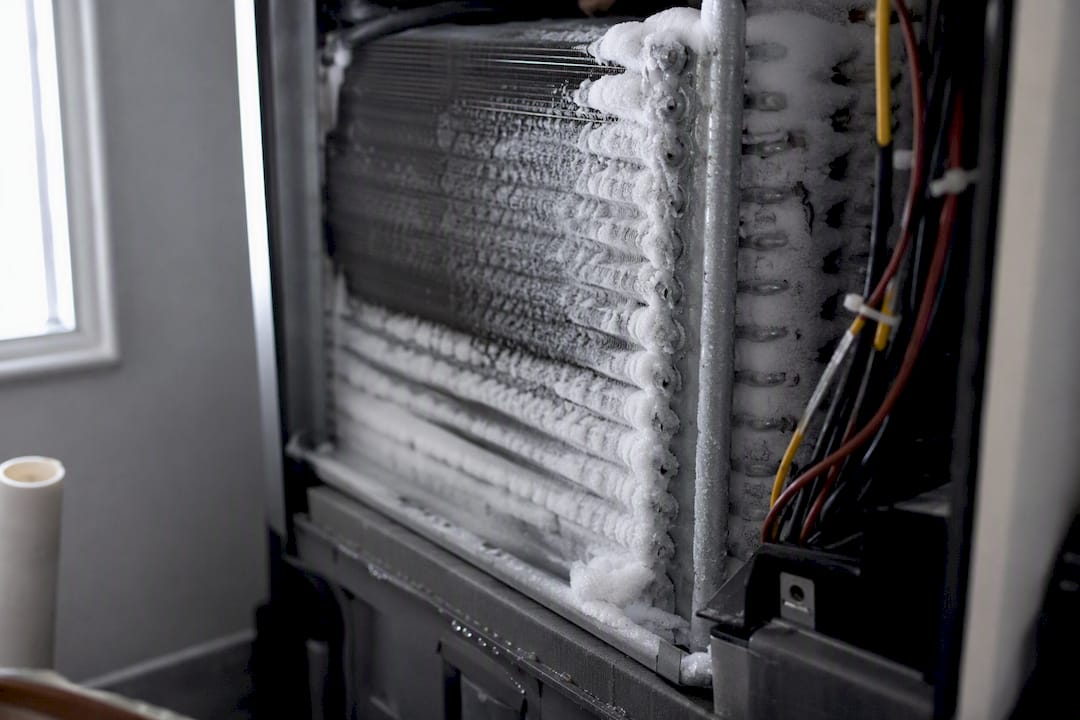
If your evaporator coil is frozen, switch the HVAC off immediately and let it thaw. Running the system with ice on the coil risks the compressor and can bend the fins beyond repair.
- Set the thermostat to OFF; if water is pooling near the unit, cut power at the breaker too.
- Never chip, scrape, or pick at the ice — you’ll puncture the coil or the refrigerant lines beneath it.
- If a dirty filter or blocked vent is the obvious culprit, clear it and try again once thawed.
Thaw time varies. A heavily iced coil can take several hours up to a full day to clear depending on how thick the ice is and how warm your home is. If the freeze returns after you’ve fixed the filter and vents, refrigerant loss or a mechanical fault is more likely, and that’s a job for a certified engineer.
Key Takeaways
A frozen evaporator coil almost always starts with restricted airflow, and shutting the system off to thaw safely prevents the far costlier compressor damage that follows if you keep running it.
| Point | Details |
|---|---|
| Stop the system first | Switch the thermostat off and let the coil thaw naturally before touching anything. |
| Never chip the ice | Forcing ice off bends or punctures the coil fins, turning a cheap fix into a replacement. |
| Airflow is the usual culprit | Dirty filters, closed vents, and dusty coils cause most freeze-ups and are DIY-fixable. |
| Refrigerant issues need a engineer | Low refrigerant means a leak, and recharging it legally requires certification. |
| Akita runs a full diagnostic sequence |
Table of Contents
- How to tell if you have a frozen evaporator coil
- Why do AC coils freeze in the first place?
- What to do in the first hour after you spot ice
- Which DIY fixes are safe to try yourself?
- When should you call an Engineer?
- How can you prevent the coil from freezing again?
- What does a professional visit actually involve?
- Don’t wait for a small fix to become a big one
- Get your frozen coil diagnosed properly, not guessed at
- Frequently asked questions
- Sources
How to tell if you have a frozen evaporator coil
A frozen coil rarely announces itself quietly. The clearest sign is visible ice, either coating the coil itself inside the air handler or wrapping the refrigerant lines running out to the condenser. Water pooling on the floor near the indoor unit is the second giveaway. That’s melted ice overwhelming the condensate pan, not a plumbing leak.
Beyond the visual clues, your system starts behaving oddly. Check for these signs:
- Warm or lukewarm air coming from the vents even though the system is running.
- Weak airflow, as if something is choking the ducts.
- Run cycles that drag on far longer than usual without cooling the house.
- A hissing or gurgling noise from the air handler, which often points to refrigerant moving somewhere it shouldn’t.
- A musty smell, usually linked to the standing water under the unit.
Before you call anyone, grab your phone. Photograph the ice, the water pooling, and the filter if it’s visibly dirty. Note when the problem started and how long cycles have been running. That timeline and those photos cut diagnostic time dramatically when a engineer arrives, because it tells them whether they’re chasing an airflow problem or something buried deeper in the refrigerant circuit.
Why do AC coils freeze in the first place?
Nearly every case of an evaporator coil icing up traces back to one of four things: airflow, refrigerant, mechanical failure, or a control fault. Knowing which one you’re dealing with saves you from wasting a weekend on the wrong fix.
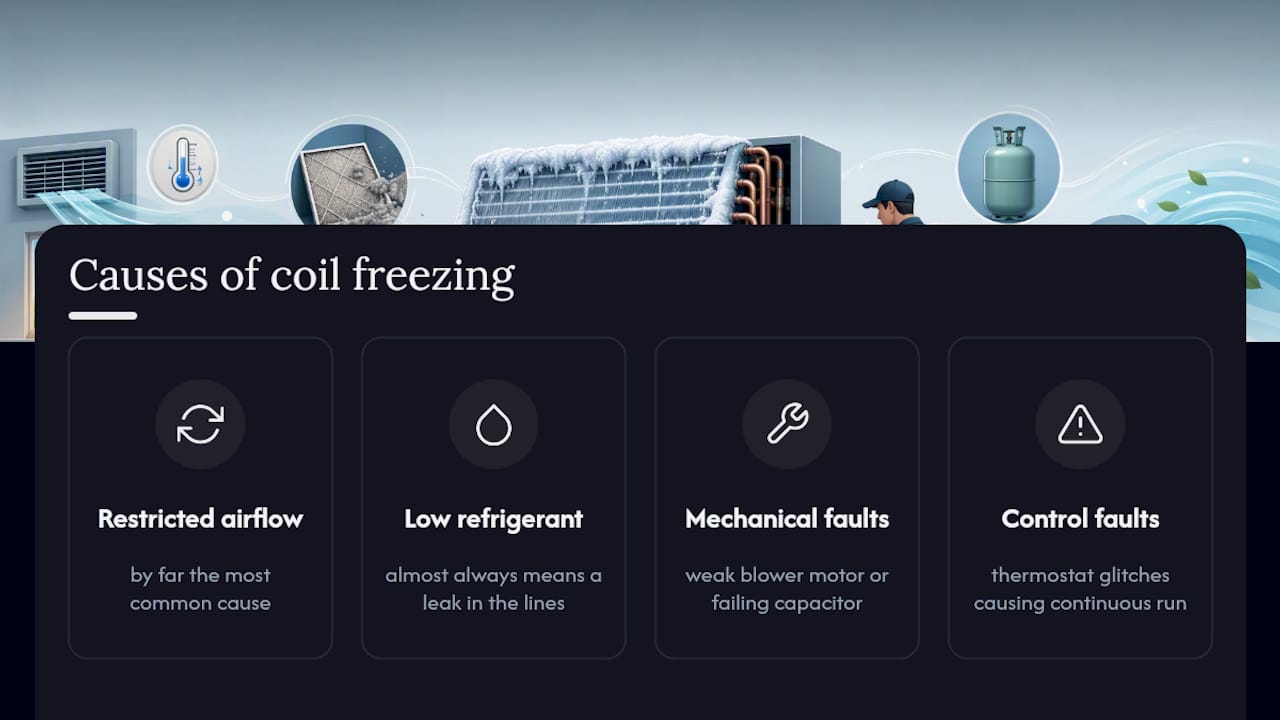
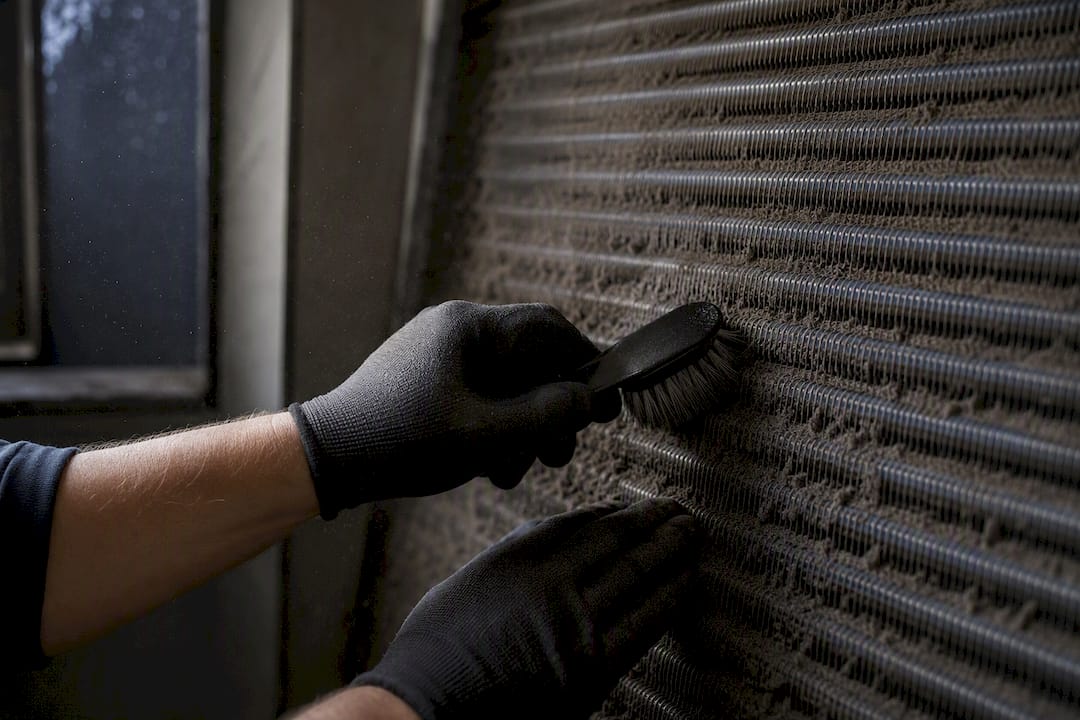
Restricted airflow is by far the most common cause. A dirty filter, closed vents, or a coil caked in dust all stop enough warm air from reaching the coil. Without that warm air moving across it, the coil’s surface temperature drops below freezing and condensation on the fins turns to ice instead of draining away. Blocked return grilles, furniture pushed against vents, and collapsed ductwork all produce the same result.
Low refrigerant is a different animal entirely. A sealed refrigerant system shouldn’t lose charge over time, so a low reading almost always means a leak somewhere in the lines or coil. Low refrigerant lowers the coil’s operating pressure and temperature to the point where moisture in the air freezes on contact, and no amount of filter changing will fix that.
Mechanical faults matter too. A weak or failing blower motor, or a capacitor on its way out, can starve the coil of airflow even with a spotless filter in place. Thermostat glitches that keep the system running continuously, rather than cycling normally, produce the same freezing pattern by giving the coil no rest between cooling calls.
Pro Tip: If your filter looks clean but the coil still froze, don’t assume airflow is fine. A struggling blower motor produces the exact same symptoms as a blocked filter, just from the other end of the airflow path.
What to do in the first hour after you spot ice
Speed matters here, but so does restraint. The goal is to stop the damage from spreading, not to force a quick fix.
- Turn the thermostat off completely. Don’t switch to fan only yet.
- If you see water anywhere near the air handler, shut off power at the breaker as a precaution against electrical contact with moisture.
- Let the coil thaw naturally. This is the slow part, and there’s no way round it.
- Once thawed, you can run the fan alone (no cooling) to help air circulate and speed the last of the drying, but avoid pointing space heaters directly at the unit. That can warp plastic housings and stress the coil unevenly.
- Resist any urge to chip or pry ice loose. Ice bonds tightly to the fins, and forcing it off bends or punctures them, which turns a simple freeze into an expensive coil replacement.
- While you wait, photograph the ice and any water damage, and jot down when symptoms started.
How long should you expect to wait? A light frost might clear within a couple of hours. A thick coating of ice, the kind that looks like a mini glacier around the coil housing, can take most of a day. Running the system before it’s fully clear risks sending liquid refrigerant back to the compressor, which is one of the more expensive failures in residential HVAC. Patience here is genuinely cheaper than impatience.
Which DIY fixes are safe to try yourself?
Once the coil has fully thawed, several fixes are well within a homeowner’s ability and won’t void any warranty.
- Replace the filter. A MERV 8 to MERV 11 filter suits most homes; swap it every 30 to 60 days if you have pets or allergy sufferers, and every 90 days for a typical household with light use.
- Open every supply and return vent. Check that furniture, rugs, or curtains aren’t blocking a return grille, and vacuum the grille itself if it’s dusty.
- Clear the condensate drain. A clogged drain line is a cheap and commonly overlooked cause of icing and overflow, and you can often flush it yourself with a wet/dry vacuum at the outdoor termination point, or a cup of distilled white vinegar poured down the indoor access port.
- Gently clean visible coil surfaces. Once thawed and dry, a soft brush or a coil cleaner made for evaporator coils lifts dust without bending the fins. Stop and call a professional if the coil is caked in grime you can’t reach, or if panels need removing to access it properly.
Pro Tip: After any fix, run the system for at least an hour and check the supply air temperature at a vent with a kitchen thermometer.
If ice comes back within a day or two of these fixes, you’re looking at something beyond airflow.
When should you call an Engineer?
Some problems are simply outside safe DIY territory, and refrigerant sits at the top of that list. Handling refrigerant, finding leaks, and recharging a system legally requires certification in most jurisdictions, and doing it wrong can damage the compressor permanently.
Call a engineer when you see any of the following:
- Ice returns within a few days of clearing filters and vents, pointing to a systemic rather than surface issue.
- The system is low on refrigerant, evidenced by hissing sounds, oily residue near fittings, or a engineer’s gauge reading.
- The blower motor hums, struggles to start, or the capacitor looks swollen or leaking.
- The thermostat runs the system continuously without normal cycling, even after a basic reset.
- You’ve replaced the filter and cleared the vents, and the coil still froze on the very next run.
Bring your photos and timeline to the appointment. A engineer who knows the freeze happened three times in two weeks, always within an hour of startup, can usually narrow the diagnosis before they’ve even opened the panel.
How can you prevent the coil from freezing again?
Most repeat freezes come down to skipped maintenance, not bad luck. A simple seasonal rhythm fixes that.
- Replace or clean the filter every 30 to 90 days, adjusting for pets, allergies, and how much the system runs.
- Book annual pre-season service that covers a coil clean, refrigerant pressure check, blower inspection, and condensate drain flush. Routine maintenance is consistently linked to fewer freeze-ups and better efficiency.
- Keep indoor return grilles unobstructed and leave at least two feet of clearance around the outdoor condenser, trimming back any shrubs that have crept closer.
- If you have a smart thermostat, set alerts for unusually long run times. That’s often the earliest sign of an airflow or refrigerant problem, well before ice shows up.
- Keep a simple maintenance log, filter changes, service dates, any odd noises. A running maintenance checklist also helps if you ever need to make a warranty claim.
A service membership that bundles these checks into one annual visit takes the guesswork out of remembering when everything’s due.
What does a professional visit actually involve?
That order matters, because it rules out the cheap fixes before touching refrigerant.
Don’t wait for a small fix to become a big one
Nine times out of ten, a frozen coil starts as something trivial: a filter nobody changed for six months, a vent someone closed in the spare room. Left alone, that small problem keeps stressing the compressor every time the system tries to run through ice, and compressors are the most expensive single part in the entire unit.
There’s also a point where repeated repairs stop making financial sense. If a coil has frozen three times in one season despite proper maintenance, or if the unit is already past ten years old, replacing it often costs less over five years than another round of patch repairs. A maintenance membership catches most of this earlier, before you’re choosing between a big repair bill and a new system.
Get your frozen coil diagnosed properly, not guessed at
As a specialist across Suffolk and north Essex, Akita sends engineers who run the full airflow, coil, and refrigerant check on the first visit, not the third.

If you’d rather book a full system check now than wait for the next freeze, Akita’s domestic air conditioning service covers diagnostics, repair, and ongoing maintenance in one call.
Frequently asked questions
Why does my AC coil keep freezing up even after I changed the filter?
A fresh filter rules out the most common cause, but not all of them. Recurring ice after a filter change usually points to low refrigerant, a failing blower motor, or a clogged condensate drain, all of which need closer inspection.
Is it safe to run the fan while the coil is still icy?
Fan-only mode is fine once the ice has mostly melted and you’re just drying out residual moisture. Running the fan or the cooling cycle while ice is still visibly present risks sending liquid refrigerant back into the compressor.
Can I use a hairdryer or space heater to speed up thawing?
Gentle ambient warmth is fine, but avoid pointing direct heat at the coil or air handler housing. Concentrated heat can warp plastic components and stress the coil unevenly, which creates a new problem while solving the old one.
How much does it cost to fix a frozen evaporator coil?
It depends entirely on the cause. A filter change and vent clearing cost nothing beyond a new filter, while refrigerant leak repair and blower motor replacement involve parts and labour that a engineer will quote after diagnosis.
Does a frozen evaporator coil mean I need a whole new AC unit?
Not usually. Most frozen coils stem from airflow or maintenance issues that a repair resolves. Replacement becomes the more sensible option mainly when freezing keeps recurring on an older unit despite proper repairs.
Sources
For deeper technical detail beyond this guide, these sources are worth bookmarking:
- Why your air handler may be freezing up (Trane troubleshooting)
- What Is an Evaporator Coil? A Homeowner’s Guide
- Why your HVAC coils matter — and what happens when they frost over
Recommended
Speak to Akita Air Conditioning
Find out more about our air conditioning repairs, or see how we work with homes and businesses in Suffolk and the surrounding area.
Ready to talk about your property? Book a free survey and one of our engineers will assess your space and recommend the right system for it.