TL;DR:
- Most air conditioning failures are caused by dirty filters, refrigerant leaks, or electrical component failures that often go unnoticed until costly repairs occur. Regular maintenance, including filter replacement and system inspections, helps prevent breakdowns and extends system lifespan. Addressing issues early and consulting certified professionals ensures safe and efficient air conditioning operation.
Common air conditioning problems are recurring faults that reduce system performance and efficiency, ranging from dirty filters and thermostat errors to refrigerant leaks and failed electrical components. Understanding this common air conditioning problems list puts you in control before a minor fault becomes a costly breakdown. About much of reported ‘broken’ AC calls are actually caused by dirty air filters, which means most homeowners are calling engineers unnecessarily. This guide covers every major fault category, explains what causes each one, and tells you exactly when to pick up the phone.
1. dirty or blocked air filters
A clogged air filter is the single most common fault on any air conditioning problems list. Clogged filters restrict airflow noticeably, which forces the evaporator coil to freeze and kills cooling output entirely. The fix is straightforward: replace or clean your filter every four to eight weeks during heavy use. If your system uses a reusable filter, rinse it under cold water and allow it to dry fully before reinserting.
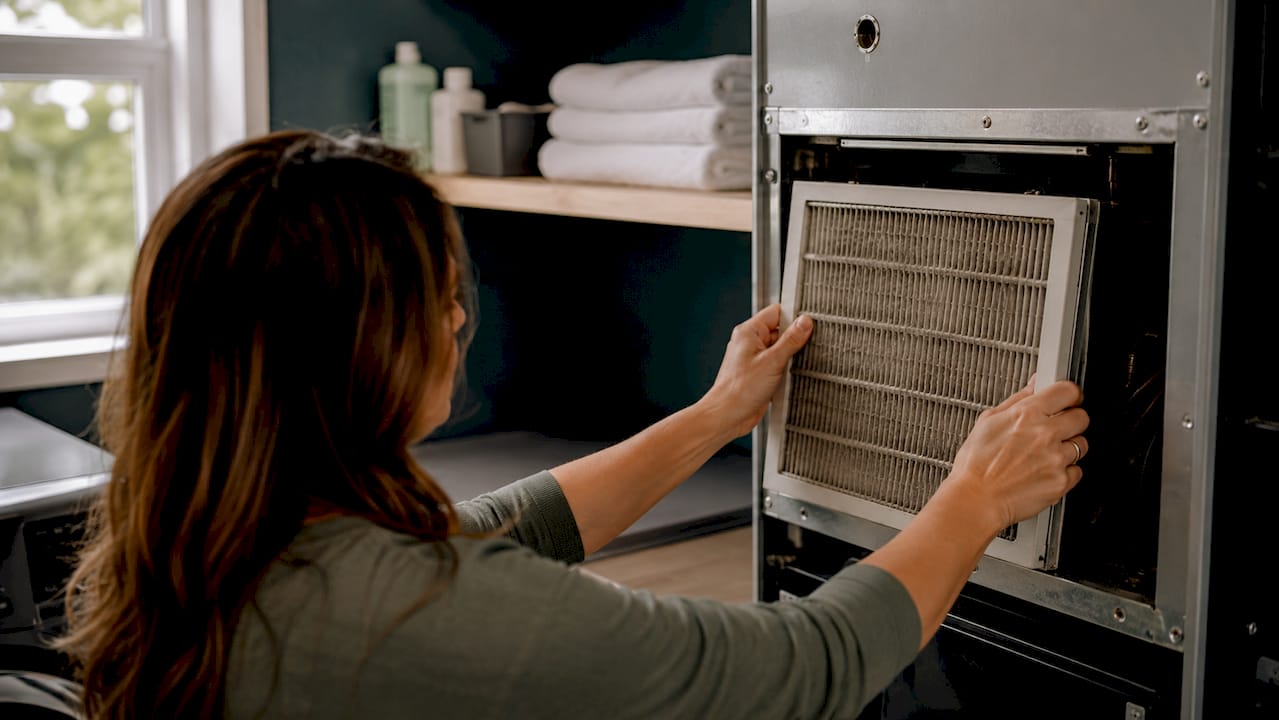
Pro Tip: Write the replacement date on the side of each new filter with a marker. You will never have to guess when it was last changed.
2. thermostat misconfigurations and sensor faults
A thermostat set to “fan only” instead of “cool” or “heat” will run the fan continuously without conditioning the air. Sensor placement is equally important. A thermostat positioned near a sunny window or a heat-generating appliance reads the room temperature incorrectly and cycles the system at the wrong times. Check that your thermostat is set to the correct mode, that the batteries are fresh, and that nothing is blocking the sensor.
3. refrigerant leaks
Refrigerant is the fluid that transfers heat out of your home. When it leaks, cooling capacity drops sharply and the system runs longer to achieve the same result. You may notice ice forming on the indoor unit, a hissing sound near the outdoor unit, or warm air from the vents despite the system running. Do not attempt to top up refrigerant yourself. Call a qualified engineer who can locate the leak, repair it, and recharge the system correctly.
4. dirty condenser coils
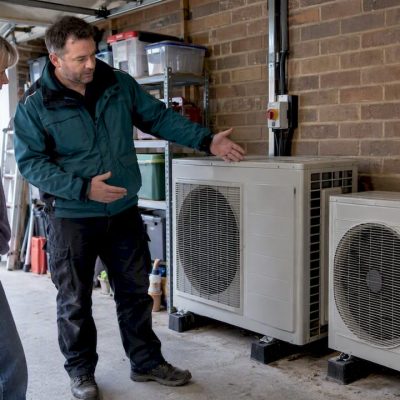
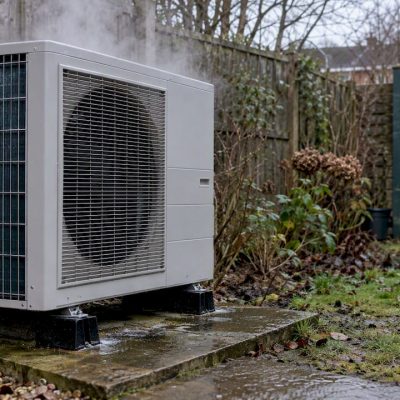
The condenser coil sits in your outdoor unit and releases heat from the refrigerant into the outside air. When it is coated in dirt, leaves, or grass cuttings, heat transfer becomes inefficient. You can gently rinse the coil fins with a garden hose on a low setting, working from the inside out. Schedule a professional coil clean at least once a year for best results.
5. blocked condensate drain lines
Your air conditioning system removes moisture from the air as it cools. That moisture drains away through a condensate line. Algae, mould, and debris build up inside the line over time and cause blockages. A blocked drain causes water to back up into the drain pan, which can overflow and damage ceilings, walls, and flooring. You can flush the line with a diluted white vinegar solution every few months to keep it clear. If the pan is already overflowing, shut the system down and call an engineer before water damage spreads.
6. electrical component failures
Capacitors, contactors, and relays are the components that start and run your compressor and fan motors. They fail more often than any other electrical part in an air conditioning system. A failed capacitor typically causes the outdoor unit to hum without starting, or to start slowly before cutting out. These components are inexpensive to replace when caught early. An annual service will identify worn electrical parts before they cause cascade failures.
7. strange noises from the system
Different noises point to different faults, which makes them a useful diagnostic tool. Rattling usually means a loose panel, screw, or debris inside the outdoor unit. Squealing from the indoor unit indicates a worn fan belt or failing blower motor bearing. Hissing points to a refrigerant leak or a pressure issue inside the refrigerant circuit. Banging or clanking suggests a loose or broken component inside the compressor. Any noise that is new or getting louder warrants investigation. Ignoring it rarely makes the problem cheaper to fix.
8. compressor problems
The compressor is the heart of your air conditioning system and the most expensive component to replace. It pressurises the refrigerant and drives the entire cooling cycle. Compressors fail due to refrigerant overcharge or undercharge, electrical faults, overheating, and age. If your outdoor unit is running but producing no cooling, and the unit is making a hard clicking or grinding sound, the compressor is the likely culprit.
9. weak airflow and uneven temperature distribution
Weak airflow is one of the most frequently misdiagnosed air conditioning issues explained in service reports. The cause is rarely the compressor. Collapsed or disconnected ductwork, blocked supply vents, and closed dampers are the most common culprits. Check every vent in the property to confirm none are blocked by furniture or closed manually. Fan motor deterioration also reduces airflow significantly. A failing blower motor will move less air even when the filter is clean and the ducts are clear.
Common causes of uneven temperatures include:
- Oversized or undersized systems that short cycle before the space reaches the set temperature
- Blocked or leaking ductwork that loses conditioned air before it reaches distant rooms
- Closed dampers in multi-zone systems that have been set incorrectly
- A thermostat positioned in a room that heats or cools faster than the rest of the property
Pro Tip: Hold a piece of tissue near each supply vent with the system running. Weak movement or no movement confirms a duct or fan problem in that zone.
When airflow problems persist after basic checks, a professional duct inspection using a flow hood or blower door test will pinpoint the exact fault. This is worth doing before replacing any components.
10. control board and sensor malfunctions
The control board is the brain of your air conditioning unit. It reads signals from the thermostat and sensors, then tells each component when to start and stop. A faulty control board can cause erratic cycling, components that refuse to start, or error codes that do not correspond to any obvious fault. Temperature sensors that drift out of calibration send incorrect readings to the board, causing the system to overheat or undercool the space.
Watch for these signs of electrical and control system faults:
- The system starts and stops repeatedly in short bursts (short cycling)
- Error codes appear on the display that reset without resolving
- One zone heats while another cools simultaneously in a multi-zone system
- The system runs continuously without reaching the set temperature
Always run through these before assuming a control board fault. If the problem persists after basic checks, a qualified engineer with a multimeter and manufacturer diagnostic software is the right next step.
11. short cycling
Short cycling is when the system turns on, runs for a few minutes, then shuts off before completing a full heating or cooling cycle. It repeats this pattern continuously. The causes include an oversized unit, a refrigerant leak, a dirty filter, or a failing compressor. Running a short cycling system causes irreversible compressor damage if the unit is not shut down promptly. The moment you notice short cycling, switch the system off at the thermostat and call an engineer. Running it further to “see if it sorts itself out” is the most expensive mistake you can make.
12. heating system and boiler issues
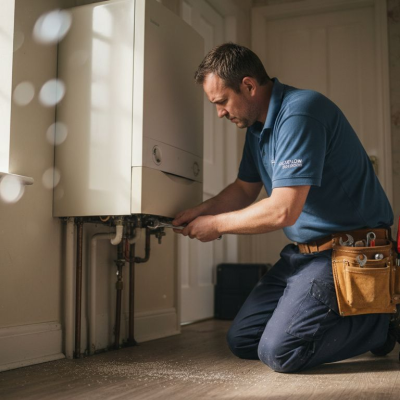
Heating faults follow a similar pattern to cooling faults but have a few unique causes. Common boiler problems include a dirty flame sensor that prevents ignition, a blocked flue that triggers the safety lockout, and a cracked heat exchanger that leaks carbon monoxide into the living space. A boiler that ignites then shuts off after a few seconds almost always has a dirty or corroded flame sensor. Cleaning it with fine wire wool takes ten minutes and costs nothing. If you smell burning or notice soot around the boiler, shut it down immediately and call a Gas Safe registered engineer.
Which maintenance practices prevent these faults?
Prevention is cheaper than repair across every fault category on this list. A residential air conditioning maintenance checklist covering filters, coils, drains, and electrical components will catch the majority of developing faults before they cause a breakdown.
The most effective maintenance schedule looks like this:
- Replace or clean air filters every four to eight weeks during active use
- Flush the condensate drain line with diluted white vinegar every three months
- Inspect and clean condenser coils at the start of the cooling season each year
- Check thermostat calibration and replace batteries annually
- Book a professional service once a year to inspect electrical components, refrigerant charge, and ductwork
| Task | Frequency | DIY or Professional |
|---|---|---|
| Filter replacement | Every 4–8 weeks | DIY |
| Condensate drain flush | Every 3 months | DIY |
| Condenser coil clean | Annually | Professional recommended |
| Electrical component check | Annually | Professional only |
| Full system service | Annually | Professional only |
Understanding why regular air conditioning maintenance saves energy is straightforward: a well-maintained system uses less electricity to achieve the same output, which reduces running costs and extends the unit’s working life.
Pro Tip: Book your annual professional service in early spring before the cooling season begins. Engineers are less busy, appointment slots are easier to get, and any faults are fixed before you need the system most.
Key takeaways
Addressing air conditioning faults in order of simplicity, starting with filters, thermostat settings, and circuit breakers, resolves the majority of problems without the cost of a service call.
| Point | Details |
|---|---|
| Filters cause most faults | Around much of AC service calls trace back to a dirty or blocked air filter. |
| Electrical neglect is expensive | Priced at survey |
| Short cycling needs immediate action | Switch the system off at once to prevent irreversible compressor damage. |
| Annual servicing prevents breakdowns | Professional checks catch failing electrical parts and refrigerant issues before they escalate. |
What we see most often at Akita
After years of servicing air conditioning systems across Suffolk and Essex, the pattern is consistent. The most expensive repairs we attend are almost never caused by the fault itself. They are caused by how long the fault was left running.
A homeowner notices the system is not cooling as well as it should. Rather than investigating, they turn the thermostat down further. We see this sequence regularly.
The diagnostic priority sequence matters enormously. Check the thermostat, check the filter, check the circuit breaker. In our experience, this sequence alone resolves a significant proportion of calls before an engineer even arrives on site. The Air conditioning diagnostics guide we publish covers this in detail, and it is worth reading before you call anyone.
The other mistake we see constantly is reactive servicing. Homeowners book an engineer only when something stops working entirely. By that point, the fault has often cascaded. Booking an annual service is not an expense. It is the cheapest insurance policy available for a system that costs thousands to replace.
If your system is showing any of the signs described in this article, shut it down if the symptoms are serious, and get a qualified engineer to assess it properly. Do not guess. Do not run it and hope.
Akita
Akita can diagnose and fix your air conditioning system
If you have worked through this list and your system is still not performing correctly, the fault is likely beyond a DIY fix. Akita provides professional domestic air conditioning installation and repair across Suffolk and Essex, with fixed-price servicing and certified engineers who carry the parts most commonly needed on the first visit.
The team also covers commercial air conditioning for offices, retail units, and managed properties. Contact Akita today to book a diagnostic visit and get your system running correctly before the problem gets worse.
Understanding the modern air conditioning system and repair needs
Today’s air conditioning units are a world apart from the clunky boxes installed a decade ago. Modern systems use inverter-driven compressors, variable refrigerant flow, and integrated sensors that constantly adjust output to match demand. This makes them far more efficient, but also more complex to repair when something goes wrong.
Older units tended to fail in predictable, mechanical ways. A capacitor blew, a belt snapped, a thermostat drifted. New systems, by contrast, can develop faults that only show up in data logs or error codes on a digital display. An engineer without the right diagnostic tools may miss the root cause entirely, patch the symptom, and leave you with a repeat failure within weeks.
Here is a quick comparison of how repair needs have shifted:
| Feature | Older systems | Modern energy-efficient systems |
|---|---|---|
| Fault detection | Manual inspection | Digital sensors and error codes |
| Efficiency rating | Low to moderate | High (A+++ rated units available) |
| Repair complexity | Mechanical | Software and mechanical combined |
| Maintenance approach | Reactive | Predictive and preventive |
| Data logging | None | Cloud-connected monitoring |
The shift from reactive to predictive maintenance is significant. Predictive and data-driven maintenance can reduce unexpected breakdowns and energy usage, meaning you spend less and worry less over the long term. This is especially relevant if you manage a commercial property where downtime has a direct financial impact.
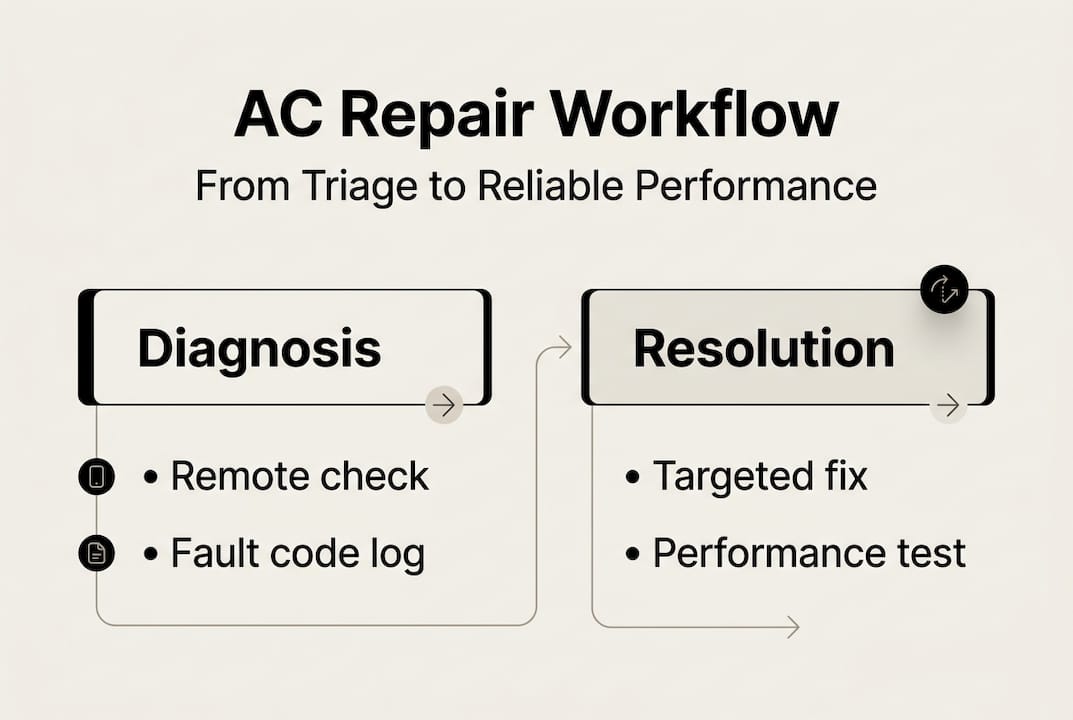
For homeowners, the benefits of better home energy efficiency are equally compelling. A well-maintained, modern system can cut running costs noticeably compared to an older unit limping along on reactive repairs.
Key reasons why modern systems need a smarter repair approach:
- Refrigerant regulations have changed, meaning older gases are being phased out and replacements require specialist handling.
- Software updates may be needed alongside physical repairs to restore full functionality.
- Energy performance degrades faster when faults are left unaddressed, even minor ones.
- Sensor calibration is now part of a thorough repair, not an optional extra.
Ignoring these realities and treating a modern AC unit like an old one is where most repair costs spiral out of control.
Step-by-step troubleshooting: get your AC back on track
A systematic approach is the difference between solving the problem in twenty minutes and spending two hours going in circles. Follow these steps in order, and you’ll either fix the issue or gather the information a professional needs to fix it quickly.
Steps to resolve common AC faults include checking power, cleaning filters, and resetting the system. Work through each stage methodically, and optimising AC performance often comes down to systematic checks of controls, airflow, and cleaning.
-
Check the power supply. Confirm the unit is receiving power. Check the mains switch, the isolator switch near the outdoor unit, and the circuit breaker in your consumer unit. A tripped breaker is one of the most common and easily overlooked causes of a unit not starting.
-
Check the thermostat settings. Set the temperature at least 3 to 4 degrees below the current room temperature. Make sure the mode is set to cooling, not fan-only or heating. Remote batteries are another thing worth replacing at this stage.
-
Inspect and clean the filter. Remove the front panel of the indoor unit and locate the filter. If it’s visibly grey or blocked with dust, clean it under a tap using lukewarm water and allow it to dry fully before replacing. A blocked filter restricts airflow and causes more problems than almost any other single issue.
-
Check all vents and grilles. Walk around and confirm that no furniture, curtains, or other objects are blocking the indoor unit’s intake or output vents. Restricted airflow causes the system to work harder and cool less effectively.
-
Clear the area around the outdoor unit. Check that leaves, dirt, or vegetation haven’t accumulated against the outdoor unit outside. The outdoor unit needs clear space of at least half a metre on all sides to transfer heat effectively.
-
Perform a system reset. Turn the unit off at the mains, wait 30 seconds, then power it back on. Many modern units will clear minor fault codes with a simple reset.
-
Observe the unit for 10 to 15 minutes. After restarting, let the system run and check whether it produces cool air, whether the outdoor unit is running, and whether any error codes appear on the display.
-
Check for error codes. Most modern split systems display a fault code when something specific is wrong. Note the code and cross-reference it with the unit manual. Common codes relate to sensor errors, communication faults, or refrigerant pressure.
Pro Tip: Keep a notepad nearby and jot down everything you change and when. If the problem returns, this record tells you exactly what was already tried and saves repeating the same steps.
Following the process will resolve most everyday issues, but how do you know if your fix worked?
Essential tools, technologies and skills for efficient repairs
| Tool or technology | Purpose |
|---|---|
| Digital refrigerant analyser | Measures pressure and identifies refrigerant type |
| Thermal imaging camera | Spots hot spots and electrical faults invisibly |
| Smart manifold gauge set | Provides real-time pressure data via Bluetooth |
| Airflow anemometer | Measures duct and outlet airflow accurately |
| Cloud diagnostic software | Connects to IoT-enabled units for remote fault reading |
| Electrical continuity tester | Checks wiring and component integrity |
IoT-enabled systems and smart diagnostics are transforming predictive maintenance effectiveness, and engineers who cannot use these tools are already working at a disadvantage. For business managers, this means asking your service provider directly: do they use digital diagnostics, or are they still working from instinct and experience alone?
Beyond tools, skills matter enormously. An engineer servicing modern AC units needs:
- F-Gas certification to handle refrigerants legally in the UK.
- Electrical competency for systems that integrate with smart home or building management platforms.
- Software literacy to interpret data logs and update firmware where needed.
- Communication skills to explain findings clearly to non-technical clients.
Remote diagnostics and cloud monitoring are now available on many premium systems. These allow an engineer to identify a developing fault before it becomes a breakdown, often without visiting the site at all. Understanding predictive air conditioning maintenance gives homeowners and managers a clearer picture of how this technology works in practice.

What are the practical benefits of AC diagnostics for homeowners and businesses?
Regular AC system troubleshooting and performance evaluation deliver measurable advantages that go beyond simply keeping the unit running.
Energy savings and running costs
Diagnostics identify inefficiencies that inflate electricity bills. A system running with a partially blocked condenser, an overcharged refrigerant circuit, or a miscalibrated thermostat consumes significantly more power than a correctly maintained unit. Addressing these issues after a diagnostic assessment brings running costs back in line with the manufacturer’s rated efficiency.
Comfort and indoor air quality
Blocked filters and damaged ductwork reduce airflow and allow dust, mould spores, and allergens to circulate. A diagnostic assessment that includes air duct condition checks catches these issues before they affect the health and comfort of occupants. For businesses, poor air quality directly affects staff productivity and customer experience.
Preventing unplanned downtime
Commercial AC systems deteriorate gradually, and the decline is often invisible until a component fails entirely. Regular diagnostics give facilities managers early warning of components approaching failure, allowing repairs to be scheduled at a convenient time.
System longevity
A system that receives annual diagnostics and prompt repairs consistently outlasts one that is only attended to when something breaks. Every hour a fault runs undetected adds wear to connected components. Catching a failing capacitor early, for example, prevents it from taking the compressor with it when it eventually gives out.
| Benefit | What diagnostics deliver |
|---|---|
| Lower energy bills | Identifies inefficiencies that inflate running costs |
| Better air quality | Detects blocked filters and duct issues affecting occupant health |
| Fewer breakdowns | Flags failing components before they cause system failure |
| Longer equipment life | Prevents secondary damage caused by undetected faults |
| Regulatory compliance | Provides documented evidence for TM44 and F-Gas requirements |
FAQ
What is the most common cause of air conditioning failure?
A dirty or blocked air filter is the leading cause of air conditioning failure, responsible for much of reported breakdowns. Replacing the filter is the first check to make before calling an engineer.
How often should i service my air conditioning system?
A professional service once a year is the standard recommendation for most residential systems. Filters should be checked and replaced every four to eight weeks during active use.
Can i top up refrigerant myself?
No. Attempting to recharge refrigerant without certification is illegal and can cause serious system damage.
Why does my air conditioning keep turning on and off?
Repeated short cycling is caused by an oversized unit, a refrigerant leak, a dirty filter, or a failing compressor. Switch the system off immediately and call an engineer, as continued operation causes irreversible compressor damage.
How much does compressor replacement cost?
For systems older than twelve years, full unit replacement is usually more cost-effective than replacing the compressor alone.
What is the role of AC diagnostics?
AC diagnostics identifies faults, inefficiencies, and compliance issues within air conditioning systems through structured testing. It prevents repeated repairs by finding the root cause rather than treating symptoms.
How long does a professional AC diagnostic take?
A professional AC diagnostic typically takes under one hour, covering pressure testing, electrical checks, and airflow measurement. Complex faults may require additional time.
Are AC diagnostics legally required in the UK?
Commercial systems above 12kW require TM44 inspections every five years under UK energy performance regulations. F-Gas regulations also mandate regular leak checks for systems above the 5 tonnes CO2 equivalent threshold.
If the checks above don’t sort it, our F-gas certified engineers can find the fault. Every install by our team comes with a 12-month installation warranty, plus up to 5 years’ manufacturer warranty when the system has its annual service. If it is time for a replacement, book a free survey.
Recommended
Speak to Akita Air Conditioning
Find out more about our air conditioning installation, or see how we work with homes and businesses in Suffolk and the surrounding area.
Ready to talk about your property? Book a free survey and one of our engineers will assess your space and recommend the right system for it.