

Why indoor air quality matters for your family's health
TL;DR:
- Indoor air quality is crucial for health because poor ventilation and pollutant buildup cause immediate and long-term illnesses. Ventilation systems, particularly mechanical ones, effectively dilute indoor pollutants and improve air freshness. Families can enhance IAQ by controlling pollution sources, maintaining ventilation, and regularly servicing their systems.
Indoor air quality (IAQ) is defined as the condition of the air inside and around buildings and its direct effect on occupants’ health and comfort. The US EPA identifies poor ventilation and pollutant accumulation as the two primary drivers of poor IAQ. The WHO links household and ambient air pollution combined to around 7 million premature deaths annually worldwide. That figure alone explains why air quality matters far beyond what most families realise. If you spend most of your time indoors, the air you breathe at home is one of the most significant environmental health factors in your daily life.
Why indoor air quality is a serious health concern
Poor indoor air quality causes both immediate and long-term health effects. Immediate symptoms include eye and throat irritation, headaches, fatigue, and worsening asthma. Chronic effects, including respiratory disease, heart conditions, and certain cancers, can emerge years after exposure with no obvious warning signs during that time.

Children face the greatest risk. HealthyChildren.org reports that children spend up to 90% of their time indoors, and indoor pollutant levels can run 2 to 5 times higher than outdoor levels. Their developing lungs and brains are more sensitive to pollutant exposure than those of adults. That combination of high exposure time and biological vulnerability makes IAQ a child health priority, not just a comfort issue.
The health effects most families overlook are the delayed ones. The EPA emphasises that improving IAQ proactively reduces long-term risk even when no one feels unwell right now. Treating IAQ as preventive health care, rather than a reactive fix, is the more effective approach.
Common health effects linked to poor indoor air quality include:
- Respiratory infections and worsening asthma or allergies
- Persistent headaches, fatigue, and difficulty concentrating
- Eye, nose, and throat irritation
- Long-term cardiovascular and lung disease with prolonged exposure
- Developmental impacts on children’s lungs and neurological function
“Indoor pollutants can affect lung and brain development in children, making the home environment a critical factor in lifelong health outcomes.” — HealthyChildren.org
What are the most common indoor pollutants?
The EPA and WHO identify six major categories of indoor pollutants, each with distinct sources and health implications. Recognising where they come from is the first step to reducing them.
- Particulate matter. Fine particles from cooking, candles, open fires, and tobacco smoke penetrate deep into the lungs. Gas hobs and wood-burning stoves are particularly significant sources in UK homes.
- Carbon monoxide (CO). Produced by incomplete combustion from boilers, gas cookers, and open fires. CO is colourless and odourless, making it undetectable without a monitor. Even low-level exposure causes headaches and fatigue.
- Volatile organic compounds (VOCs). Released continuously from paints, varnishes, adhesives, cleaning products, and new furniture. VOC concentrations indoors can be significantly higher than outdoors, particularly in newly decorated rooms.
- Radon. A naturally occurring radioactive gas that seeps from the ground into buildings through floors and walls. Radon is the second leading cause of lung cancer in the UK after smoking.
- Mould and biological pollutants. Mould spores thrive in damp, poorly ventilated spaces such as bathrooms, kitchens, and loft spaces. They trigger allergic reactions and respiratory problems, particularly in children and older adults.
- Tobacco smoke. Second-hand smoke contains over 7,000 chemicals. Even residual smoke on surfaces and fabrics, sometimes called third-hand smoke, continues to off-gas pollutants long after smoking has stopped.
Modern homes present a specific challenge. Airtight construction, double glazing, and draught-proofing reduce energy bills but also trap these pollutants indoors. Without adequate ventilation, even small continuous emissions accumulate to harmful concentrations over time.
Why is ventilation the most critical factor for indoor air?
Ventilation is the primary mechanism for diluting and removing indoor pollutants. The air exchange rate controls how quickly polluted indoor air is replaced with fresher outdoor air. When that rate is too low, pollutants build up regardless of how clean the original sources are.
There are three main types of ventilation:
| Ventilation type | How it works | Limitation |
|---|---|---|
| Infiltration | Air enters through gaps, cracks, and openings in the building fabric | Unpredictable and insufficient in modern airtight homes |
| Natural ventilation | Air moves through open windows and vents driven by wind and temperature differences | Dependent on weather; ineffective in cold or still conditions |
| Mechanical ventilation | Fans, heat recovery units, and HVAC systems actively move air | Requires installation and maintenance but provides consistent performance |
Infiltration was once sufficient in older, draughty UK housing stock. Modern construction standards have changed that equation. Tight building envelopes without mechanical ventilation allow pollutant levels to rise steadily, particularly in bedrooms and living rooms where families spend the most time.
Mechanical ventilation, including systems with heat recovery (MVHR), solves this problem by continuously exchanging stale indoor air for filtered outdoor air without significant heat loss. HVAC systems with good filtration go further by removing particulate matter and allergens during the exchange process. Understanding how HVAC improves air quality helps families make informed decisions about their home environment.
Pro Tip: Open windows on opposite sides of a room for cross-ventilation during cooking or cleaning. Even five minutes of cross-ventilation removes a significant proportion of VOCs and cooking particulates before they accumulate.
How can families improve indoor air quality effectively?
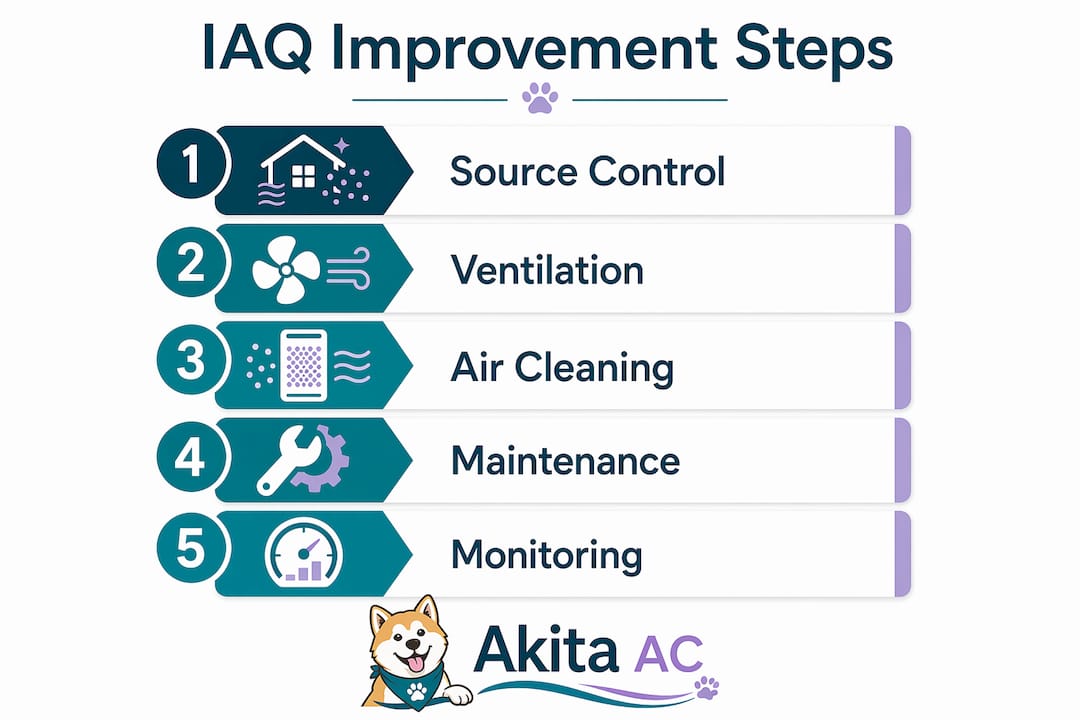
The EPA identifies three core strategies for improving IAQ: source control, ventilation improvement, and air cleaning. The most effective approach combines all three rather than relying on any single method.
Source control
Removing or reducing pollutant sources is the highest-impact action. Practical steps include:
- Switch to low-VOC paints, adhesives, and cleaning products. Brands such as Dulux and Ecos Paints offer certified low-VOC ranges widely available in the UK.
- Store chemicals, solvents, and pesticides in sealed containers in outbuildings rather than inside the home.
- Install carbon monoxide detectors on every floor, particularly near boilers and gas appliances.
- Test for radon if you live in a high-risk area. Public Health England provides a radon map and postal testing kits.
- Address damp and mould at the source by fixing leaks and improving bathroom and kitchen ventilation rather than simply treating visible mould with bleach.
Ventilation and filtration
Increasing outdoor air flow is the second pillar. Beyond opening windows, families benefit from HVAC ventilation systems that provide consistent air exchange with energy efficiency. Air purifiers with HEPA filters reduce airborne particulates and allergens in rooms where windows cannot be opened easily, such as bedrooms on busy roads.
Pro Tip: Schedule HVAC filter changes every three months rather than annually. A clogged filter reduces airflow and recirculates the pollutants it was designed to capture.
Protecting children specifically
HealthyChildren.org recommends timing IAQ interventions around children’s daily schedules. Run kitchen extraction fans during and after cooking. Ventilate bedrooms before children sleep. Avoid using aerosol sprays, scented candles, or air fresheners in rooms where children spend significant time. These small behavioural changes reduce cumulative exposure meaningfully over weeks and months.
Professional cleaning practices also reduce settled dust, pet dander, and mould spores that standard vacuuming misses. Regular deep cleaning of soft furnishings, carpets, and curtains lowers the reservoir of particles that re-enter the air during daily activity.
What are the broader benefits of good indoor air quality?
Good IAQ delivers benefits well beyond avoiding illness. Elevated indoor CO2 is directly linked to reduced attention, sleepiness, and headaches. That matters in home offices, children’s study spaces, and any room where concentration is needed.
| Benefit area | Effect of good IAQ |
|---|---|
| Cognitive performance | Lower CO2 and pollutant levels support concentration and mental clarity |
| Sleep quality | Cleaner bedroom air reduces night-time respiratory disruption |
| Productivity | Fewer headaches and fatigue symptoms mean more effective working hours |
| Long-term health costs | Reduced exposure lowers lifetime risk of respiratory and cardiovascular disease |
| Energy efficiency | Well-maintained ventilation systems reduce heating costs compared to ad-hoc window opening |
The Sustainable Energy Initiative positions IAQ as a public health infrastructure issue in 2026, not merely a personal comfort preference. Healthy indoor air improves cognitive performance and productivity by reducing the CO2 and pollutant-related symptoms that most people attribute to tiredness or stress. The economic case for good IAQ is therefore as strong as the health case.
Key takeaways
Good indoor air quality is preventive health care. Families who address pollutant sources, maintain ventilation, and service their HVAC systems regularly reduce both immediate symptoms and long-term disease risk.
| Point | Details |
|---|---|
| IAQ directly affects health | Poor indoor air causes immediate symptoms and long-term conditions including heart disease and cancer. |
| Children are most vulnerable | Children spend up to 90% of their time indoors and face higher cumulative pollutant exposure than adults. |
| Ventilation is the primary control | Air exchange rate determines pollutant concentration more than any single source. |
| Three strategies work together | Source control, ventilation improvement, and air filtration are most effective when combined. |
| Benefits extend beyond health | Good IAQ improves sleep, concentration, and productivity alongside reducing disease risk. |
Akita’s view on why indoor air quality deserves more attention
Most families I speak with are surprised to learn that the air inside their homes can be more polluted than the air outside. The assumption is that closing the windows keeps pollution out. The reality is often the opposite. Sealing a home without providing mechanical ventilation simply locks pollutants in.
The misconception I encounter most often is that energy-efficient homes automatically have better air quality. A well-insulated, airtight home is excellent for reducing heating bills. Without a verified mechanical ventilation system, however, it can accumulate VOCs, CO2, and moisture at rates that older, draughtier homes never would. The building does exactly what it was designed to do. The problem is that nobody added a plan for the air.
What actually makes the biggest difference is not the most expensive intervention. It is consistency. Changing HVAC filters on schedule, running extraction fans properly, and choosing low-VOC products when redecorating costs very little compared to the health and cognitive benefits gained. The families who see the most improvement are those who treat IAQ as a routine maintenance task rather than a crisis response.
Monitoring matters too. A basic CO2 monitor in a bedroom or home office gives you real data on whether your ventilation is working. If CO2 climbs above 1,000 parts per million during the night, your ventilation needs attention. That is a simple, inexpensive check that most families have never considered.
— Akita
How Akita can help you breathe better at home
Air conditioning and ventilation are not separate problems. A well-specified system does both: it manages temperature and actively improves the air your family breathes every day.

Akita specialises in domestic air conditioning installation across Suffolk, Norfolk, and Essex, with systems chosen for energy efficiency and air quality performance. Modern units filter particulates, manage humidity, and provide consistent air exchange without the heat loss of open windows. Akita’s installations come with transparent fixed pricing, flexible finance options, and full aftercare support. Whether you are looking to improve a family home or a home office environment, Akita’s team can specify the right system for your space and budget.
FAQ
What does indoor air quality mean?
Indoor air quality (IAQ) refers to the condition of the air inside and around buildings and its effect on occupants’ health and comfort. The US EPA identifies pollutant sources and ventilation effectiveness as the two primary factors that determine IAQ.
How much worse is indoor air than outdoor air?
Indoor pollutant levels can be 2 to 5 times higher than outdoor levels, according to HealthyChildren.org. Poor ventilation in modern airtight homes is the main reason pollutants accumulate to those concentrations.
What are the most dangerous indoor pollutants?
Carbon monoxide, radon, fine particulate matter, and VOCs are among the most significant indoor pollutants identified by the EPA and WHO. Radon is the second leading cause of lung cancer in the UK after smoking.
How does ventilation improve indoor air quality?
Ventilation increases the air exchange rate, which dilutes and removes indoor pollutants by replacing stale air with outdoor air. Mechanical systems such as HVAC and MVHR units provide consistent ventilation regardless of weather conditions.
Can an air conditioning system improve indoor air quality?
Yes. Modern air conditioning systems filter particulates, manage humidity, and support continuous air exchange. Regular filter maintenance is required to maintain that performance, with filter changes recommended every three months.