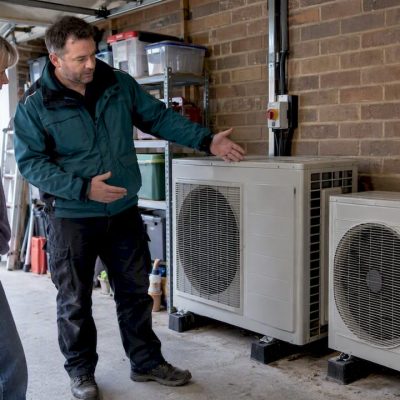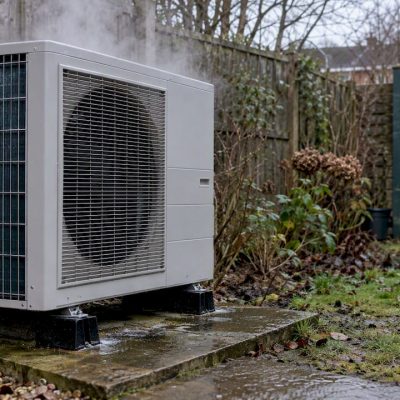
Choosing the wrong air conditioning system can add hundreds of pounds to your annual energy bills whilst leaving rooms too hot or too cold. UK homeowners and businesses face a bewildering array of AC types, each with different costs, efficiency ratings, and maintenance demands. This guide cuts through the confusion by explaining the key criteria that matter, comparing common system types, and matching each to specific property needs so you can make an informed, cost-effective choice.
Table of Contents
- How To Choose An Air Conditioning System: Key Criteria For UK Homes And Businesses
- Common Types Of Air Conditioning Systems
- Energy Efficiency And Environmental Impact
- Installation And Maintenance Considerations
- Summary Comparison And Situational Recommendations
- Explore Expert Air Conditioning Installation In Suffolk and Essex
- How each air conditioning system works
- What is high wall aircon?
- What is an air conditioning system?
Key takeaways
| Point | Details |
|---|---|
| Clear criteria simplify choice | Energy efficiency ratings, installation complexity, and maintenance frequency determine long-term value and running costs. |
| Split systems suit most UK homes | They balance upfront affordability with solid energy performance and straightforward annual servicing. |
| VRF systems excel in larger buildings | Variable refrigerant flow technology offers the highest efficiency and precise multi-zone control for commercial or large residential properties. |
| Installation and upkeep vary widely | Ducted systems cost noticeably more to install than split units, whilst VRF needs specialist bi-annual servicing. |
| Smart controls cut energy use significantly | Adaptive temperature regulation and remote monitoring reduce consumption noticeably, lowering bills and environmental impact. |
How to choose an air conditioning system: key criteria for UK homes and businesses
Before comparing AC types, establish what matters most for your property. Six core benchmarks guide effective evaluation.
Start with energy efficiency. The UK energy label shows SEER (Seasonal Energy Efficiency Ratio) for cooling and SCOP for heating; higher values mean lower running costs. Understanding energy efficient air conditioning principles helps you spot genuine savings opportunities.
Installation complexity directly affects your budget and timeline. Portable units plug in and go. Split systems require wall mounting and outdoor condenser placement. Ducted and VRF installations involve extensive pipework, ceiling access, and specialist labour, pushing costs thousands of pounds higher.
Maintenance frequency shapes lifetime ownership costs. Simple systems like portable units need monthly filter checks but little else. Multi-split and VRF systems demand professional servicing twice yearly to maintain warranty coverage and peak performance. Factor in these recurring expenses when budgeting.
Property size and usage patterns dictate suitability. A small flat benefits from a single split unit. A multi-room office needs zone control, making multi-split or VRF systems cost-effective. Commercial spaces with variable occupancy gain most from adaptive VRF technology.
Environmental factors now carry legal weight. UK regulations mandate low Global Warming Potential (GWP) refrigerants like R32, phasing out older, high-impact alternatives. Choosing systems with compliant refrigerants avoids costly retrofits and regulatory penalties.
Smart control integration offers substantial additional savings. Wi-Fi thermostats, occupancy sensors, and remote monitoring enable adaptive temperature regulation. These features reduce wasted cooling during unoccupied periods and optimise performance automatically.
Pro tip: Request SEER ratings and annual maintenance cost estimates from installers before committing. Compare total five-year ownership costs, not just purchase price, to identify genuine value.
Common types of air conditioning systems
Five primary AC system types dominate the UK market, each suited to different scenarios.
Split systems comprise an indoor wall-mounted unit and an outdoor compressor connected by refrigerant lines. They deliver reliable cooling for single rooms or small homes without requiring ductwork. Installation takes a day for most properties.
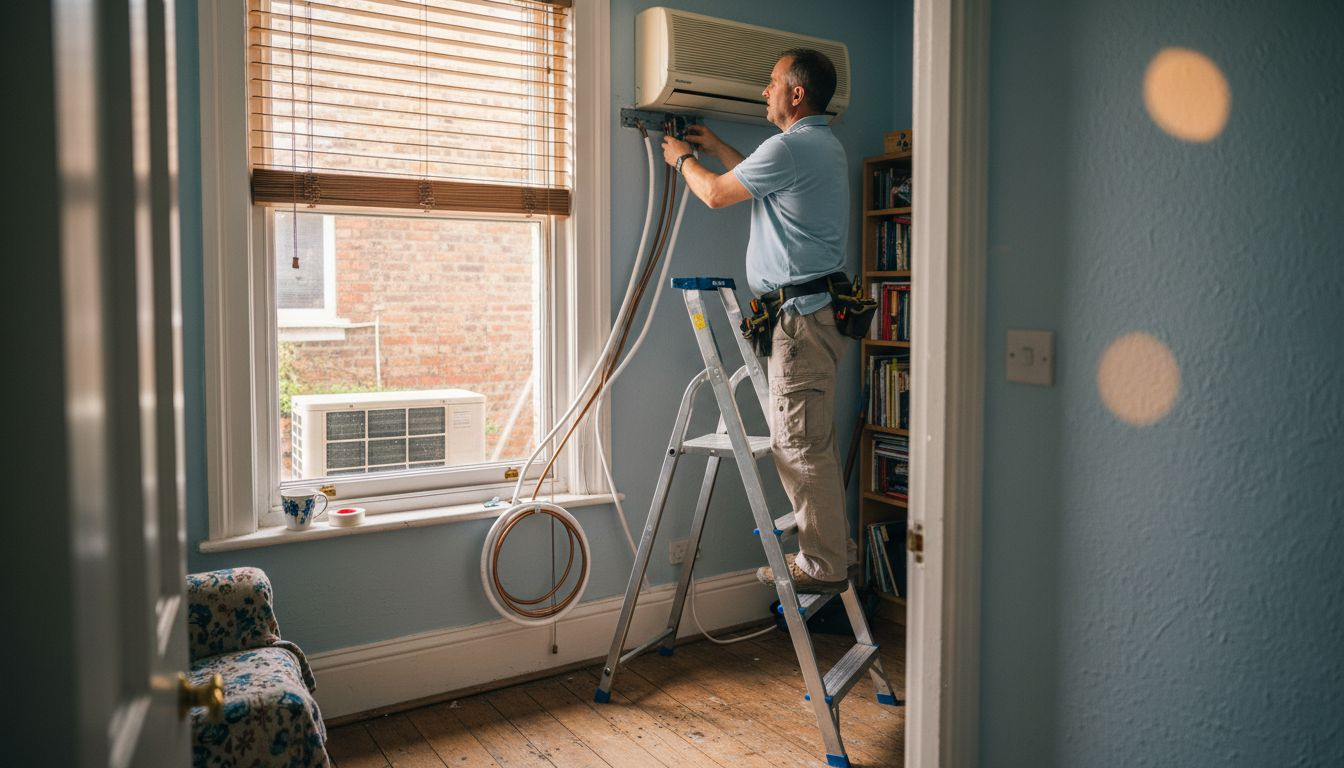
Portable units sit on castors and vent hot air through window kits. They offer ultimate flexibility for renters or temporary cooling needs. However, efficiency suffers due to poor insulation and constant air exchange with outdoors. Running costs quickly surpass fixed systems, limiting portables to occasional or short-term use.
Ducted systems cool entire buildings through ceiling or floor vents connected to a central indoor unit. They hide equipment from view and provide uniform temperature control across multiple rooms. Installation requires extensive ceiling access and ductwork fabrication, driving costs noticeably higher than split systems. Maintenance involves cleaning ducts, replacing filters quarterly, and annual professional servicing.
Multi-split systems connect multiple indoor units to a single outdoor compressor. They provide independent zone control, letting different rooms maintain separate temperatures. Offices and medium-sized homes benefit from this flexibility. Installation complexity sits between split and ducted systems. Maintenance resembles standard splits but covers more indoor units.
VRF (Variable Refrigerant Flow) systems represent the premium tier, using advanced inverter technology to adjust refrigerant flow precisely to each zone’s demand. They achieve the highest SEER ratings whilst supporting simultaneous heating and cooling in different areas. Large homes, hotels, and commercial buildings gain maximum value from VRF. The trade-off involves higher upfront investment and specialist servicing requirements.
Each system type serves distinct needs. Energy saving aircon capabilities vary significantly, affecting both environmental impact and operating costs. Understanding these differences prevents mismatched installations that waste money. Consider whether upgrading air conditioning systems makes sense for older properties with inefficient existing equipment.
Energy efficiency and environmental impact
SEER ratings provide the primary energy performance benchmark.
Refrigerant choice carries growing importance. R32 has become the UK standard for new installations due to its low GWP of 675, compared to 2088 for older R410A. R32 systems also operate more efficiently, delivering noticeably better performance than equivalent R410A units. UK regulations progressively restrict high-GWP refrigerants, making future-proof choices essential.
Smart controls amplify efficiency gains. Adaptive thermostats learn occupancy patterns and adjust temperatures automatically. Remote monitoring alerts you to performance issues before they escalate into expensive repairs. These features reduce energy consumption noticeably through precise temperature regulation and eliminating wasted runtime.
Government regulations accelerate the shift to sustainable cooling. The F-Gas phase-down limits refrigerant supply, pushing prices higher for non-compliant systems. Properties with old equipment face retrofit costs exceeding new installations. Choosing energy efficient cooling solutions now avoids regulatory headaches later.
Energy consumption varies dramatically across system types:
| System Type | Typical SEER | CO₂ Emissions (kg/year) |
|---|---|---|
| Portable | 8-10 | 520-615 |
| Split | 18-22 | 245-300 |
| Multi-split | 19-23 | 230-285 |
| Ducted | 16-20 | 275-340 |
| VRF | 22-26 | 205-250 |
VRF systems deliver the lowest running costs and environmental impact, though their premium purchase price requires careful ROI calculation. For most UK homes, high-SEER split systems provide the sweet spot between affordability and efficiency.
Commercial air conditioning installations must account for higher usage hours and more complex zoning needs. Businesses benefit disproportionately from energy efficient air conditioning technologies due to extended operating schedules.
Pro tip: Calculate payback period by dividing the price premium of higher-efficiency systems by annual energy savings. Systems with payback under five years typically justify the investment.
Installation and maintenance considerations
Installation costs and complexity shape both immediate budgets and long-term satisfaction.
Split systems offer the most accessible entry point. The process involves mounting the indoor unit, positioning the outdoor condenser, and running refrigerant lines through a small wall penetration. Most installations complete within four to six hours.
Ducted systems demand significantly more investment. Installation costs run noticeably higher than split systems due to ductwork fabrication, ceiling modifications, and extended labour hours.
Multi-split installations fall between splits and ducted systems in complexity and cost. The outdoor unit handles higher refrigerant volumes, requiring larger electrical circuits and more robust mounting.
VRF systems require specialist installation teams familiar with complex refrigerant piping networks and control systems.
Portable units avoid installation costs entirely. However, their inefficiency creates higher operating costs that quickly offset the savings. Maintenance involves weekly filter cleaning and annual condenser vacuuming, manageable without professional help.
| System Type | Install Complexity | Maintenance Frequency |
|---|---|---|
| Portable | Plug and play | Weekly filters |
| Split | Low-moderate | Annual professional |
| Multi-split | Moderate | Annual professional |
| Ducted | High | Bi-annual + quarterly filters |
| VRF | Very high | Bi-annual specialist |
Pro tip: Verify installer F-Gas certification before committing. Certified engineers handle refrigerants legally and maintain manufacturer warranties. Request proof of public liability insurance covering potential installation damage.
Proper UK AC maintenance prevents performance degradation and extends equipment lifespan. Budget for professional servicing when comparing total ownership costs.
Summary comparison and situational recommendations
Consolidating all factors reveals clear patterns for different property types and budgets.
| System Type | Best For | Energy Efficiency | Install Cost | Maintenance | Key Advantage | Main Drawback |
|---|---|---|---|---|---|---|
| Split | Small UK homes, single rooms | See UK energy label | Low | Simple annual | Affordable, reliable | Limited to one zone |
| Portable | Temporary cooling, renters | See UK energy label | None | DIY weekly | Ultimate flexibility | High running costs |
| Multi-split | Small offices, 2-4 room homes | See UK energy label | Moderate | Annual | Independent zone control | Higher install than single split |
| Ducted | Whole-home cooling, aesthetics | See UK energy label | High | Complex bi-annual | Hidden units, uniform cooling | Expensive install and maintenance |
| VRF | Large homes, commercial buildings | See UK energy label | Very high | Specialist bi-annual | Maximum efficiency, simultaneous heating/cooling |
For small UK homes and flats under 100m², single split systems deliver optimal value. They provide sufficient cooling capacity without overspending on multi-zone features you won’t use.
Medium-sised homes (100-180m²) benefit from multi-split systems when cooling three to four rooms. This approach costs less than installing separate splits whilst maintaining independent temperature control per zone. It’s ideal for families with varying comfort preferences.
Large homes exceeding 180m² and commercial properties gain most from VRF technology. The higher upfront investment pays back through superior efficiency, reduced energy costs, and simultaneous heating and cooling capabilities. Offices with varying occupancy patterns see particularly strong ROI.
Renters and temporary situations suit portable units despite poor efficiency. The ability to move equipment between properties and avoid installation justifies higher running costs for short-term use.
Ducted systems make sense primarily when aesthetics trump cost concerns or when whole-building integration with existing ductwork is possible. New-build luxury homes often incorporate ducted AC for seamless architectural integration.
Budget-conscious buyers should prioritise split systems with high SEER ratings over premium features. A well-chosen split unit delivers most of the benefits at a significant share of the cost compared to VRF.
Commercial buyers must factor in occupancy patterns, zone requirements, and future expansion. VRF systems offer modular scalability that fixed-capacity systems lack, making them cost-effective for growing businesses despite higher initial investment.
Explore expert air conditioning installation in Suffolk and Essex
Understanding AC system types is just the start. Professional installation ensures your chosen system delivers promised efficiency and reliability for years to come.
How each air conditioning system works
Knowing the name of a system is one thing. Understanding how it actually heats, cools, and ventilates your space helps you make a smarter purchase and get more from your investment.

Heating in modern air conditioning systems comes from three main sources. Traditional gas boilers burn fuel to heat water, which then circulates through radiators. Heat pump basics work differently: they extract heat energy from outside air or the ground and transfer it indoors, using far less electricity than they produce in heat. Hybrid systems pair a heat pump with a boiler, switching between the two depending on outdoor temperature for maximum efficiency.
Ventilation is where many property owners leave significant savings on the table. There are three main control strategies:
- CAV (constant air volume): Supplies a fixed amount of air regardless of demand. Simple but wasteful.
- VAV (variable air volume): Adjusts airflow to match actual demand in each zone.
- DCV (demand-controlled ventilation): Uses CO2 or occupancy sensors to supply air only when and where it is needed.
Cooling is delivered through direct expansion (DX) units, which are the refrigerant-based systems found in most splits and VRF setups, or through chillers, which cool water that is then circulated through fan coil units in larger buildings. Inverter technology is worth understanding: an inverter-driven compressor ramps up and down to match demand rather than switching fully on and off, which cuts energy use significantly.
“The choice of ventilation control strategy is one of the most impactful decisions you can make for long-term energy performance in any building.”
For a full breakdown of how controls affect performance, our guide to air conditioning controls is an excellent next read.
What is high wall aircon?
A high wall air conditioner, sometimes called a ductless split system, is a two-part cooling (and often heating) system. One unit sits inside your room, mounted high on the wall. The other, the compressor, sits outside. The two are connected by a refrigerant line, a power cable, and a condensate drain, all threaded through a single small hole in your exterior wall.
The indoor unit draws warm air from the room across a refrigerant-filled coil, which absorbs the heat. That heat is transferred through the refrigerant to the outdoor compressor, which releases it outside. The cooled air is then distributed back into the room. No ducts involved, and no energy wasted shifting air through metres of pipework.
It is worth understanding how this differs from other common AC types:
- Portable units sit entirely within a window frame, venting heat directly outside. They are cheap but noisy, block natural light, and are limited by window size.
- Central ducted systems use a network of ducts to push conditioned air throughout an entire building from one central unit. They suit large properties but carry significant installation complexity and energy losses.
- Portable air conditioners need no installation but are among the least efficient options and often struggle in warmer rooms.
High wall units occupy the middle ground. The outdoor compressor can be positioned up to 15.2 metres away from the indoor unit, giving considerable flexibility in placement. Most models also include a heat pump function, meaning they can warm your home in winter as well as cool it in summer. That dual-purpose capability makes them particularly practical in the UK climate.
What is an air conditioning system?
Air conditioning stands for heating, ventilation and air conditioning. It is the umbrella term for all the technology that manages the temperature, air quality, and humidity inside a building. If you want a deeper look at the topic, our what is air conditioning guide covers the fundamentals in full.
Air conditioning systems manage heating, ventilation and air conditioning for indoor environments, keeping occupants comfortable regardless of what the British weather is doing outside. Modern systems go well beyond a simple boiler and radiator setup. A single unit can now heat in winter, cool in summer, filter allergens, and control humidity year-round.
Here is what a complete air conditioning system typically covers:
- Heating: Boilers, heat pumps, or hybrid systems that maintain warmth during colder months
- Ventilation: Mechanical or natural airflow that removes stale air and brings in fresh air
- Air conditioning: Cooling and dehumidifying indoor spaces during warmer periods
- Air quality control: Filtration systems that remove dust, pollen, and pollutants
- Controls: Thermostats, sensors, and smart systems that manage everything automatically
For UK properties, a well-chosen air conditioning system is not a luxury. It is an investment in comfort, health, and energy efficiency.
FAQ
Which air conditioning system is best for small UK homes?
Split system air conditioners balance cost, efficiency, and maintenance simplicity perfectly for small homes.
How much does it cost to install a ducted AC system in the UK?
It depends on the size of the property, the number of rooms and how much ceiling or floor void is available for ductwork, so ducted systems are always priced after a survey. As a guide, ducted systems cost more than wall-mounted splits because of the extra design and installation work. Entry split system installs start from £1,750, and VAT on domestic installs is 0% until 31 March 2027, then 5%.
Can smart controls really reduce air conditioning energy use?
Smart controls can cut AC energy consumption noticeably through adaptive temperature regulation, occupancy sensing, and remote monitoring. They eliminate wasted runtime during unoccupied periods whilst optimising performance based on actual usage patterns, delivering both cost savings and environmental benefits increasingly valued in modern UK AC maintenance strategies.
What is VRF and when does it make sense?
Variable Refrigerant Flow technology uses inverter-driven compressors to adjust cooling capacity precisely to each zone’s demand. VRF makes financial sense for large homes exceeding 180m², commercial buildings, or properties needing simultaneous heating and cooling in different areas, where its premium efficiency offsets higher installation costs.
How often should different AC systems be serviced?
Split and multi-split systems require annual professional servicing plus monthly filter checks. Ducted systems need bi-annual professional maintenance plus quarterly filter changes. VRF systems demand specialist servicing twice yearly due to complex controls and refrigerant management. Portable units only need weekly filter cleaning and occasional DIY condenser vacuuming.
What is the most energy efficient air conditioning system for UK homes?
Air-to-air heat pumps are typically the most energy efficient option, achieving SCOP 3.5 to 4.5 and producing noticeably less CO2 than a gas boiler.
How much does it cost to install an air conditioning system in the UK?
Will upgrading my air conditioning system really reduce my energy bills?
Yes.
Can air conditioning systems also improve indoor air quality?
Absolutely. Air conditioning systems ensure indoor air quality through filtration and controlled ventilation, which reduces allergens, pollutants, and excess humidity in your home or workplace.
Our team installs Mitsubishi Electric and Daikin systems in homes across Suffolk and Essex. Every install starts with a free heat-load survey and is carried out by F-gas certified engineers under our REFCOM registration (REF1023379). Entry installs start from £1,750, and VAT on domestic installs is 0% until 31 March 2027, then 5%. Every install by our team comes with a 12-month installation warranty, plus up to 5 years’ manufacturer warranty when the system has its annual service. Book a free survey.
Recommended
Speak to Akita Air Conditioning
Find out more about our air conditioning installation, or see how we work with homes and businesses across Suffolk and Essex, including air conditioning in Colchester and Bury St Edmunds.
Ready to talk about your property? Book a free survey and one of our engineers will assess your space and recommend the right system for it.