

What is a multi-split system? Your 2026 guide
TL;DR:
- A multi-split system connects one outdoor unit to multiple indoor units, each independently controlled. It offers zone-specific climate control, energy efficiency, and minimal outdoor space usage. Proper installation and management maximize performance and lifespan for residential and commercial applications.
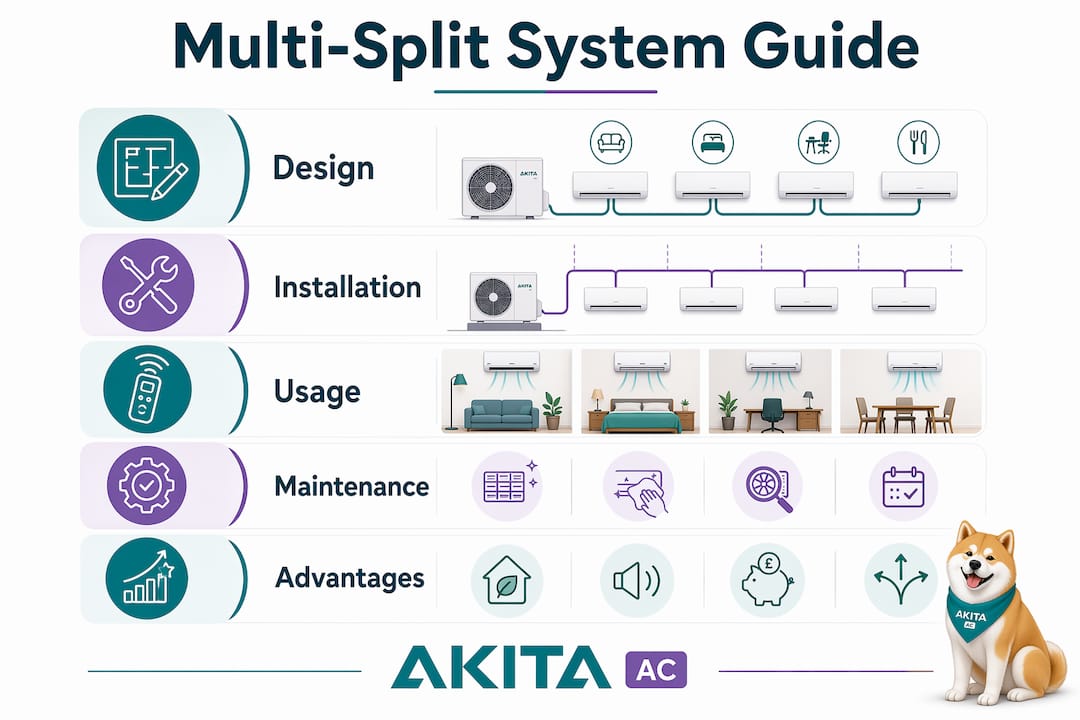
A multi-split system is defined as a type of air conditioning setup where one outdoor compressor unit connects to multiple indoor units, each controlled independently. Unlike a single-split system, which serves one room per outdoor unit, a multi-split arrangement supports 2 to 8 indoor units from a single external installation. This makes it the preferred choice for homeowners and business owners who need zone-specific climate control across several rooms without cluttering the exterior of their property with multiple outdoor units. Akita installs multi-split systems across Suffolk, Norfolk, and Essex for exactly this reason: one clean outdoor unit, multiple comfortable rooms.
How does a multi-split air conditioning system work?
A multi-split air conditioning system operates through a single outdoor compressor that distributes refrigerant to each indoor unit via dedicated pipework. The outdoor unit contains the compressor and condenser. Each indoor unit contains an evaporator coil and a fan that circulates conditioned air into its specific room or zone.

Refrigerant travels from the outdoor unit through insulated copper pipes routed through the building’s walls. Each connection requires only a 3-inch wall penetration for the refrigerant lines, electrical wiring, and condensate drain. That is a far smaller intrusion than the large duct runs required by central air systems, which makes multi-split suitable for older properties, listed buildings, or rooms where ductwork is simply not viable.
Each indoor unit has its own thermostat and remote control, so one room can be set to 18°C while another runs at 22°C. The outdoor unit shares its total capacity across whichever indoor units are active at any given time. When fewer rooms are in use, more capacity is available to the active zones, which improves both comfort and efficiency.
Indoor units come in several mounting styles, including wall-mounted, floor-standing, and ceiling cassette formats. This flexibility means the system can be tailored to the layout and aesthetics of each room individually.
Pro Tip: Ask your installer to map out refrigerant line routes before any work begins. Shorter, more direct runs improve efficiency and reduce the risk of pressure loss across the system.
Installation is more involved than a standard single-split setup. A qualified engineer must design the pipework layout, calculate total capacity requirements, and confirm that the outdoor unit can handle the combined load of all connected indoor units.
What are the advantages of choosing a multi-split system?
A multi-split system delivers meaningful advantages over both single-split and ducted alternatives, particularly for properties where space, aesthetics, or structural constraints limit the options.
The headline benefit is energy efficiency through zone control. Strategic zoning can save 25–30% energy compared to conditioning all rooms simultaneously, and up to 40–60% compared to traditional central air conditioning. That saving is significant. It means a household that only conditions occupied rooms during the day could cut its cooling and heating costs substantially over a full year.
The key advantages are:
- Single outdoor unit. One compact unit serves the whole property, preserving garden space, roof space, or facade appearance.
- Independent zone control. Each room gets its own temperature setting, so occupants are not forced to accept a single building-wide temperature.
- No ductwork required. Multi-split systems are ideal where ductwork is restricted, such as in converted properties, flats, or commercial spaces with suspended ceilings already in use.
- Flexible indoor unit styles. Wall, floor, and cassette units can be mixed across rooms to suit different ceiling heights and room layouts.
- Consistent exterior appearance. A single outdoor unit looks cleaner and is easier to screen or position discreetly than multiple separate units.
For business owners, the zone control benefit extends to managing comfort across offices, meeting rooms, and reception areas independently. A meeting room that is empty until 2pm does not need to be cooled all morning. That kind of targeted use is where multi-split systems genuinely earn their keep. Pairing the system with energy-saving techniques amplifies those gains further.
What installation considerations and limitations should you know?
Multi-split systems carry a higher upfront cost and greater installation complexity than single-split units. Understanding the limitations before committing avoids expensive surprises.
The key factors to address before installation are:
- Capacity sizing. The outdoor unit’s total capacity is shared among all connected indoor units. Undersizing the outdoor unit means it cannot maintain target temperatures if all rooms demand full output simultaneously. A qualified engineer must calculate the combined load correctly.
- Refrigerant line length limits. Every manufacturer specifies maximum pipe run lengths. Exceeding those limits risks performance loss and compressor failure. Longer runs also increase installation cost and complexity.
- Wall penetrations. Each indoor unit requires its own 3-inch hole through an external or internal wall. In listed buildings or properties with planning restrictions, this may require prior approval.
- Number of indoor units. Most outdoor units support between 2 and 8 indoor units. Exceeding the manufacturer’s stated maximum is not possible without a separate outdoor unit.
- Professional design is non-negotiable. Multi-split systems demand professional planning to size correctly and route pipework within safe limits. An undersized or poorly routed system will underperform from day one.
The upfront cost is higher than a comparable number of single-split units in some cases, though the saving on outdoor unit hardware and exterior wall space often offsets this. Homeowners and business owners should treat the installation as a long-term investment rather than a like-for-like comparison with a single room unit.
Pro Tip: Get a room-by-room heat load calculation from your installer before agreeing on a system specification. This single step prevents the most common sizing mistakes and protects your investment.
For a clear comparison of how multi-split stacks up against central air alternatives, the central vs split AC guide covers the key differences in detail for UK properties.
How to maximise the efficiency and lifespan of a multi-split system?
Getting the most from a multi-split system comes down to consistent habits and regular professional attention. The technology is only as efficient as the way it is used.
- Zone actively. Turn off indoor units in unoccupied rooms. Efficiency gains depend entirely on this behaviour. Running all units simultaneously at full load removes the core advantage of the multi-split design.
- Service the system annually. A professional service covers refrigerant pressure checks, coil cleaning, electrical connection inspection, and drain clearance. Following a structured HVAC maintenance checklist keeps the system running at peak performance between visits.
- Clean filters monthly. Blocked filters force the indoor unit to work harder, reducing airflow and increasing energy draw. Most filters slide out and can be rinsed under a tap.
- Avoid simultaneous peak demand. Running every indoor unit at maximum output simultaneously puts the outdoor compressor under sustained stress. Stagger temperature changes across zones where possible.
- Use a programmable or smart controller. Setting schedules for each zone means rooms reach the right temperature before they are occupied, rather than blasting at full power from a cold start.
- Protect the outdoor unit. Keep the area around the outdoor unit clear of debris, vegetation, and obstructions. Restricted airflow to the condenser reduces efficiency and shortens compressor life.
Professional installation is the foundation of long-term reliability. A correctly sized and properly commissioned system will deliver consistent performance for well over a decade with routine maintenance. A poorly installed one will underperform from the outset, regardless of how well it is maintained afterwards.
Key takeaways
A multi-split system is the most practical solution for multi-room climate control where outdoor space is limited and ductwork is not viable.
| Point | Details |
|---|---|
| Core definition | One outdoor unit connects to 2–8 indoor units, each with independent temperature control. |
| Energy savings | Strategic zoning delivers 25–30% energy savings versus conditioning all rooms at once. |
| Installation complexity | Professional sizing and refrigerant line planning are required to avoid performance and reliability issues. |
| Efficiency depends on behaviour | Turning off unused zones is the single most important factor in realising energy savings. |
| Maintenance matters | Annual professional servicing and monthly filter cleaning protect system lifespan and efficiency. |
Akita’s view on choosing a multi-split system
The most common mistake we see is homeowners choosing a multi-split system based on the number of rooms they have, rather than the number of rooms they actually use at the same time. A five-bedroom property does not need five zones running simultaneously. It needs two or three well-sized zones and the discipline to use them correctly.
The second mistake is underestimating the importance of the design stage. We have seen systems installed by other contractors where the refrigerant lines exceed safe lengths, or where the outdoor unit is undersized for the connected indoor units. Both problems are invisible until the system fails to perform on the hottest day of the year. Getting the specification right before installation is not optional.
What surprises most of our clients is how flexible these systems are over time. If your business expands into a new office, or you convert a loft, adding an indoor unit to an existing multi-split outdoor unit is often possible without replacing the whole system. That future-proofing is a genuine benefit that rarely features in the initial buying conversation, but it matters enormously over a ten-year ownership period.
My honest advice: work with an installer who provides a room-by-room heat load calculation as standard, not as an optional extra. If they skip that step, find someone who does not.
— Akita
Professional multi-split installation from Akita
Akita specialises in the design and installation of multi-split air conditioning systems for homes and businesses across Suffolk, Norfolk, and Essex.

Every installation begins with a full site assessment and room-by-room capacity calculation, so the system is sized correctly from the start. Akita offers transparent, fixed-price installation options for domestic air conditioning and a dedicated service for commercial air conditioning clients who need zone control across offices, retail spaces, or hospitality venues. Flexible finance options are available, and all installations are backed by a warranty guarantee. Contact Akita to arrange a consultation and get a specification built around how you actually use your space.
FAQ
What is a multi-split system in simple terms?
A multi-split system is one outdoor air conditioning unit connected to multiple indoor units, each controlling the temperature in a separate room independently. It is the standard industry term for what is also called a multi-head split or multi-zone system.
How many rooms can a multi-split system serve?
Most multi-split outdoor units support between 2 and 8 indoor units, depending on the model and total capacity. Each indoor unit serves one room or zone.
Is a multi-split system more efficient than central air conditioning?
Yes. Strategic zoning with a multi-split system can reduce energy use by 25–30% compared to conditioning all rooms, and up to 40–60% compared to traditional central air conditioning systems.
Does a multi-split system need a lot of building work to install?
Each indoor unit requires a single 3-inch wall penetration for pipework and wiring. No ductwork is needed, which makes multi-split systems far less invasive than ducted central systems.
Can all indoor units run at different temperatures at the same time?
Yes. Each indoor unit has its own thermostat and remote control, so rooms can be set to different temperatures simultaneously, subject to the outdoor unit’s total shared capacity.