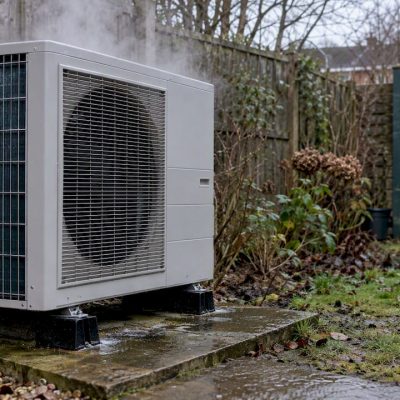
UK summers are getting hotter with more frequent heatwaves impacting home comfort, making energy-efficient air conditioning no longer a luxury but a necessity. Proper installation of these systems can significantly lower your energy bills, especially with new UK environmental regulations effective 2026 making system choice critical. This guide walks you through every step to ensure your installation maximises comfort while minimising costs and environmental impact.
Table of Contents
- Prerequisites: What You Need Before Installing An Air Conditioning System
- Choosing The Right Energy-Efficient Air Conditioning System For Your Home
- Step-By-Step Installation Process Explained
- Common Installation Mistakes And Troubleshooting Tips
- Ready To Upgrade? Expert Air Conditioning Installation Services In Suffolk, Norfolk & Essex
- Frequently Asked Questions About Installing Air Conditioning In UK Homes
Key Takeaways
| Point | Details |
|---|---|
| Energy efficiency ratings | Systems with SEER 16+ dramatically reduce running costs compared to older models. |
| Professional certification | F-Gas certified installers ensure compliance and optimal performance for your investment. |
| Planning permission | Most installs are permitted development but conservation areas require council approval. |
| Installation mistakes | Poor sizing or charging can increase energy use by up to 30% above expected levels. |
Prerequisites: What You Need Before Installing an Air Conditioning System
Before any equipment arrives, you need proper groundwork to ensure your installation proceeds smoothly and legally. Starting with a professional site survey sets the foundation for everything that follows.
A qualified F-Gas certified engineer should assess your home layout, insulation quality, window placement, and cooling requirements. This survey determines the correct system size and type for your specific needs, preventing the costly mistake of under or over sizing.
You must verify planning permission requirements for your property. Most UK home air conditioning installations fall under permitted development rights, but listed buildings and conservation areas require council approval. Check with your local council early to avoid delays or potential fines.
Ensure your chosen installer holds proper credentials. Only F-Gas certified engineers are legally allowed to install or service air conditioning systems in the UK to prevent environmental harm from refrigerant leaks. Always verify certification before signing any contracts.
Key preparation steps include:
- Arrange a detailed site survey with certified professionals to assess your cooling needs
- Verify planning permission status with your local council, especially for listed or conservation properties
- Confirm installer F-Gas certification and check references from previous customers
- Document your home specifications including room dimensions and insulation details
Proper preparation saves time, money, and frustration during installation.
Choosing the Right Energy-Efficient Air Conditioning System for Your Home
With preparation complete, selecting the right system becomes your next critical decision. The market offers various options, each with distinct efficiency profiles and cost implications.
Heat pumps deliver exceptional efficiency, often reaching 400 to 500% efficiency by moving heat rather than generating it. Traditional air conditioning systems typically achieve 250 to 350% efficiency. Portable units offer flexibility but usually provide the lowest efficiency ratings.
Systems with SEER ratings of 16 or higher are recommended for UK climate conditions to ensure optimal energy savings. Higher SEER numbers mean better efficiency and lower running costs over the system’s lifespan.
Compare different system types based on your specific needs:
| System Type | Efficiency (SEER) | Best For | Typical Cost Range |
|---|---|---|---|
| Heat Pump | 18-25+ | Year-round climate control, whole home | £4,000-£12,000 |
| Split System | 16-22 | Single rooms or specific zones | £1,150-£2,700 per room |
| Multi-Split | 16-20 | Multiple rooms without ducts | £3,000-£8,000 |
| Ducted System | 14-18 | Whole home, new builds | £5,000-£15,000 |
| Portable | 8-12 | Temporary or rental properties | £200-£600 |
Consider total costs beyond initial purchase price. Installation labour, ongoing maintenance, and energy consumption over 15 to 20 years significantly impact your return on investment.
Choose between split systems for targeted cooling, multi-split for several rooms, or ducted systems for comprehensive whole home comfort. Each suits different home layouts and budgets. Energy efficient air conditioning UK options continue expanding with advancing technology.
Match system capacity to your actual cooling load. Oversized units cycle on and off frequently, wasting energy and reducing comfort. Undersized units run constantly without achieving desired temperatures. Only a professional survey gives accurate sizing.
For guidance tailored to your situation, explore how to choose energy efficient AC based on your home’s unique characteristics.
Step-by-Step Installation Process Explained
Understanding the installation process helps you know what to expect and ensures your installer follows best practices. Professional installation typically unfolds in five key stages.
-
Conduct Detailed Site Survey: Your certified engineer finalizes system sizing, confirms mounting locations for indoor and outdoor units, plans refrigerant pipe routes, and identifies electrical connection points. This survey typically takes 1 to 2 hours for residential properties.
-
Obtain Final Permissions: If planning permission is required, secure approval before proceeding. Even for permitted development, confirm compliance with local regulations to avoid future complications.
-
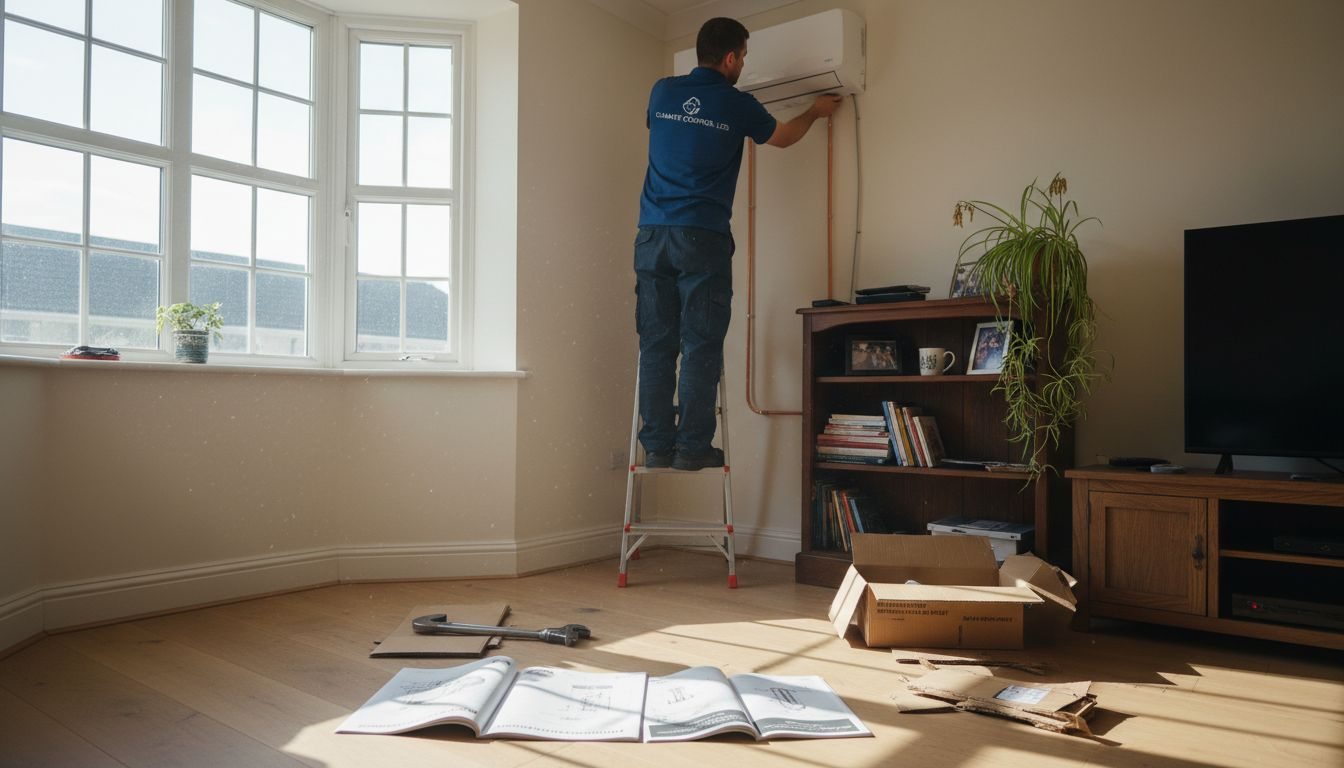
Install Indoor and Outdoor Units: Installers mount brackets securely to walls or floors, position units for optimal airflow and accessibility, and ensure outdoor units have adequate shade and ventilation. Proper positioning dramatically affects system efficiency.
-
Complete System Connections: Engineers run refrigerant pipes through walls with minimal disruption, install electrical wiring to code specifications, connect drainage pipes with proper fall for condensate removal, and pressure test all refrigerant lines before charging the system.
-
Commission and Test System: Final commissioning includes leak testing all refrigerant connections, balancing airflow across zones, verifying temperature differentials, testing all controls and safety features, and training you on proper system operation.
Installation time estimates range from 4 to 6 hours for single room units up to several days for larger multi-split systems depending on complexity and access challenges. Expect some disruption but professional installers minimise mess and restore your home quickly.
Pro Tip: Schedule installation during mild weather in spring or autumn for smoother operation and quicker commissioning when outdoor temperatures are moderate.
Your installer should provide detailed commissioning reports documenting refrigerant charges, pressure readings, and performance metrics. Keep these records for warranty claims and future maintenance. Understanding air conditioning value in the UK requires seeing the complete installation picture.
Regular post-installation maintenance keeps your system running efficiently. Follow the HVAC maintenance checklist UK recommendations to protect your investment and maintain peak performance.
Common Installation Mistakes and Troubleshooting Tips
Even with professional help, installations can go wrong if you don’t know what to watch for. Awareness of common pitfalls helps you verify quality work.
Incorrect system sizing remains the most frequent error. Oversized units waste energy through short cycling while undersized units struggle to maintain comfort. Always insist on proper load calculations based on your home’s specific characteristics, not rules of thumb.
Improper refrigerant charging reduces system efficiency and can damage expensive compressor components. Only certified professionals should handle refrigerants. Verify your installer uses proper charging methods with manifold gauges and temperature measurements, not just pressure alone.
Incorrect unit sizing, poor refrigerant charging, ignoring planning permissions, and bad drainage cause inefficiency and legal issues in up to 40% of non-certified installs. These mistakes are completely avoidable with proper professional installation.
Failing to verify planning permissions can result in enforcement action requiring system removal or modification at your expense. Even if you believe your installation qualifies as permitted development, document your research and confirm with local authorities.
Poor drainage installation leads to water damage, mold growth, and structural issues. Condensate pipes must have adequate fall, proper insulation in cold spaces, and discharge to appropriate locations. Never allow drainage into gutters or onto neighbouring property.
Common red flags during installation:
- Installer cannot show current F-Gas certification or insurance documents
- No formal load calculation or survey conducted before equipment selection
- Refrigerant lines installed without proper insulation or protection
- Condensate drainage pipes installed with inadequate fall or poor positioning
- No commissioning report or performance testing completed before final payment
If you spot any of these issues, halt work immediately and seek a second opinion. Poor installation is expensive to correct later and voids most manufacturer warranties.
Understanding the complete financial picture helps you budget effectively and maximise your return on investment. Costs vary significantly based on system type and installation complexity.
Typical installation costs for split system AC range between £1,150 to £2,700 per room in the UK in 2026, including equipment and labour. Heat pumps command higher initial investment but offer superior long term value.
| Component | Split System | Heat Pump System |
|---|---|---|
| Equipment Cost | £800-£1,800 | £3,500-£8,000 |
| Installation Labour | £350-£900 | £500-£4,000 |
| Additional Materials | £100-£300 | £200-£500 |
| Total Investment | £1,250-£3,000 | £4,200-£12,500 |
This substantial support makes heat pumps financially competitive with traditional systems while delivering superior efficiency.
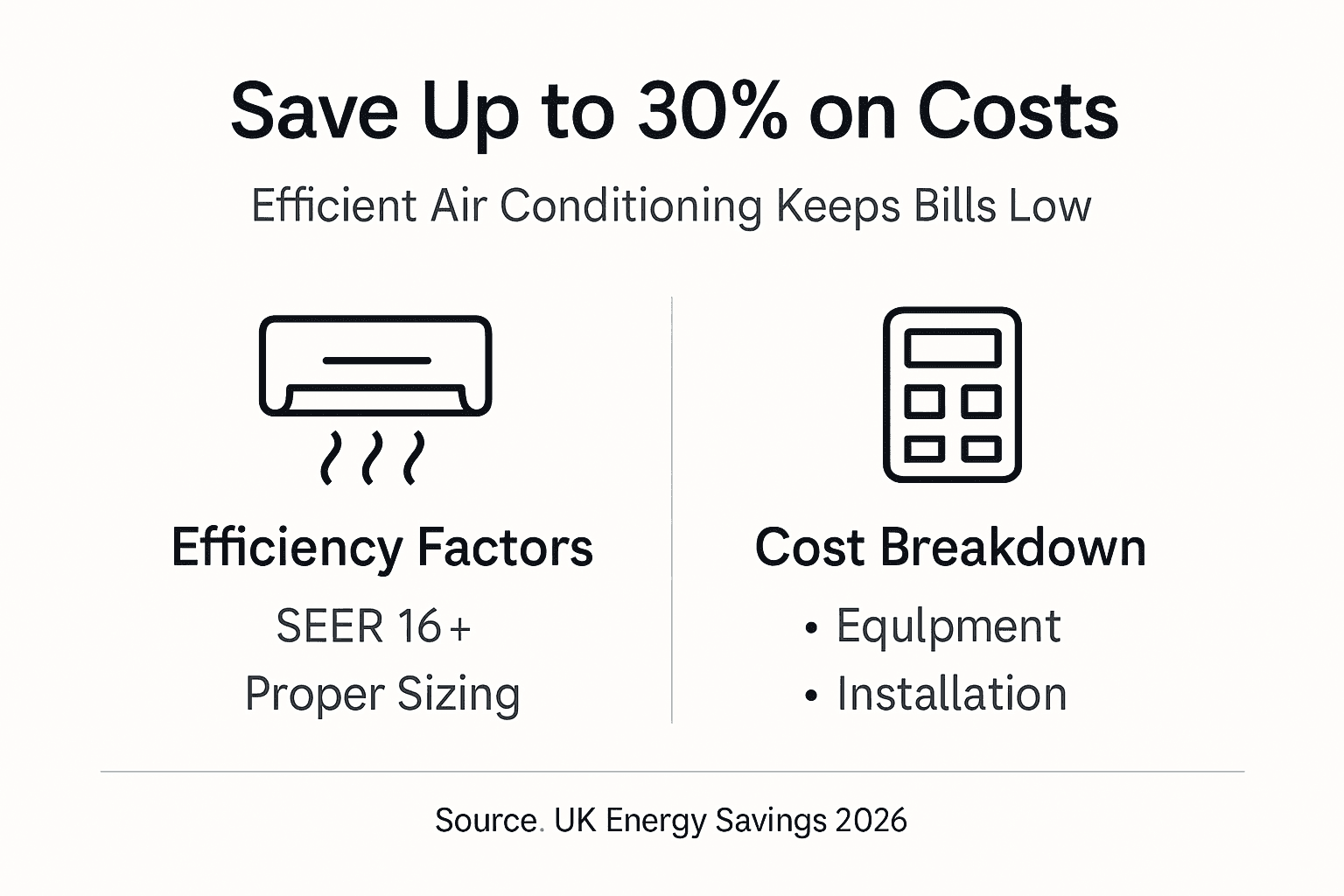
Expected energy savings from properly installed efficient systems can reach 25 to 30% on your cooling and heating bills compared to older or poorly installed equipment. Actual savings depend on your usage patterns, home insulation, and local climate.
Typical system lifespan ranges 15 to 20 years with routine maintenance following manufacturer recommendations. This longevity combined with energy savings often results in positive return on investment within 5 to 8 years for heat pumps and 7 to 12 years for traditional AC.
- Hire purchase agreements spreading costs over system lifespan
- Energy company schemes providing subsidized installations in some regions
Compare total lifetime costs, not just purchase prices. A system costing £2,000 less upfront but using 30% more energy becomes more expensive within a few years. Focus on energy efficient air conditioning costs over the full ownership period.
Ready to Upgrade? Expert Air Conditioning Installation Services in Suffolk, Norfolk & Essex
You now understand what makes an efficient AC installation successful. Putting this knowledge into practice requires partnering with experienced professionals who prioritise quality and compliance.
Akita Air Conditioning specialises in energy efficient system installations throughout Suffolk and north Essex, bringing certified expertise to every project. Our F-Gas certified engineers conduct thorough site surveys, recommend systems tailored to your specific needs, and complete installations meeting all 2026 UK regulations.

Explore our regional services: Air Conditioning Services in Essex and Air Conditioning Services in Suffolk. Learn more about how to choose energy efficient AC systems perfectly matched to your home.
Schedule your free site survey consultation today to begin your journey toward enhanced comfort and reduced energy costs.
Frequently Asked Questions About Installing Air Conditioning in UK Homes
What types of air conditioning are best suited for UK homes?
Heat pumps offer the best value for UK homes, providing both heating and cooling with exceptional efficiency ratings above SEER 18. Split systems work well for targeted cooling in specific rooms, while multi-split systems suit homes needing several zones without ductwork. Your choice depends on whether you want year-round climate control or summer cooling only.
Are there any legal permissions needed to install air conditioning in Suffolk or Essex?
Most residential installations qualify as permitted development requiring no formal planning permission. However, listed buildings, properties in conservation areas, and flats always need council approval before installation. Check with your local authority early in the planning process to avoid costly delays or enforcement action.
How much can I expect to save on energy bills with an efficient system?
Properly installed systems with SEER ratings of 16 or higher typically reduce cooling and heating costs by 25 to 30% compared to older or inefficient equipment. Actual savings vary based on your home’s insulation, usage patterns, and local energy prices. Heat pumps deliver the greatest savings due to their exceptional efficiency in both heating and cooling modes.
Can I install the AC system myself or must I hire a certified professional?
UK law requires F-Gas certified engineers to install and service all air conditioning systems due to refrigerant handling regulations. DIY installation is illegal and dangerous, voids all warranties, and can result in substantial fines. Always hire certified professionals to ensure compliance, safety, and optimal system performance.
What maintenance is required immediately after installation?
Your installer should complete full system commissioning including leak testing, airflow balancing, and performance verification before leaving. Schedule your first routine maintenance check 3 to 6 months after installation to verify everything operates correctly. Clean or replace filters monthly during heavy use periods and keep outdoor units clear of debris for optimal efficiency.
Recommended
Speak to Akita Air Conditioning
Find out more about our air conditioning prices, or see how we work with homes and businesses in Sudbury and the surrounding area.
Ready to talk about your property? Book a free survey and one of our engineers will assess your space and recommend the right system for it.