Suffolk and north Essex have some of the finest historic buildings in the country, from timber-framed merchants’ houses to Georgian town houses. Many owners want the comfort of modern heating and cooling, but listed status brings extra responsibilities. This guide explains how listed building consent works for air conditioning, what tends to be acceptable, and how we approach installations in historic homes. It is general guidance; the decision always rests with your local planning authority.
What listed status means
A listed building is protected because of its special architectural or historic interest. Listing covers the whole building, inside and out, and usually includes fixtures and some structures within its grounds. It is not just the front elevation that matters.
Listed building consent is required for works that affect a listed building’s character as a building of special architectural or historic interest. Carrying out such works without consent is a criminal offence, and a council can require unauthorised work to be reversed. That is why it is essential to get advice before any installation starts.
Is consent needed for air conditioning?
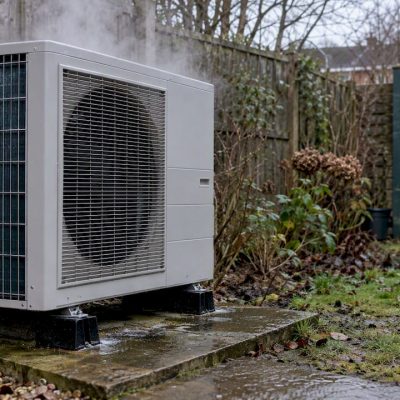
In most cases, installing air conditioning in a listed building is likely to need listed building consent, because it typically involves fixing equipment to walls, drilling through historic fabric and placing an outdoor unit where it may be visible. Planning permission may also be needed for the outdoor unit. Permitted development rights for air source heat pumps do not apply to listed buildings or land within their curtilage.
Every building is different, and some councils may take the view that a particular minor, reversible installation does not require consent. The only way to be sure is to ask. Many councils offer pre-application advice, and their conservation officers can tell you what they are likely to accept.
What tends to be acceptable
While each case is judged on its merits, conservation officers generally look for proposals that:
- avoid harm to historic fabric, such as timber frames, lime plaster, wattle and daub, panelling or decorative features
- are reversible, so equipment can be removed later without lasting damage
- keep outdoor units out of sight from public views and away from principal elevations
- route pipework through existing openings or less significant parts of the building
- use indoor unit types and positions that are sympathetic to the room
Rooms in later extensions or in parts of the building of lesser significance are often easier to deal with than principal rooms.
Design options for historic homes
- Floor console units sit low on the wall and can be less intrusive than high wall units, especially in rooms with exposed beams.
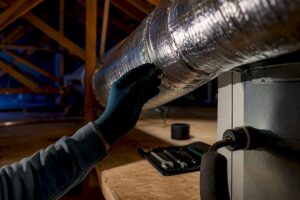
- Ducted systems can hide equipment in a loft or void, where the structure allows it without harming historic fabric.
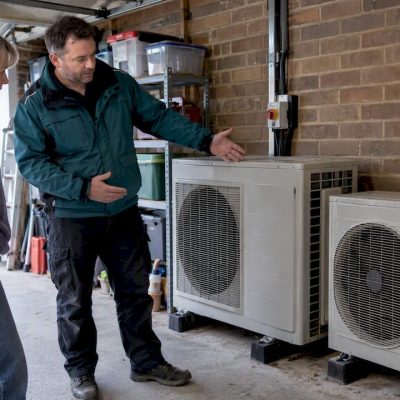
- Outdoor unit siting behind outbuildings, garden walls or in rear courtyards, sometimes with sympathetic screening.
- Pipe routes through existing service voids, cellars or later partitions.
- Multi-split systems to reduce the number of outdoor units.
Our role
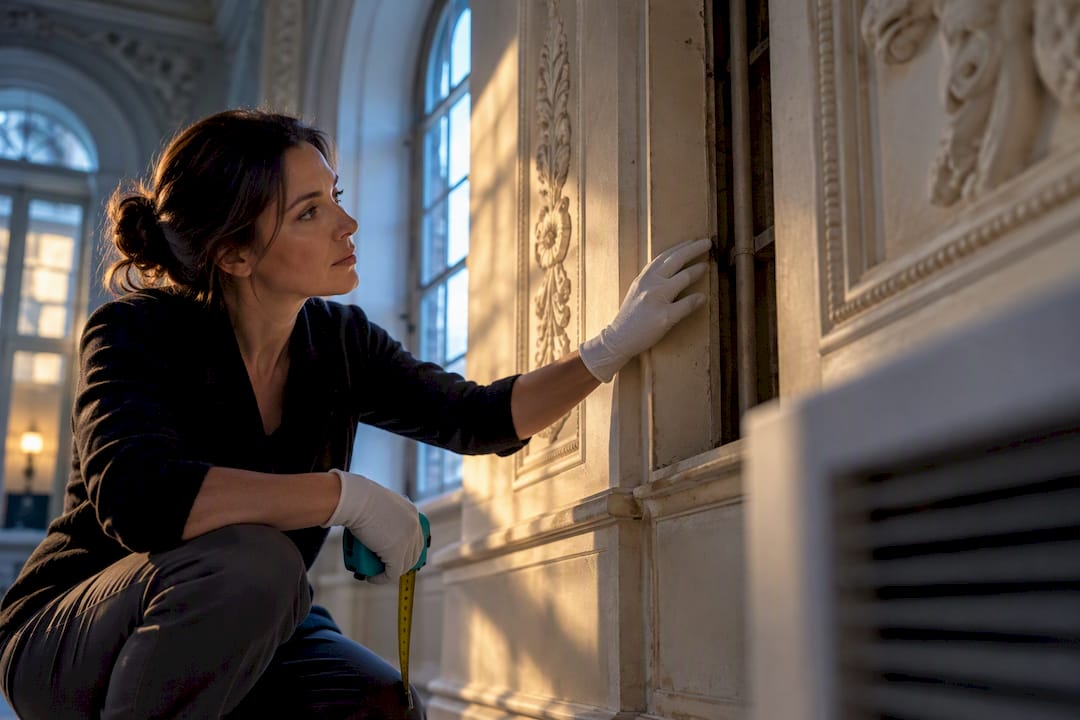
We have experience working in period properties and advising on discreet layouts. We survey the building, propose options that minimise impact, and provide the technical details you or your architect need for an application. We advise on consent but never submit applications on your behalf; the application is made by the owner or their agent. We will not start work until you have confirmed the necessary consents are in place.
Conservation areas
Many historic homes sit in conservation areas, such as the centres of Lavenham, Long Melford and Sudbury. In a conservation area, even an unlisted building may face restrictions on equipment visible from a highway, and some areas have Article 4 directions that remove permitted development rights. Check with your council before installing an outdoor unit that will be visible from the street. See our guide to planning permission for air conditioning.
Heat pumps in listed buildings
Air-to-water heat pumps can also work in listed buildings, but consent issues are similar, and older solid-wall buildings often need careful heating design. Radiator changes, cylinder location and pipe routes all need thought. Our engineers install the heat pump side and our trusted plumbing partner handles the water side.
Building regulations and other rules
Building regulations, including Part L, may apply to new fixed systems, although there is some flexibility for historic buildings where meeting standards would harm their character. Refrigerant work must be carried out by F-Gas certified engineers, regardless of the building type.
Practical tips
- Talk to your council’s conservation officer early.
- Gather photos and any existing listing description; the list entry is available from Historic England.
- Allow time in your plans for the consent process.
- Choose an installer who will design around the building rather than forcing a standard layout.
Costs
Installations start from £1,300, though historic buildings sometimes need more work and care. Domestic air conditioning is currently zero-rated for VAT, and we confirm the price after a survey. Read more about our approach on our period homes and listed buildings page, or about the homes we look after in Lavenham.
Book a free survey
Ready to talk about your property? Book a free survey and one of our engineers will assess your space and recommend the right system for it.