The best home climate control systems for UK homeowners in 2026 combine smart thermostats, zoned heating, and energy-efficient air conditioning technology to cut bills and maintain consistent comfort year-round. Whether you have a Victorian terrace, a modern flat, or a detached family home, the right system depends on your property’s insulation, heating infrastructure, and how you actually live in the space.
Here is a quick overview of what the UK market offers:
- Smart radiator valves (TRVs): enable room-by-room zoning without a full system overhaul
- Air source heat pumps: highly efficient replacements for gas boilers in well-insulated homes
- Hybrid heating systems: pair a heat pump with a gas boiler for flexibility during cold snaps
- Split air conditioning units: provide both cooling and heating, ideal for homes without central heating upgrades
- Combi and system boilers with smart controls: the most common UK setup, significantly improved by adding a smart thermostat
All of these options can reduce energy costs and improve comfort. The challenge is matching the right technology to your specific property.
Table of Contents
- How do smart thermostats and climate control systems actually work?
- What are the real benefits of upgrading to smart climate control?
- Common types of home climate control systems for UK properties
- What does it cost to install smart climate control in the UK?
- How to choose the right climate control system for your UK home
- How Akita approaches energy-efficient climate control for UK homes
- What maintenance do home climate control systems need?
- Which system suits your property type?
- Akita can install the right system for your home
- Key takeaways
- What are the main climate control technologies and where does each one fit?
- What is the science behind heating, ventilation, and air conditioning?
- What UK regulations and sizing rules do you need to know?
How do smart thermostats and climate control systems actually work?
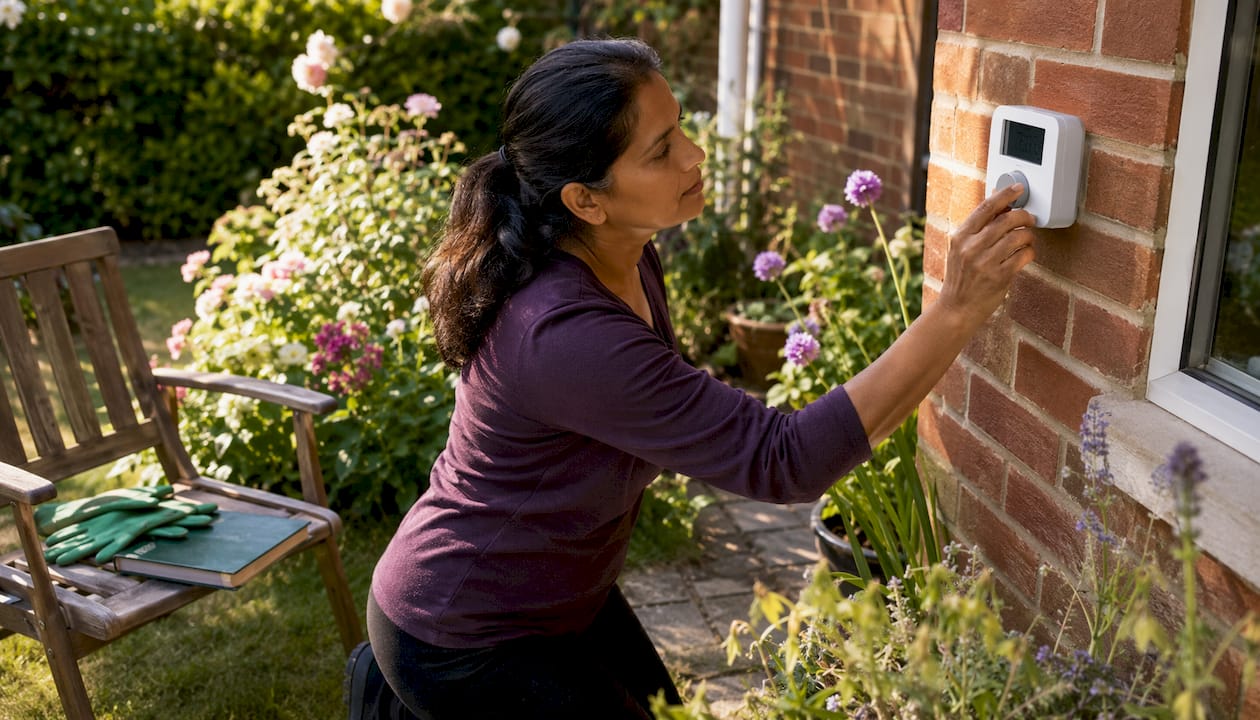
Smart thermostats sit between your boiler (or heat pump) and your heating schedule, replacing the basic timer and dial most UK homes still use. They connect to your home Wi-Fi and let you control heating via a smartphone app, voice commands through Amazon Alexa or Google Assistant, or the device itself.
The key features that separate smart thermostats from standard programmable ones:
- Scheduling: set different temperatures for different times and days
- Geofencing: the thermostat detects when your phone leaves or approaches home and adjusts heating accordingly
- Occupancy detection: some models use motion sensors or door sensors to avoid heating empty rooms
- OpenTherm integration: compatible boilers can modulate their output (rather than simply switching on and off), though boiler modulation requires OpenTherm compatibility, which is not universal
Smart thermostats reduce heating bills primarily by cutting boiler run-time, not by making the boiler itself more efficient. The savings come from heating your home only when and where it is needed.
Pro Tip: Before buying any smart thermostat, check the manufacturer’s compatibility tool. An incompatible boiler can limit features significantly, particularly geofencing and modulation.

What are the real benefits of upgrading to smart climate control?
Beyond the numbers, the practical benefits stack up quickly:
- Remote control: turn heating on from the train home rather than leaving it running all day
- Comfort consistency: no more cold mornings or overheated evenings from a badly set timer
- Energy awareness: apps show you exactly how much you are spending and where
- Smart home integration: works with Amazon Alexa, Google Home, and Apple HomeKit
- Reduced carbon footprint: less gas burned means lower emissions, relevant as UK homes face tightening EPC requirements
The savings correlate strongly with behaviour. Homes that already run disciplined schedules see smaller marginal gains. The biggest wins go to households switching from no thermostat control at all, or from heating the home on a fixed timer regardless of occupancy.
Common types of home climate control systems for UK properties
Choosing the right system starts with understanding what is available and what each one suits. The best choice depends on your property’s insulation, hot water demand, and existing radiator infrastructure.
- Combi boilers with smart thermostats: the most common UK setup. Combi boilers suit smaller homes with one bathroom and no separate hot water cylinder. Adding a smart thermostat is the lowest-cost upgrade.
- System boilers with unvented cylinders: better for larger homes with high hot water demand. Compatible with smart controls and heat pumps.
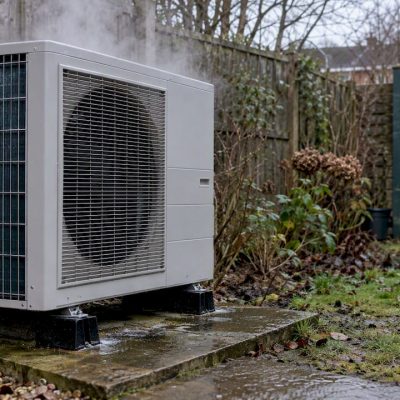
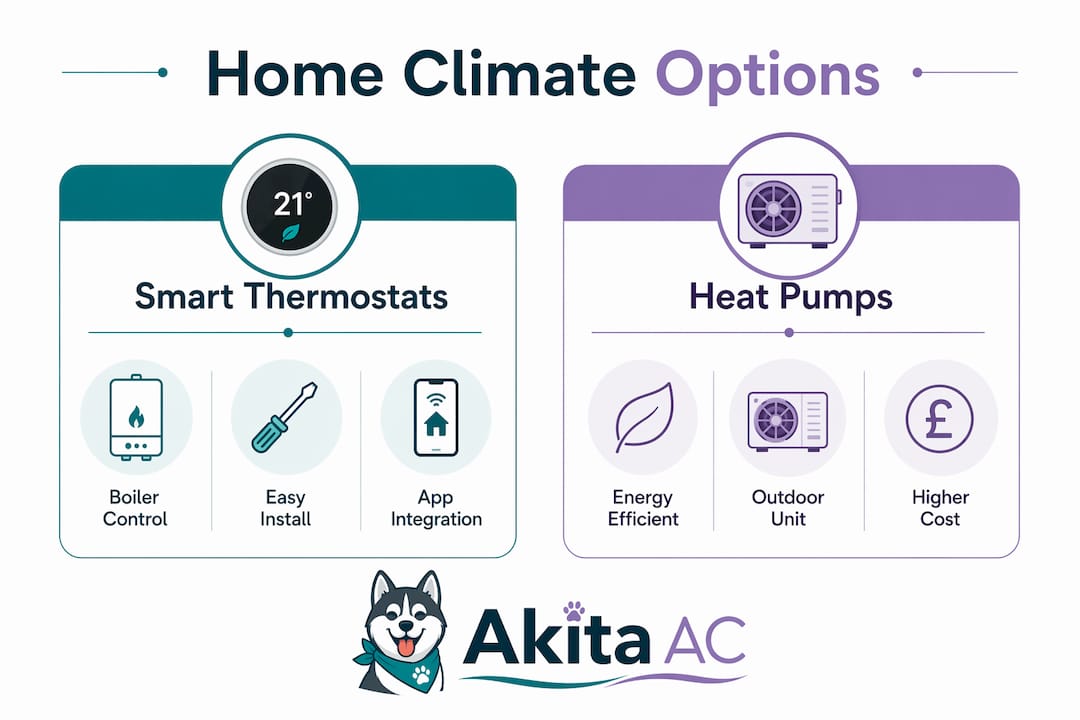
- Air source heat pumps (ASHPs): extract heat from outside air and deliver it at lower temperatures over longer periods. Modern ASHPs provide up to 3–4 units of heat per unit of electricity used, but they need good insulation and ideally underfloor heating or larger radiators.
- Ground source heat pumps: more efficient than air source but require significant outdoor space for ground loops. Higher upfront cost, lower running costs.
- Hybrid heating systems: combine an ASHP with a gas boiler. The heat pump handles mild weather; the boiler takes over when temperatures drop sharply. A practical middle ground for homes not yet ready for full electrification.
- Smart radiator valves (TRVs): replace manual twist valves on individual radiators. Smart TRVs cost around sixty to seventy pounds each and enable room-by-room zoning without replacing the boiler.
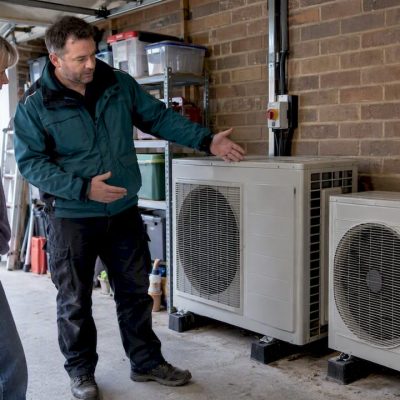
- Split air conditioning units: wall-mounted units that heat and cool. Particularly useful for homes adding a home office or a room the central heating does not reach effectively.
Pro Tip: Before committing to a heat pump or hybrid system, commission a professional heat-loss survey. Poorly insulated homes see diminished returns from advanced systems, and insulation upgrades are often a prerequisite for optimal performance.
What does it cost to install smart climate control in the UK?
Smart thermostats are the most accessible entry point. Typical prices run from around one hundred to two hundred fifty pounds for the device, with professional installation adding additional costs. Efficient use can save a notable amount per year on gas heating bills.
Key cost factors to consider:
- Hybrid system: higher than a standalone heat pump due to dual components, but often lower disruption to existing infrastructure
- Split air conditioning unit: varies by capacity and brand; Akita offers fixed-price domestic installation with transparent upfront costs
Running costs depend heavily on how you use the system and your current energy tariff.
How to choose the right climate control system for your UK home
No single system fits every property. A property-specific approach that accounts for heat-loss calculations, existing infrastructure, and your household’s habits is the only reliable way to select the most efficient option.
Key considerations when making your decision:
- Insulation quality: poorly insulated homes lose heat faster than any system can efficiently replace it; address insulation before upgrading the heating
- Existing heating infrastructure: combi boiler homes have different upgrade paths than those with system boilers or older back boilers
- Hot water demand: high demand households need a cylinder-based system, not a combi
- Future EPC requirements: UK regulations are tightening. Choosing a system that improves your EPC band now avoids costly retrofits later. Guidance on air conditioning innovations for businesses is worth reviewing before you commit
- Budget: smart thermostats offer the fastest payback; heat pumps require longer-term thinking
- Cooling needs: if your home overheats in summer, a split air conditioning unit addresses both heating and cooling in one system
The government’s energy efficiency tool lets you enter your property details and receive tailored recommendations, including estimated costs and savings for each improvement.
Pro Tip: Balance upfront cost against long-term efficiency carefully. A smart thermostat pays back within two to three years for most households. A heat pump may take longer but positions your home well for future energy regulations and resale value.
How Akita approaches energy-efficient climate control for UK homes
Akita specialises in installing and maintaining energy-efficient air conditioning systems for UK homeowners, with a particular focus on Suffolk and Essex. The approach is built around matching the right system to each property rather than recommending the same solution to everyone.
What Akita offers:
- Professional installation of split air conditioning systems that provide both heating and cooling
- Transparent, fixed pricing with no hidden costs
- Eco-friendly, high-efficiency systems from leading manufacturers
- Every install by our team comes with a 12-month installation warranty, plus up to 5 years’ manufacturer warranty when the system has its annual service.
- Diagnostics and servicing for existing systems
Akita’s customer testimonials consistently highlight the combination of technical competence and straightforward communication, two qualities that matter when you are making a significant investment in your home’s comfort infrastructure.
What maintenance do home climate control systems need?
Maintenance requirements vary by system type, but all climate control technology benefits from regular attention. Neglected systems lose efficiency and can fail at the worst possible moments.
Smart thermostats need very little: occasional software updates (usually automatic) and a battery check if the device is not hardwired. The real maintenance is reviewing your schedules seasonally to make sure they still reflect how you use the house.
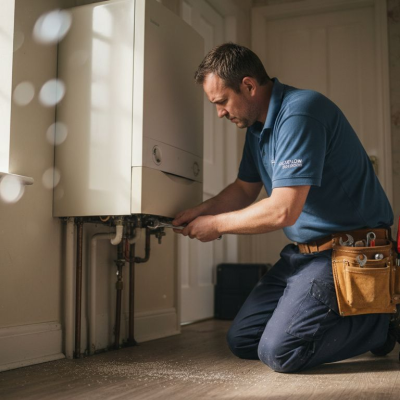
Boilers should be serviced annually by a Gas Safe registered engineer. Skipping annual servicing can void manufacturer warranties and reduce efficiency over time.
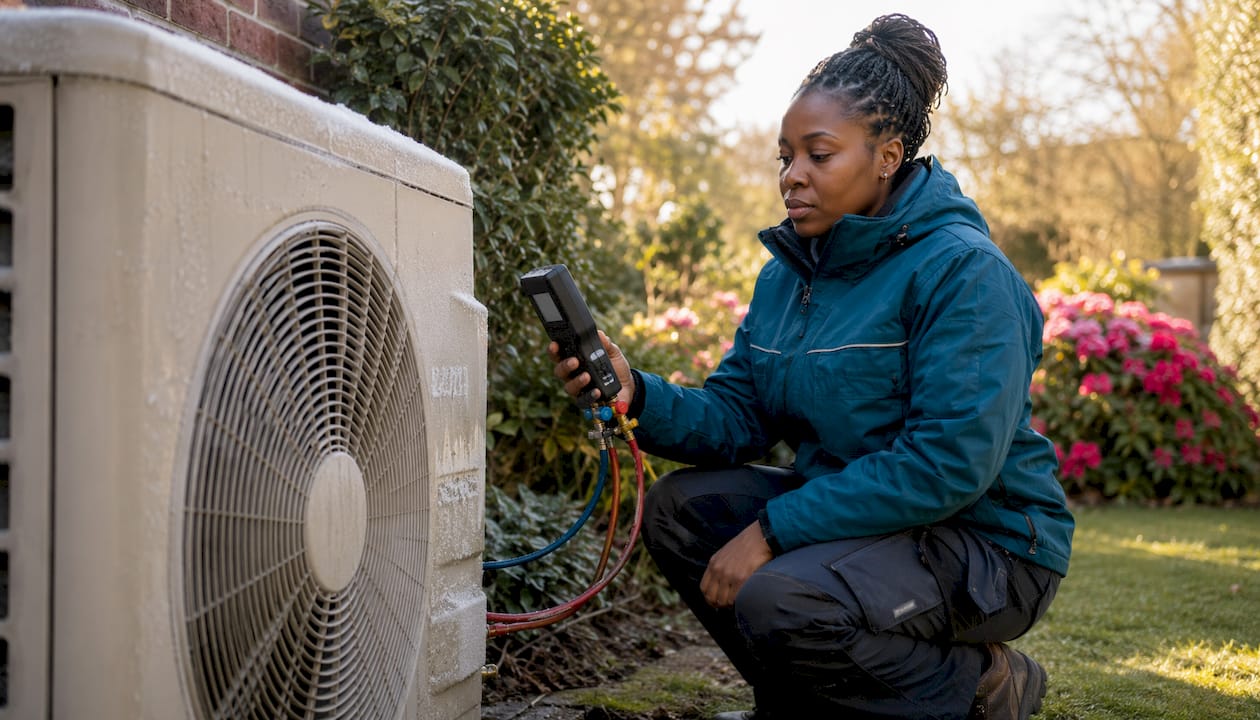
Air source heat pumps require an annual check by a qualified engineer, covering refrigerant levels, filters, and the outdoor unit. Filters on indoor units need cleaning every few months, which is straightforward to do yourself.
Split air conditioning units need filter cleaning every four to six weeks during heavy use, plus an annual professional service covering refrigerant pressure, electrical connections, and coil condition. Akita’s maintenance membership covers this for homeowners who want it handled without thinking about it.
Smart TRVs run on batteries, typically lasting one to two years depending on usage. Most apps will alert you when a valve’s battery is running low.
Which system suits your property type?
Property type shapes your options more than most homeowners realise. A system that works brilliantly in a detached four-bedroom house can be impractical or inefficient in a top-floor flat.
Detached houses have the most flexibility. They suit air source heat pumps (space for the outdoor unit, often better insulation potential), multi-zone smart thermostat systems, and split air conditioning for supplementary cooling.
Semi-detached and terraced homes are the bread and butter of the UK smart thermostat market. A combi boiler with a smart thermostat and a handful of smart TRVs is usually the most cost-effective upgrade. Heat pumps are possible but require careful assessment of insulation and radiator sizing.
Flats present the most constraints. Leasehold flats often restrict external unit installation, which rules out air source heat pumps and some split air conditioning systems without landlord or management company approval. Smart thermostats work well within existing systems, and energy-efficient cooling tips become particularly relevant during summer when ventilation options are limited.
New-build homes are increasingly delivered with heat pump-ready infrastructure and underfloor heating, making them the easiest candidates for full electrification. Smart controls integrate from day one rather than being retrofitted.
Passive measures matter across all property types. The government’s guidance on managing indoor temperatures recommends shading, night ventilation, and reducing internal heat loads before relying on active cooling. These steps reduce the demand on any climate control system and lower running costs regardless of what technology you install.
Akita can install the right system for your home
Smart thermostats and heat pumps are excellent tools, but they work best when installed correctly and matched to your property from the start. That is where professional installation makes the difference between a system that performs as expected and one that disappoints.
Visit Akita’s domestic air conditioning page to get a quote or find out which system suits your home.
Key takeaways
Smart thermostats and energy-efficient air conditioning systems can cut UK heating bills while improving comfort, but only when matched correctly to the property’s insulation, infrastructure, and usage patterns.
| Point | Details |
|---|---|
| Smart thermostat savings | UK homes typically reduce gas consumption noticeably, with the biggest gains in households switching from manual controls. |
| Cost of entry | Priced at survey |
| Property type matters | Flats face installation restrictions; detached homes have the most system options including full zoning and heat pumps. |
What are the main climate control technologies and where does each one fit?
Understanding how climate control works across different technologies helps you shortlist options before speaking to an installer.
Air source heat pumps extract heat from outdoor air and transfer it inside. A COP of around 3 means they are far cheaper to run than direct electric heating, and they work in temperatures well below freezing. They suit well-insulated detached and semi-detached homes, and many commercial buildings. Noise from the outdoor unit is modest on modern inverter-driven models, typically 45–55 dB at one metre.
Ground source heat pumps use buried pipework to extract heat from the ground, which stays at a more stable temperature than air. Performance is steadier in cold spells, but installation requires significant groundworks, either trenches or boreholes, and a larger upfront investment.
Split and ducted air conditioning covers everything from a single-room wall-mounted unit to a fully ducted system serving multiple zones. These systems cool quickly and efficiently, and modern units carry strong SEER (seasonal energy efficiency ratio) and SCOP (seasonal coefficient of performance) ratings. Capital cost is lower than heat pumps, making them a practical first step for homes or offices that need cooling rather than heating.
VRF/VRV systems use variable refrigerant flow to serve multiple indoor units from one outdoor unit. They scale well for larger homes, hotels, and commercial buildings where different zones need independent temperature control simultaneously.
MVHR recovers heat from stale extracted air and transfers it to fresh incoming air. It does not heat a building on its own, but it dramatically improves air quality and reduces ventilation heat loss in airtight new builds or deep retrofits.
Underfloor heating distributes warmth at low flow temperatures, which suits heat pumps perfectly. It is disruptive to install in existing floors but can be laid in screed during extensions or renovations.
Passive measuresinsulation, draught-proofing, and external shading, are not air conditioning systems, but they reduce the load on every active system. Addressing them first often means a smaller, cheaper heat pump or AC unit.
Pro Tip: Before specifying any active system, ask your installer to run a heat-loss calculation. A building with poor insulation will need a larger, more expensive unit, and will still be uncomfortable.
What is the science behind heating, ventilation, and air conditioning?
Understanding the physical processes inside air conditioning equipment helps you make better decisions about system selection and usage.
How air conditioning actually removes heat
Air conditioning units do not generate cold air. They remove heat from indoor air via a refrigerant cycle that absorbs heat in an evaporator coil and releases it outdoors through a condenser. The indoor unit draws warm room air across the cold evaporator coil. The refrigerant absorbs the heat and carries it outside, where the condenser releases it into the external air. The cooled air is then circulated back into the room. This heat-transfer process is why an air conditioner placed in a sealed room with no outdoor unit would actually warm the room rather than cool it.
Ventilation and fresh air supply
Too little fresh air and CO₂ levels rise, reducing concentration and comfort. Too much and the system wastes energy conditioning outdoor air unnecessarily. Control systems manage outside air dampers and return air dampers automatically to maintain this balance, adjusting for occupancy levels and outdoor temperature.
Humidity regulation
Humidity control is often overlooked but directly affects comfort and health. High humidity makes warm air feel hotter and encourages mould growth. Low humidity dries out airways and can damage timber floors and furnishings. Climate control systems address both conditions. The cooling cycle naturally dehumidifies air as moisture condenses on the evaporator coil. In winter or dry climates, a humidifier element adds moisture back into the supply air. Understanding psychrometrics and moisture control helps explain why humidity management is as important as temperature in maintaining a healthy indoor environment.
Pro Tip: Keep supply and return air vents clear of furniture and curtains. Blocked airflow forces the system to work harder, reduces efficiency, and creates uneven temperatures across the room.
What UK regulations and sizing rules do you need to know?
Correct air conditioning sizing is not just a technical nicety, it directly affects running costs, comfort, and legal compliance.
Under the Energy Performance of Buildings (England and Wales) Regulations 2012, air-conditioning systems with an effective rated output above 12 kW must have periodic inspection reports. Those reports must assess efficiency, sizing, and suggest improvements or alternatives. This applies to many small commercial systems and larger domestic installations.
Oversized systems short-cycle: they reach the set temperature quickly, switch off, and repeat, reducing efficiency and wearing components faster. Undersized systems run continuously and still fail to meet demand on cold days. Neither outcome is acceptable.
A professional survey should cover:
- Heat-loss calculation for every zone
- Radiator or emitter compatibility with target flow temperatures
- Electrical supply capacity (heat pumps often need a dedicated circuit)
- Ventilation requirements and any airtightness improvements planned
- Commissioning plan and expected timeline
Checklist to request from any installer:
- Target COP/SCOP/SEER figures for the proposed system
- Projected running costs based on your actual usage pattern
- Disruption timeline and phasing plan
- Written commissioning report on completion
Pro Tip: Always ask whether the installer will balance radiators and tune weather compensation after commissioning. Many efficiency problems trace back to systems that were installed but never properly set up.
Recommended
- Air conditioning trends in 2026: Future-proof your UK home or business – Akita AC
- Air conditioning buying guide 2026: smart UK choices – Akita AC
- Top 3 Providers of Top Air Conditioning Systems for UK Homes 2026 – Akita AC
- What are air conditioning controls: UK homeowners and businesses guide – Akita AC
Speak to Akita Air Conditioning
Find out more about our air conditioning installation, or see how we work with homes and businesses across Suffolk and Essex, including air conditioning in Colchester and Bury St Edmunds.
Ready to talk about your property? Book a free survey and one of our engineers will assess your space and recommend the right system for it.