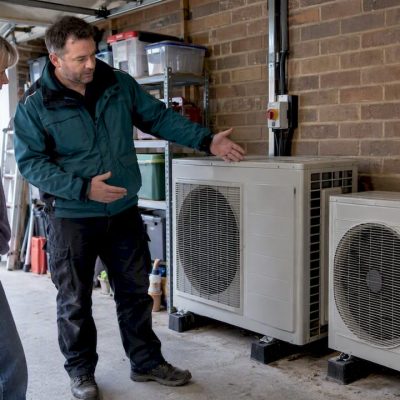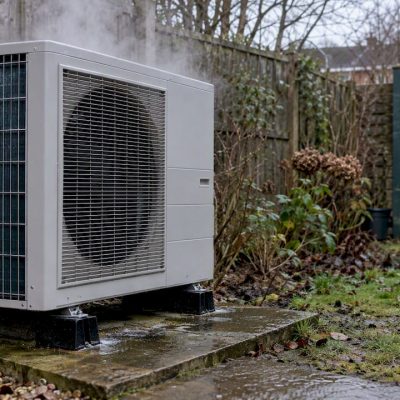
Choosing the right air conditioning system for your UK property in 2026 involves navigating energy efficiency ratings, installation regulations, and cost considerations that directly impact your comfort and bills. This guide walks you through key selection criteria, popular system types, and practical installation insights to help you make an informed decision that balances performance, compliance, and long-term value.
Table of Contents
- Key Criteria For Choosing Your Air Conditioning System In The UK
- Popular Air Conditioning Options For UK Homes And Businesses
- Comparing Energy Efficiency And Costs Of Air Conditioning Systems
- Making The Right Decision: Installation, Maintenance, And Planning Considerations
- Explore Expert Air Conditioning Installation Services With Akita AC
- Smart controls and scheduling
- Efficient heating as well as cooling
- Frequently Asked Questions About Air Conditioning Buying In The UK
Key takeaways
| Point | Details |
|---|---|
| Energy efficiency ratings | SEER and SCOP metrics guide savings, with A++ systems cutting bills significantly |
| System types | Single split suits homes, multi-split covers multiple rooms, VRF handles commercial zoning |
| Installation requirements | F-Gas certified professionals required, planning permission often unnecessary since 2025 updates |
| Inverter technology | Priced at survey |
| Noise and compliance | Units must meet 42 dB limits to avoid planning issues and neighbour complaints |
Key criteria for choosing your air conditioning system in the UK
Understanding the fundamental criteria shapes every successful air conditioning purchase in the UK. Energy efficiency ratings form the backbone of your decision, with SEER and SCOP measuring how effectively systems cool and heat relative to energy consumed. SEER (Seasonal Energy Efficiency Ratio) evaluates cooling performance, whilst SCOP (Seasonal Coefficient of Performance) assesses heating efficiency. Look for A++ or higher ratings, typically SEER 7.0+ and SCOP 4.0+, to maximise savings.
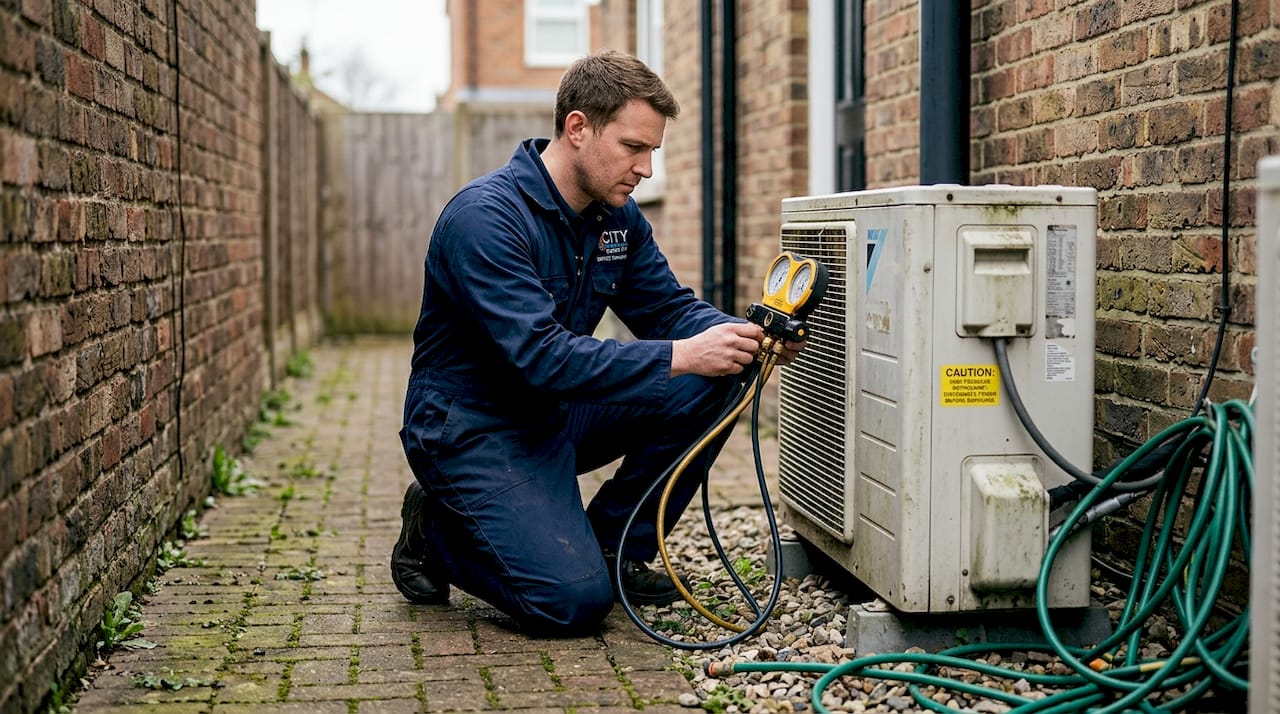
Inverter technology represents a game changer in modern air conditioning. Unlike fixed-speed compressors that cycle on and off, inverter systems adjust output continuously to match demand. The technology also maintains more stable temperatures and operates more quietly.
Installation rules demand attention before you purchase. UK law requires F-Gas certified professionals to handle refrigerants safely and legally. Planning permission requirements relaxed in 2025 for most residential installations, but noise limits and boundary conditions still apply. Units must typically operate below 42 dB, and outdoor components need careful placement to avoid visibility issues on street-facing walls.
Maintenance requirements influence total cost of ownership. Systems need annual professional servicing to sustain efficiency and comply with environmental standards. When choosing energy efficient AC, factor in filter cleaning schedules, refrigerant top-ups, and warranty terms that protect your investment.
Pro Tip: Request detailed SEER and SCOP certificates from suppliers before purchasing, as claimed ratings sometimes differ from tested performance in real UK climate conditions.
Key evaluation points include:
- Energy ratings (SEER 7.0+ and SCOP 4.0+ for optimal efficiency)
- Inverter technology for adaptive performance and lower bills
- F-Gas certified installation to meet legal requirements
- Noise output below 42 dB for planning compliance
- Annual maintenance costs and service accessibility
- Warranty coverage for parts and labour
Popular air conditioning options for UK homes and businesses
After establishing your criteria, explore the main system types available for UK properties. Single split systems connect one indoor unit to one outdoor compressor, making them ideal for cooling or heating individual rooms. Single splits suit bedrooms, home offices, or small commercial spaces where targeted climate control suffices.
Multi-split systems link several indoor units to a single outdoor compressor, allowing you to condition multiple rooms without installing separate outdoor units for each space. This approach saves exterior wall space and reduces visual impact, particularly important in conservation areas or properties with limited outdoor mounting options.
VRF (Variable Refrigerant Flow) technology delivers advanced zoning capabilities for commercial buildings or larger homes requiring precise temperature control across numerous zones. VRF systems adjust refrigerant flow to individual indoor units based on real-time demand, maximising efficiency when different areas need different temperatures. VRF suits businesses with diverse cooling needs but demands higher upfront investment and more complex maintenance schedules.
Portable units appear attractive for their low initial cost and no-installation appeal, but they rarely make sense for permanent climate control. These units operate inefficiently, generate significant noise (often 50-65dB), and require window venting that compromises security and insulation. Portable air conditioners work for temporary cooling during heatwaves but cannot match the performance, efficiency, or comfort of properly installed systems.
Your choice depends on space requirements, usage patterns, and budget constraints. Homes typically benefit from single or multi-split configurations, whilst businesses often justify VRF investment through superior zoning control and long-term energy savings. Consider how many rooms need conditioning, whether heating capability matters, and how installation complexity affects your property type. Understanding types of air conditioning systems helps match technology to your specific needs.
Common system types:
- VRF: commercial/large homes, higher cost, advanced zoning
- Portable: temporary use only, inefficient, noisy operation
Comparing energy efficiency and costs of air conditioning systems
Comparing efficiencies and costs reveals which system delivers the best return on investment for your situation. The table below presents typical performance and cost data for 2026:
| System Type | SEER Rating | SCOP Rating | Noise Level |
|---|---|---|---|
| Single Split A+++ | 8.5+ | 4.6+ | 19-24dB indoor |
| Multi-Split A++ | 7.0-8.0 | 4.0-4.5 | 21-26dB indoor |
| VRF A++ | 7.5-9.0 | 4.2-5.0 | 23-28dB indoor |
These savings compound over the typical 12-15 year lifespan of quality systems, often recovering higher initial investment within 3-5 years.
Installation costs vary significantly by system complexity and property characteristics.
Noise levels affect both planning approval and daily comfort. Modern inverter systems operate remarkably quietly, with indoor units typically producing 19-26dB during normal operation. Outdoor compressors generate 42 dB, which meets planning permission noise limits in most residential settings. Always verify noise specifications before purchase, as excessive sound can trigger neighbour complaints and planning enforcement.
Balancing upfront costs against long-term savings requires realistic usage projections. A higher-rated system costs more initially but delivers superior comfort and lower bills throughout its lifespan. Calculate payback periods by dividing the price premium by annual savings, then compare against your expected occupancy duration. Understanding air conditioning installation cost helps budget accurately for both purchase and operation.
“Investing in the highest efficiency rating your budget allows typically pays dividends through reduced bills and increased property value, particularly as energy costs continue rising and environmental regulations tighten.”
Cost considerations:
- Initial investment versus lifetime savings over 12-15 years
- Inverter technology premium recovered through lower running costs
- Installation complexity affecting labour charges
- Maintenance contracts protecting efficiency and extending lifespan
- Noise specifications ensuring planning compliance and comfort
Making the right decision: installation, maintenance, and planning considerations
Professional installation ensures safety, efficiency, and regulatory compliance. F-Gas certified installers handle refrigerants legally whilst optimising system performance through proper sizing, placement, and commissioning. Attempting DIY installation violates UK environmental regulations and voids manufacturer warranties, creating liability risks that far outweigh any perceived savings.
Planning permission requirements depend on property type and installation specifics. Since the 2025 regulation updates, most residential installations proceed without formal planning applications if units remain invisible from street level, noise stays below 42 dB limits, and outdoor components mount at least one metre from boundaries. Listed buildings, conservation areas, and flats still require permission in most cases, so verify requirements with your local planning authority before proceeding.
Noise management protects neighbourly relations and planning compliance. Position outdoor units away from bedroom windows, both yours and neighbours’. Consider acoustic barriers or strategic placement behind existing structures to minimise sound transmission. Modern inverter systems operate quietly, but poor placement amplifies perceived noise and invites complaints.
Ongoing maintenance preserves efficiency and prevents costly breakdowns. Annual professional servicing catches refrigerant leaks, cleans heat exchangers, and verifies electrical connections before minor issues escalate. Between services, clean or replace filters monthly during heavy use periods, keep outdoor units clear of debris, and monitor performance for unusual sounds or reduced cooling capacity. Regular care maintains the energy savings that justified your investment. Detailed guidance on air conditioning installation cost includes maintenance budgeting.
Pro Tip: Schedule annual inspections before cooling season starts in late spring, ensuring your system operates at peak efficiency when you need it most whilst avoiding the premium rates charged during summer rush periods.
Installation and compliance steps:
- Verify planning requirements for your property type and location
- Obtain quotes from multiple F-Gas certified installers
- Confirm noise specifications meet local limits (typically 42 dB)
- Check outdoor unit placement complies with boundary rules
- Schedule installation during mild weather for easier commissioning
- Arrange annual maintenance contract to protect warranty and efficiency
Essential maintenance tasks:
- Monthly filter cleaning or replacement during active use
- Annual professional inspection and refrigerant check
- Quarterly outdoor unit debris removal and coil cleaning
- Immediate attention to unusual noises or performance changes
- Condensate drain verification to prevent water damage
Explore expert air conditioning installation services with Akita AC
Akita AC specialises in energy-efficient air conditioning installation for UK homes and businesses across Suffolk and Essex. Our F-Gas certified professionals ensure every installation meets current regulations whilst optimising system performance for your specific property and usage patterns. We handle planning permission consultations, noise assessments, and compliance verification, removing uncertainty from your climate control upgrade.
Transparent pricing and expert consultation help you select the right system without overselling or unnecessary complexity. Every install by our team comes with a 12-month installation warranty, plus up to 5 years’ manufacturer warranty when the system has its annual service. Understanding installation cost UK variations helps us tailor recommendations to your budget and performance requirements.
Pro Tip: Contact Akita AC early in your decision process to discuss system sizing and placement options, ensuring you choose equipment that maximises efficiency for your specific property layout and usage patterns.
Smart controls and scheduling
Wi-Fi control has moved from luxury to standard on many ranges. Being able to set schedules, switch a room on before you get home, or check that a unit has not been left running in an empty office saves energy and hassle. Some systems also integrate with popular voice assistants and home automation platforms. If you already use a smart heating thermostat, it is worth knowing that most of these are designed for boilers and do not control a split system directly; the air conditioning normally has its own app or a dedicated controller instead. We can advise on the options for the brand we install.
Efficient heating as well as cooling
Most modern split systems are reversible, working as an air-to-air heat pump in winter. For many of our customers, the heating mode ends up being used as much as cooling, warming a conservatory, home office or bedroom without firing up the whole central heating system. Look at the seasonal heating efficiency on the energy label, not just the cooling figure, and check how well the unit performs in cold weather if you plan to rely on it in winter.
Frequently asked questions about air conditioning buying in the UK
Do I need planning permission for an air conditioner installation in a terraced house?
Since the 2025 planning rule updates, terraced houses generally require no permission if outdoor units remain invisible from street level, operate below noise limits (typically 42 dB), and mount at least one metre from boundaries. Exceptions apply to listed buildings, properties in conservation areas, and flats, which usually need formal applications. Always verify with your local planning authority before installation, as specific conditions vary by council and property characteristics.
What is F-Gas certification and why is it important for installation?
F-Gas certification confirms installers possess legal qualifications to handle refrigerants safely and comply with UK environmental regulations. Certified professionals prevent refrigerant leaks that damage the ozone layer and contribute to climate change. Installation by non-certified persons violates environmental law, voids manufacturer warranties, and creates liability for property owners. Always verify your installer’s current F-Gas certification before authorising work.
How noisy are modern air conditioning units?
Modern inverter systems operate remarkably quietly, with indoor units typically producing 19-26dB during normal operation, comparable to a whisper or rustling leaves. Outdoor compressors generate 42 dB, similar to a quiet library or background conversation. These levels meet planning permission requirements and avoid neighbour complaints when units are properly positioned. Always check noise specifications before purchasing, as ratings vary between manufacturers and models. Strategic placement away from bedroom windows further minimises perceived sound.
Can I install an air conditioning system myself in the UK?
DIY installation is prohibited under UK law because handling refrigerants requires F-Gas certification. Attempting self-installation violates environmental regulations, voids manufacturer warranties, and creates safety hazards from electrical work and refrigerant handling. Professional installation by certified engineers ensures proper sizing, placement, commissioning, and compliance whilst protecting your investment through valid warranties. The modest cost of professional installation delivers significant value through guaranteed performance and legal compliance. Understanding choosing energy efficient AC includes recognising installation requirements.
How often should we have my air conditioning system serviced to keep efficiency?
Annual servicing by qualified engineers maintains efficiency, prevents breakdowns, and complies with environmental standards. Professional inspections catch refrigerant leaks, clean heat exchangers, verify electrical connections, and optimise performance before minor issues escalate into costly repairs. Between annual services, clean or replace filters monthly during heavy use and keep outdoor units clear of debris. Regular maintenance extends system lifespan to 12-15 years whilst preserving the energy savings that justified your investment.
Our team installs Mitsubishi Electric and Daikin systems in homes across Suffolk and Essex. Every install starts with a free heat-load survey and is carried out by F-gas certified engineers under our REFCOM registration (REF1023379). Entry installs start from £1,750, and VAT on domestic installs is 0% until 31 March 2027, then 5%. Book a free survey.
Recommended
- Types of air conditioning systems: UK homeowner’s guide 2026 – Akita AC
- What is air conditioning? Efficient cooling guide for 2026 – Akita AC
- Commercial air conditioning tips for energy efficiency – Akita AC
- Guide to choosing an energy efficient air conditioning system UK 2026 – Akita AC
- What is energy efficient air conditioning: A 2026 homeowner’s guide
Speak to Akita Air Conditioning
Find out more about our air conditioning installation, or see how we work with homes and businesses in Suffolk and the surrounding area.
Ready to talk about your property? Book a free survey and one of our engineers will assess your space and recommend the right system for it.