Modern air conditioning is far quieter than older systems, but outdoor units still make some noise, and in close-knit towns and villages that matters. Noise is also one of the conditions that can affect whether an installation needs planning permission. This guide explains how noise from air conditioning and heat pumps is treated in the UK, in general terms, and what we do to keep systems quiet for you and your neighbours.
Where the noise comes from
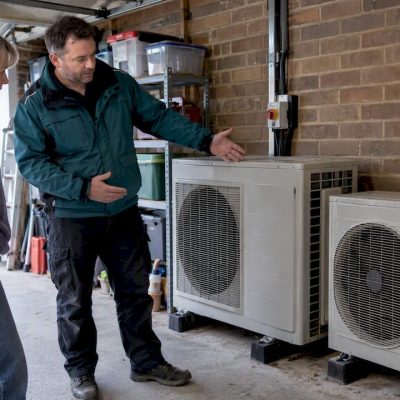
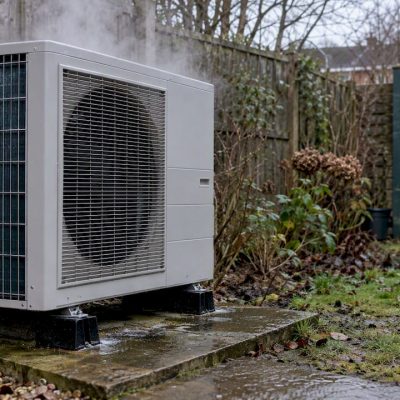
An outdoor unit contains a compressor and a fan. Modern inverter units vary their speed, so they are often very quiet at part load and only louder when working hard, such as on the hottest or coldest days. Indoor units mainly make fan noise, which on low speeds can be barely audible. Noise can increase if a unit is poorly mounted, vibrating against a structure, short of airflow, dirty or developing a fault.
How noise is treated in the UK
Statutory nuisance
Under the Environmental Protection Act 1990, local councils must investigate complaints about noise that may amount to a statutory nuisance. If a council finds that noise from equipment is unreasonably interfering with someone’s use of their home, it can serve an abatement notice requiring the problem to be dealt with. There is no single decibel limit that defines a nuisance; officers consider factors such as level, character, time of day and duration.
Planning rules
In England, air source heat pumps at houses can often be installed under permitted development, but one of the conditions is meeting a recognised noise standard at the nearest neighbouring property. If a unit cannot meet the conditions, planning permission is needed. Air conditioning units are not specifically covered by those permitted development rules, so councils may assess them differently. Where planning permission is needed, the council may consider noise and set conditions.
Commercial installations
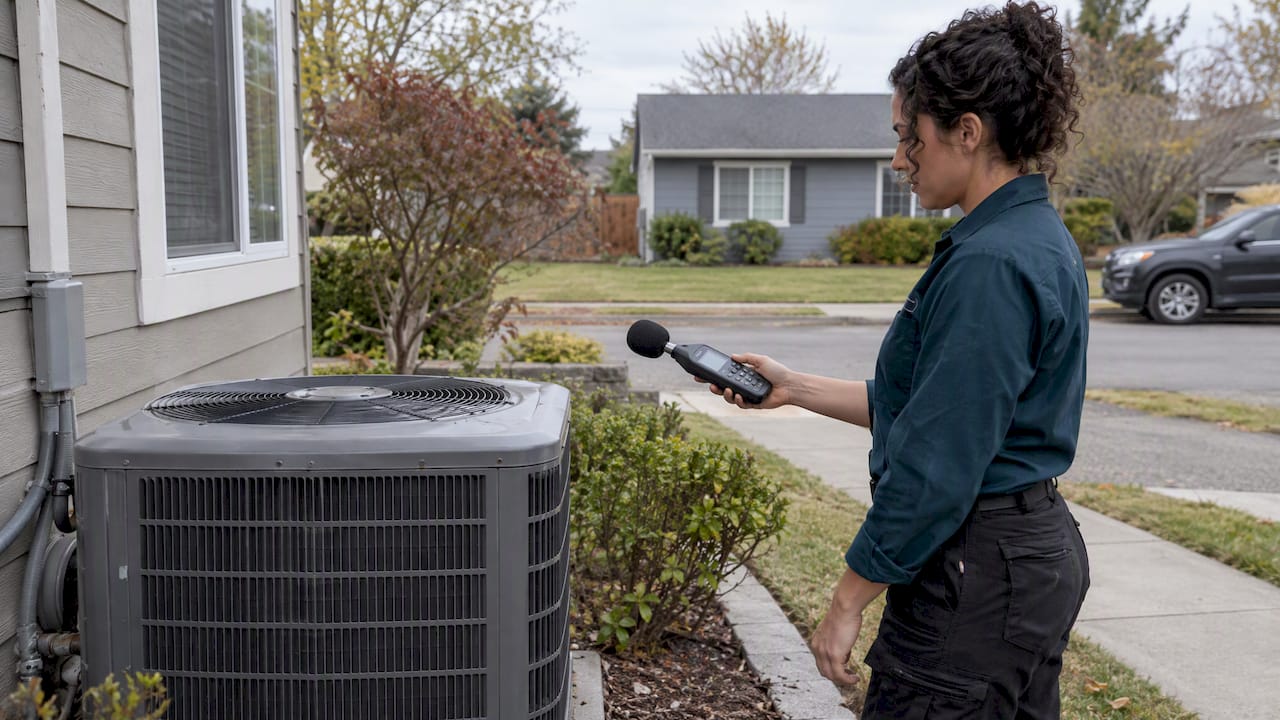
For commercial premises, councils often ask for a noise assessment, commonly using the methods in British Standard BS 4142, which compares equipment noise with the existing background noise level. Larger systems near homes may need acoustic screening or limits on operating times.
Because the rules and their application vary, check with your council if you are unsure. Our guide to planning permission for air conditioning covers the planning side.
Good practice for a quiet installation
- Choose a quiet model. Manufacturers publish sound levels. Low sound power levels are particularly important for outdoor units near bedrooms or neighbours.
- Site the outdoor unit carefully. Keep it away from neighbours’ windows, bedrooms and boundaries where possible. Avoid corners and enclosed spaces where noise can reflect.
- Use anti-vibration mounts. Wall brackets and ground stands should have proper isolation to stop vibration passing into the structure.
- Avoid lightweight walls. Mounting on a timber partition or thin wall can amplify noise; solid masonry or a ground stand is often better.
- Allow airflow. A unit starved of air works harder and louder.
- Size correctly. An undersized unit runs flat out more often and is noisier.
- Use quiet modes. Many systems have night or quiet modes that limit outdoor fan and compressor speed.
When an existing unit becomes noisy
If a system that used to be quiet has become noisy, it is often a sign that something needs attention. Common causes include:
- loose panels or fixings
- worn anti-vibration mounts
- debris or leaves in the fan
- dirty coils or filters forcing the system to work harder
- fan motor bearing wear
- refrigerant issues
A service usually identifies and fixes these. Our servicing ranges from £179 to £389 depending on the system, and our Comfort Club covers routine care for £14.99 a month. If a fault needs repair, our air conditioning repairs page explains how we help.
Being a good neighbour
If your outdoor unit is close to a neighbour, it is worth talking to them before installation. Explaining where it will go, how quiet modern units are and how you will use it avoids most issues. If a neighbour raises a concern, we can check the installation, adjust settings, and consider screening or relocation if needed.
Indoor noise
For bedrooms and offices, indoor unit noise matters most. Choose a model with a low sound level on its quietest setting, and position it so airflow does not blow directly onto beds or desks. Regular filter cleaning keeps fans quiet.
A quick checklist before you install
- Where is the nearest neighbouring window, and is it a bedroom?
- Is there a solid wall or a stable ground position for the outdoor unit?
- Will the unit be visible from the street, and does that raise planning questions?
- Are you likely to run the system at night?
Answering these early makes it far easier to design a quiet, trouble-free installation.
Our approach
We consider noise on every survey, particularly in the terraced streets and close-set villages around Sudbury and across Suffolk. We choose quiet equipment, site units thoughtfully and fit them with proper isolation. Find out more on our air conditioning servicing and installation pages.
Book a free survey
Ready to talk about your property? Book a free survey and one of our engineers will assess your space and recommend the right system for it.