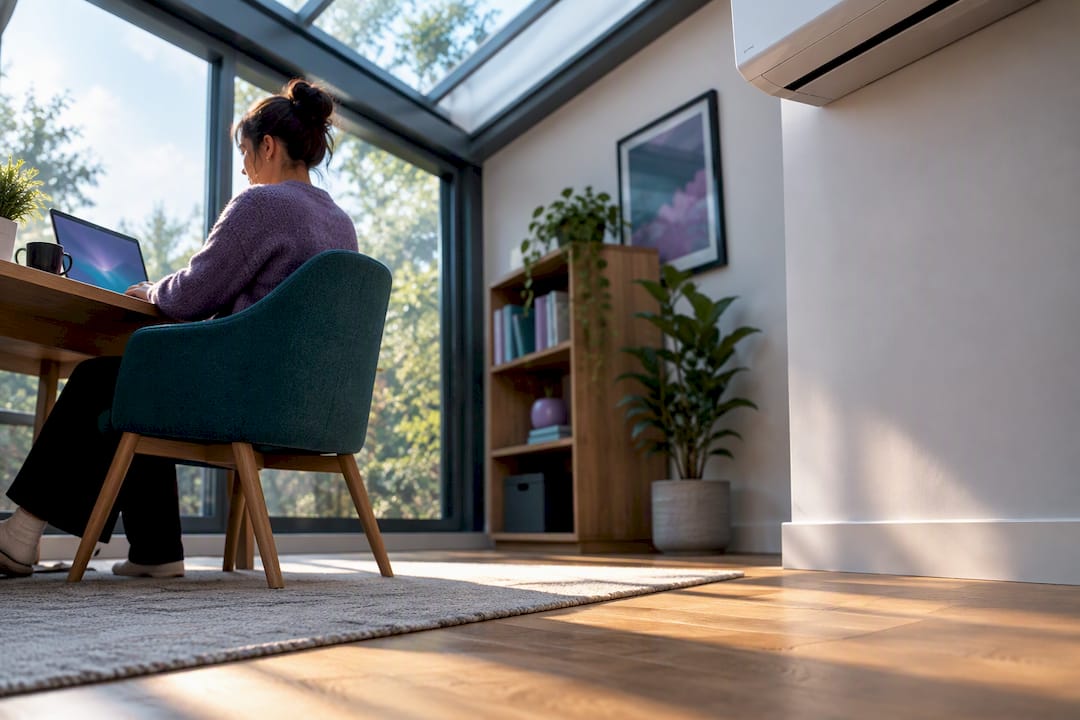
Garden offices have become a permanent fixture for people who work from home. They are wonderful in spring and autumn, but many are uncomfortably hot in summer and cold and damp in winter. Lightweight construction, large glazed doors and small volumes mean temperatures swing quickly. A split air conditioning system is one of the most effective ways to make a garden office usable all year, because it cools in summer and heats efficiently in winter. Here is what to think about before you go ahead.
Why garden offices overheat and chill so quickly
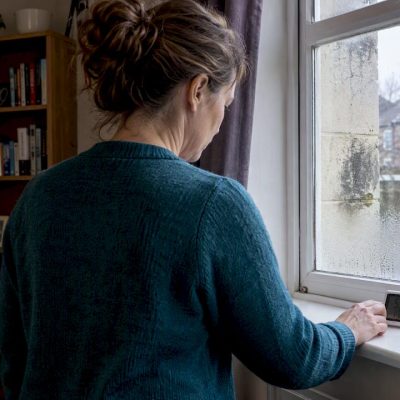
Most garden rooms are timber or composite frame buildings with a lot of glass. Even with good insulation, they have little thermal mass to soak up heat, so a sunny afternoon can push temperatures well above comfortable levels. On winter mornings the opposite happens. Computers, monitors and printers add their own heat too. Fans and portable heaters only go so far, and portable air conditioners are noisy, inefficient and need a hose through a window or door.
Why a split system suits a garden room
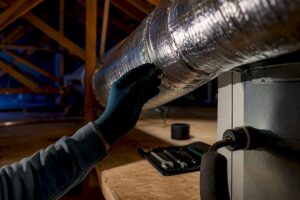
A wall-mounted split system has a quiet indoor unit inside and a compact outdoor unit outside, connected by insulated refrigerant pipework and a cable. Modern inverter units adjust their output to the room, which suits small spaces well. Crucially, most also run as an air-to-air heat pump, delivering several units of heat for each unit of electricity used, which is far more efficient than a plug-in electric heater. Many people find they use the heating mode as much as the cooling.
Getting the size right
Bigger is not better. An oversized unit will cool the room too quickly and switch down before it has removed much humidity, which can leave the space feeling clammy. An undersized unit will struggle on the hottest days. When our engineers survey a garden office, we look at:
- floor area and ceiling height
- the amount and orientation of glazing
- insulation in the walls, floor and roof
- how many people and how much equipment will be in there
- how much shade the building gets
That gives us the information to choose the right capacity, which for most single-room garden offices is at the smaller end of the range.
Where to put the units
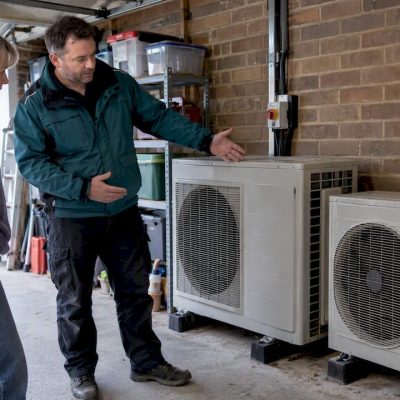
The indoor unit is normally mounted high on a wall, ideally where it can blow air along the length of the room rather than straight at your desk. The outdoor unit usually sits on wall brackets on the building or on a ground stand behind or beside it. We think about how it looks, the pipe route, where condensate water will drain, and how the noise will affect you and your neighbours. Keeping the outdoor unit away from boundaries and neighbours’ windows is good practice.
Power supply
The air conditioning unit needs a suitable dedicated electrical supply. Many garden offices already have a supply from the house with a small consumer unit; others have just a single socket circuit. Electrical work must meet the wiring regulations and, where it involves new circuits, be carried out and certified by a competent electrician. We check what is in place during the survey and explain clearly what, if anything, needs to change.
Condensation and drainage
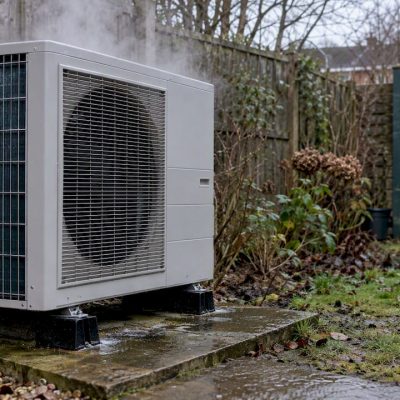
When cooling, the indoor unit removes moisture from the air, which drains away through a small pipe. On a garden building this needs a sensible route, often to a gravel soakaway or existing drainage, so it does not puddle against the timber. In heating mode, the outdoor unit produces water during defrost cycles, which also needs to drain away safely.
Planning and building rules
Many garden offices are built under permitted development, and adding air conditioning does not usually change that, but it is not automatic. Air conditioning units are not specifically covered by the permitted development rules for air source heat pumps, and some councils treat a visible outdoor unit differently. If you live in a conservation area, in a listed building’s grounds, or where an Article 4 direction applies, check with your council before installing. Our guide to planning permission for air conditioning explains the main points. Noise is another consideration; see our air conditioning noise guide.
Controls for an efficient workspace
Wi-Fi controls let you switch the system on from the house a few minutes before you start work, and set schedules so it is not running when you are not there. Setting cooling to a moderate temperature rather than as cold as possible keeps running costs down and is healthier for people moving between the garden office and the house.
Refrigerant and installation standards
New split systems generally use R32 refrigerant. Installing and commissioning a system involves handling refrigerant, so it must be done by F-Gas certified engineers. A proper installation includes pressure testing the pipework, evacuating the system and recording the commissioning details. Shortcuts here are the most common cause of leaks and poor performance.
Cost and VAT
Garden office systems are often among our simpler installations. Our installations start from £1,300, and the final price depends on the unit, pipe run and any electrical work, which we confirm after the survey. Domestic air conditioning installations are currently zero-rated for VAT, and we show this clearly on every quote. See our air conditioning installation page for more.
Looking after the system
A garden office system is easy to look after. Clean the indoor filters every few weeks when in use, keep leaves and plants clear of the outdoor unit, and have the system serviced regularly. Our servicing ranges from £179 to £389 depending on the system, or our Comfort Club covers routine care for £14.99 a month.
We fit garden office systems for homeowners across Suffolk and north Essex, including Long Melford and the surrounding villages.
Book a free survey
Ready to talk about your property? Book a free survey and one of our engineers will assess your space and recommend the right system for it.