Planned preventative maintenance (PPM) is scheduled, purposeful maintenance carried out at set intervals to keep a building’s structure, plant, and equipment in satisfactory working order before failures occur. The RICS professional standard (June 2022) defines it as systematic inspections and corrective work designed to prevent deterioration rather than react to it. For property and facilities managers, that distinction matters in three immediate ways:
- Safety and compliance: a documented PPM calendar provides auditable evidence against obligations under the Building Safety Act 2022, the Fire Safety Order, and the Homes (Fitness for Human Habitation) Act 2018.
- Predictable budgets: scheduled spend is easier to forecast and justify in service charge accounts than a string of unplanned repairs.
Key takeaways
Planned preventative maintenance is the most reliable way for UK property managers to control costs, meet statutory obligations, and keep assets running longer than reactive maintenance ever allows.
| Point | Details |
|---|---|
| PPM defined | Scheduled, purposeful maintenance to prevent failures, backed by RICS professional standards and UK statute. |
| Legal necessity | The Building Safety Act 2022, Fire Safety Order, and Homes Act create overlapping duties that a documented PPM calendar must evidence. |
| Asset-led scheduling | Build an asset register before setting frequencies; prioritise safety-critical and high-cost-to-fail items first. |
| Evidence is non-negotiable | Certificates, signed logs, and photographs are required for compliance; verbal confirmation satisfies no auditor or insurer. |
| Akita for HVAC PPM | Akita provides scheduled HVAC servicing, maintenance contracts, and compliance certificates across Suffolk and north Essex. |
Table of Contents
- What does planned preventative maintenance include?
- Why PPM pays off for property and facilities managers
- What does a PPM schedule actually look like?
- How to set up a PPM programme step by step
- What UK law requires from your maintenance programme
- The pros, cons, and costs of PPM
- Tools and templates that make PPM manageable
- An HVAC PPM checklist you can use now
- What we have learned from doing this in the field
- Akita’s HVAC maintenance plans for property managers
- Sources
What does planned preventative maintenance include?
PPM is not a single method. It is a family of approaches, and most effective programmes combine more than one.
The interval is fixed by regulation, manufacturer guidance, or professional judgement. It is straightforward to schedule and easy to evidence, which is why it dominates residential block management.
Condition-based maintenance shifts the trigger from the calendar to the asset’s actual state. A reading outside tolerance, a vibration signature, or a filter pressure drop prompts the intervention. The CIBSE indicative economic life expectancy tool supports this approach by providing life-expectancy benchmarks that help managers decide when condition data should override a fixed interval.
Predictive maintenance takes condition monitoring further by using sensor data, trend analysis, or building management system (BMS) outputs to forecast when a component is likely to fail. Akita’s article on predictive HVAC maintenance explains how this works in practice for climate control systems.
Risk-based maintenance prioritises assets by the consequence of failure rather than treating every item equally. A communal fire alarm panel and a decorative lobby light fitting are both on the schedule, but the former gets more frequent attention and a tighter evidence trail.
The contrast with reactive maintenance is simple: reactive work happens after something breaks. A well-designed PPM programme does not eliminate reactive work entirely, but it reduces it to a manageable residual.
Why PPM pays off for property and facilities managers
The operational case for planned maintenance is strong, and the financial case is stronger than most managers initially expect.
Safety and legal compliance sit at the top. A documented schedule of inspections, servicing, and testing is the primary mechanism for evidencing compliance with fire, water, lift, and gas safety obligations, as the PPM schedule guide for block management makes clear. When a regulator, insurer, or leaseholder asks for proof, a live PPM log with signed certificates and remedial close-outs answers the question immediately.
Extended asset life is the second major gain. Air conditioning units, boilers, and lift systems that receive regular servicing consistently outlast neglected equivalents. Regular HVAC maintenance reduces wear on compressors and heat exchangers, deferring capital replacement costs that dwarf the annual service fee.
Budget stability follows from predictability. The RICS built environment journal (2024) notes that PPM reports and schedules support whole-life cost planning and service charge justification by providing costed, prioritised projections over a multi-year period.
The gains depend on data discipline and asset criticality, but the direction is consistent across building types.
Tenant satisfaction rounds out the picture. Fewer breakdowns mean fewer complaints, and fewer complaints mean lower management overhead.
What does a PPM schedule actually look like?
Concrete examples help more than abstract principles. The tasks below cover the systems most commonly found in UK residential blocks and commercial properties.
Typical PPM tasks by system:
- Fire detection and alarm: weekly visual check, monthly test, annual full inspection and certification
- Gas appliances (CP12): annual landlord gas safety check
- Electrical installation (EICR): every five years for rental properties, or as risk-assessed
- Legionella / water hygiene: monthly temperature checks, annual risk assessment review
- Lifts: monthly safety check, six-monthly thorough examination under LOLER
- Communal lighting: monthly visual inspection, lamp replacement as required
- Roof and gutters: biannual inspection (spring and autumn), clearance after storms
- Air conditioning and ventilation: seasonal servicing twice yearly, filter checks quarterly
SFG20 provides recognised task templates and benchmark frequencies for building services; it is the standard reference UK facilities professionals use when defining task scope and intervals.
Sample schedule cadence:
| Frequency | Typical tasks |
|---|---|
| Monthly | |
| Quarterly | HVAC filter inspection, gutter visual check, water hygiene review |
| Annual | |
| Every 5 years | Electrical installation condition report (EICR), full structural survey |
| Every 5–10 years | Planned replacement of end-of-life plant (boilers, AHUs, lift components) per RICS programme horizon |
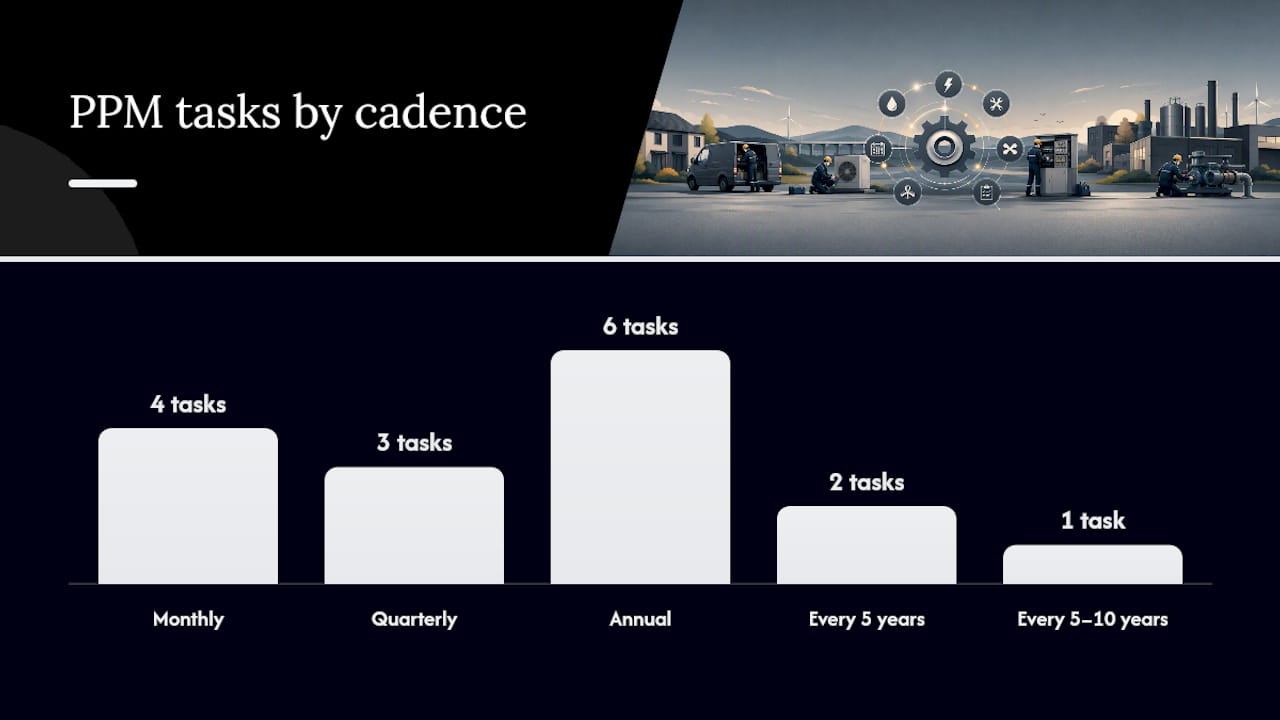
The RICS standard recommends programmes covering 5–10 years as standard, with some extending to 30 years for major fabric elements. Group tasks by access requirement wherever possible: combining a boiler service with a gas safety check in a single visit halves the disruption to residents.
How to set up a PPM programme step by step
Starting from scratch feels daunting, but the logic is sequential.
- Build an asset register. Record every maintainable asset: make, model, serial number, installation date, location, and criticality rating. An asset you cannot name cannot be scheduled. Prioritise safety-critical and high-cost-to-fail items first.
- Map statutory and contractual duties. Cross-reference your asset list against legal obligations: the Building Safety Act, the Fire Safety Order, gas and electrical regulations, LOLER for lifts, and any lease covenants. Use legislation.gov.uk for primary text and RICS guidance for professional standards.
- Set frequencies using a risk-based approach. Use SFG20 benchmarks as a starting point, then adjust for asset age, condition, criticality, and occupancy. A new heat pump in a low-rise block needs a different interval than a twenty-year-old boiler in a high-rise.
- Assign named owners and approved installers. Every task needs a responsible person and a vetted installer. Verbal agreements are not enough; confirm scope, access arrangements, and evidence requirements in writing before the first visit.
- Define record-keeping standards. Certificates, service reports, photographs, and signed logs must be dated, stored, and retrievable. Link every remedial action to a closure log so outstanding items cannot be forgotten. A proactive scheduling approach for landlords reinforces the same principle: a single owned calendar per building, with named owners and proof requirements, is far more reliable than a collection of installer reminder emails.
- Set KPIs and review regularly. Review quarterly and adjust frequencies when the data suggests over- or under-maintenance.
Pro Tip: When naming digital files for certificates and service reports, use a consistent convention: [AssetID][TaskType][YYYY-MM-DD]. A file named “AHU01_AnnualService_2026-03-15” takes seconds to find during an audit; a file named “scan001.pdf” does not.
- Aim for a planned-to-reactive ratio of at least 80:20 as a starting benchmark.
- Use occupancy windows (school holidays, quiet periods) to group intrusive tasks and reduce tenant disruption.
What UK law requires from your maintenance programme
PPM is not optional for most UK property managers. Several overlapping statutory frameworks make a documented, evidence-backed schedule a legal necessity rather than a best practice.
- Building Safety Act 2022: introduces a duty to manage building safety risks systematically, with particular obligations for higher-risk buildings. Accountable persons must demonstrate ongoing competence and evidence of safety management.
- Regulatory Reform (Fire Safety) Order 2005: requires a suitable and sufficient fire risk assessment and ongoing maintenance of fire precautions. The responsible person must keep records of inspections, tests, and remedials.
- Homes (Fitness for Human Habitation) Act 2018: landlords must ensure properties remain fit for habitation throughout the tenancy. Deferred maintenance that creates hazards can result in civil liability.
- Awaab’s Law (Awaab Ishak case and Social Housing (Regulation) Act 2023): sets mandatory timeframes for social landlords to investigate and fix reported hazards, including damp and mould. The principle of timely, evidenced response is increasingly influencing expectations in the private sector too.
- RICS professional standard (June 2022): the primary professional reference for PPM survey content, reporting, and programme design. It emphasises independent surveyor reporting for building fabric PPM and professional competence limits.
- SFG20: provides the recognised task templates and benchmark intervals that make a PPM schedule defensible in front of auditors, insurers, and leaseholders.
Documentation checklist for compliance:
- Gas safety certificates (CP12), renewed annually
- Electrical installation condition reports (EICR), with remedial close-out records
- Fire risk assessment and annual review records
- Legionella risk assessment and temperature monitoring logs
- Lift examination reports (LOLER) and service records
- HVAC service reports and refrigerant handling records (F-Gas)
- Roof and fabric inspection reports with photographic evidence
- Remedial action log with completion dates and sign-off
The pros, cons, and costs of PPM
PPM is not cost-free, and pretending otherwise undermines the business case.
Pros:
- Longer asset life: regular servicing defers capital replacement.
- Compliance confidence: a live evidence trail satisfies auditors, insurers, and leaseholders.
- Predictable cash flow: scheduled costs are easier to budget than surprise invoices.
Cons:
- Upfront cost and effort: building an asset register and procuring installers takes time before the first saving appears.
- Risk of over-maintenance: fixed-interval schedules can lead to servicing assets that do not yet need it, particularly for newer plant.
- Installer dependency: PPM quality is only as good as the installers carrying it out.
Typical cost drivers:
- Accessibility: roof plant, confined spaces, and high-rise access add cost.
- Labour rates: specialist trades (gas, electrical, lift) command higher day rates than general maintenance.
- Parts and consumables: filters, belts, and seals are predictable; major component failures are not.
- Asset criticality and frequency: safety-critical systems require more frequent attention and more detailed evidence.
Budgeting note: RICS guidance supports using PPM cost projections to justify sinking fund contributions and service charges. A costed, multi-year schedule is a stronger argument for a reserve fund than a verbal estimate.
The most effective budgeting approach is to convert repeated reactive spend into planned interventions.
Tools and templates that make PPM manageable
The right tool depends on portfolio size and complexity.
Spreadsheets work for small portfolios of one to five buildings. A master schedule with columns for asset, task, frequency, responsible person, due date, completion date, and certificate reference covers the basics. The risk is version control: a shared spreadsheet quickly becomes unreliable when multiple people edit it.
Entry-level field apps (mobile-first, low monthly cost) add scheduling alerts, photo capture, and basic reporting. They suit landlords and small managing agents who need something more reliable than a spreadsheet but do not need full CMMS functionality.
Mid-market CMMS (Computerised Maintenance Management Systems) such as Fixflo or MRI Software (UK) offer asset registers, automated scheduling, installer portals, certificate storage, and reporting dashboards. They are appropriate for managing agents handling multiple blocks or commercial portfolios. Fixflo is particularly well established in the UK residential sector for maintenance workflow management; MRI Software serves larger commercial and mixed-use portfolios.
Enterprise CAFM (Computer-Aided Facilities Management) platforms integrate PPM with space management, energy monitoring, and financial reporting. They are suited to large commercial estates and public sector portfolios where cross-functional data matters.
Whatever the tool, the minimum functionality for a usable PPM system is: asset register, task scheduling with alerts, evidence storage (certificates and photos), and a reporting view showing overdue and completed tasks.
SFG20 task templates define what a good PPM task record should include: task scope, frequency, competency requirement, evidence required, and pass/fail criteria. Use them as the content layer inside whichever tool you choose.
An HVAC PPM checklist you can use now
HVAC systems are among the most maintenance-intensive assets in any building. The checklist below is engineer-facing and covers a standard split-system or VRF installation.
Seasonal HVAC service checklist:
- Isolate power and confirm safe isolation before any internal work
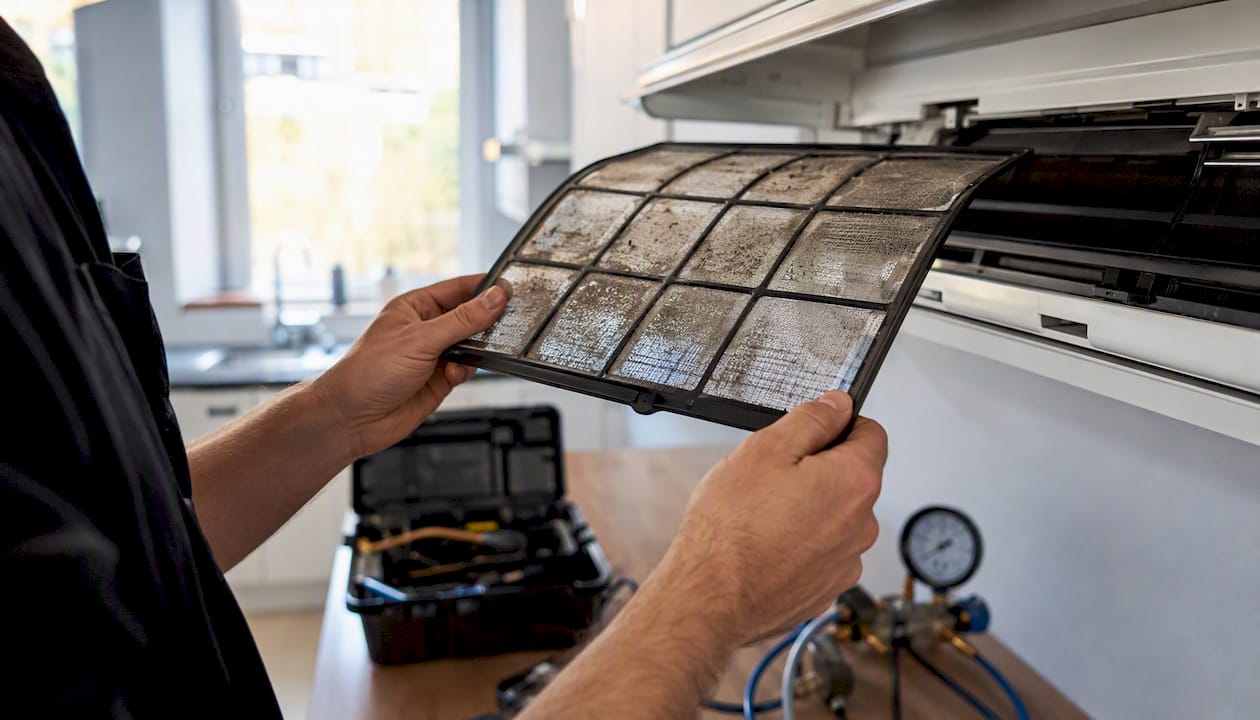
- Inspect and clean or replace air filters (indoor and outdoor units)
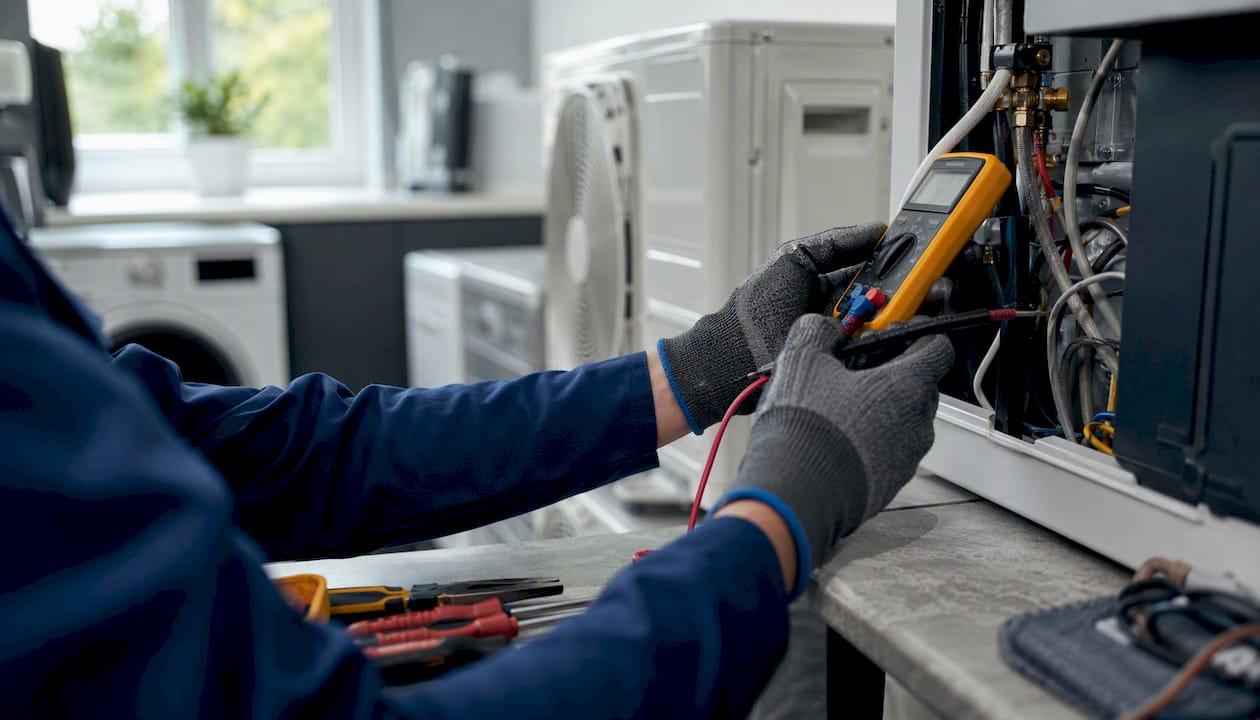
- Check refrigerant pressures against manufacturer specification and log readings
- Inspect refrigerant pipework and connections for signs of leakage or corrosion
- Clean indoor coil and condensate drain; confirm drain flow is unobstructed
- Clean outdoor coil and clear debris from around the unit
- Check fan blades and motor bearings for wear or unusual noise
- Inspect electrical connections, terminals, and wiring for signs of deterioration
- Test controls, thermostats, and BMS integration points for correct operation
- Record supply and return air temperatures and compare against design values
- Log all readings, actions, and parts replaced on a dated service report
- Photograph any defects found and any remedial work completed
- Issue a signed service certificate and file it against the asset record
For a homeowner-facing version of this checklist, Akita’s air conditioner maintenance checklist for UK homes covers the same ground in accessible language.
Pro Tip: Photograph the unit’s nameplate, the pressure gauge readings, and any defects found at every visit. Name files using the convention [UnitID][ServiceType][YYYY-MM-DD] and store them in a folder linked to the asset record. If a warranty claim or insurance query arises eighteen months later, you will have the evidence immediately to hand.
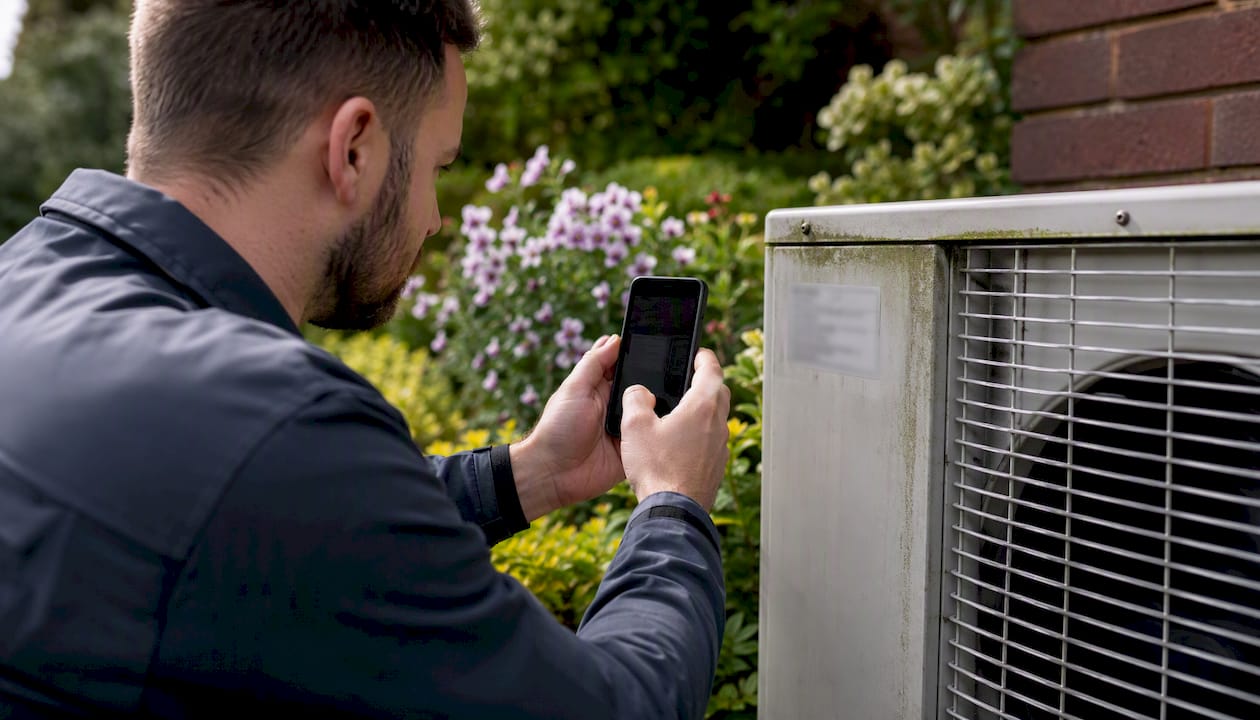
Akita’s engineers carry out scheduled HVAC servicing across Suffolk and north Essex, with service reports and certificates issued as standard on every visit. Akita’s HVAC maintenance plan guidance sets out what a well-structured plan should include for both residential and commercial systems.
What we have learned from doing this in the field
The gap between a PPM schedule on paper and one that actually works is almost always the same three things.
Start with the assets, not the calendar. The most common mistake is downloading a generic schedule template and forcing every building’s assets into it. A twenty-year-old packaged rooftop unit and a two-year-old split system do not belong on the same interval. Build the asset register first, assess criticality, then set frequencies. The schedule follows the assets, not the other way around.
Insist on evidence, not assurances. A installer who says “all done, no issues” without a signed report, a certificate, or a photograph has given you nothing you can use. Verbal confirmation does not satisfy an auditor, an insurer, or a leaseholder who later claims a fault was never addressed. Make evidence a contractual requirement, not a request.
Review and refine. A PPM programme that has not been touched in three years is almost certainly wrong in places: assets have been replaced, occupancy patterns have changed, and some tasks are being done more often than the data justifies.
On installer selection: the cheapest quote rarely reflects the true cost when you factor in the time spent chasing paperwork and correcting substandard work. Installers who understand the evidence requirements of UK compliance are worth paying for. On tenant communication: a simple letter or email explaining the date, time, and purpose of a planned visit reduces access refusals dramatically and keeps relationships constructive.
Akita’s HVAC maintenance plans for property managers
Property and facilities managers in Suffolk and north Essex who need the HVAC element of their PPM programme handled professionally have a straightforward option with Akita. Fixed-price domestic air conditioning installation and servicing and commercial HVAC maintenance contracts cover scheduled servicing, filter changes, refrigerant checks, electrical inspections, and certificate issue as standard. Every visit produces a dated service report and signed certificate, filed against the asset record, so your compliance evidence is always current.
For landlords and block managers, that means fewer tenant complaints, a cleaner audit trail, and a maintenance cost that appears in the budget rather than arriving as a surprise. To discuss a maintenance plan or book a survey, contact Akita directly through the website.
Sources
Every property and facilities manager designing a PPM programme should have these references to hand.
- Planned preventative maintenance (RICS professional standard, June 2022)
- Planned preventative maintenance and asset management (RICS built environment journal, 2024)
- Legislation
- What is Planned Preventative Maintenance? (SFG20 resources)
- CIBSE indicative economic life expectancy tool
Recommended
Speak to Akita Air Conditioning
Find out more about our air conditioning servicing, or see how we work with homes and businesses in Suffolk and the surrounding area.
Ready to talk about your property? Book a free survey and one of our engineers will assess your space and recommend the right system for it.