Portable or split? A portable air conditioner is cheap, needs no installation and can be wheeled from room to room, but it is noisy and inefficient. A split system needs a professional install, but it is quiet, efficient and can heat as well as cool. Here is how they compare for a typical UK home.
Table of Contents
- Portable vs split: at a glance
- How a portable air conditioner works
- How a split system works
- Running costs, noise and comfort
- Which should you choose?
- Getting a split system fitted
Portable vs split: at a glance
| Feature | Portable air conditioner | Split system |
|---|---|---|
| Installation | Plug in and vent a hose through a window kit | Fitted by an F-gas certified engineer, usually in a day |
| Noise indoors | Compressor and fan are both in the room | Compressor sits outside; indoor unit is much quieter |
| Efficiency | Lower; warm air leaks back in around the window kit | Higher; inverter models carry strong UK energy label ratings |
| Heating | Rarely | Yes, as an air-to-air heat pump |
| Best for | Short-term or rented rooms | Rooms you want comfortable every summer for years |
How a portable air conditioner works
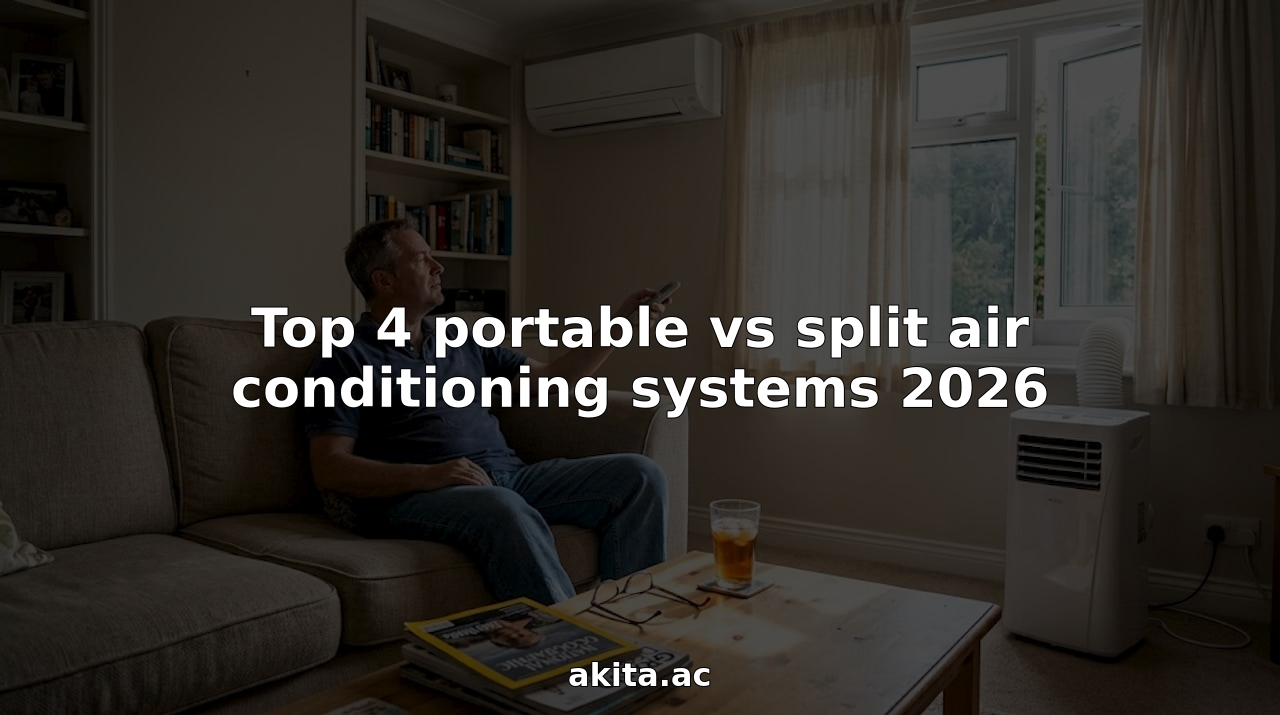
A portable unit packs the whole cooling circuit into one box on wheels. It pulls warm air from the room, passes it over a cold coil, and blows the heat it has collected out through a flexible hose. That hose has to go somewhere, so it is fed through a window or a vent kit.
The weak point is that hose. The unit pushes air out of the room, so replacement air is drawn in from gaps around doors and windows, and on a hot day that air is warm. The window you have propped open for the hose also lets heat back in. The result is a machine that works hard and cools one room modestly.
- Upside: no installation, no outdoor unit, and you can take it with you when you move.
- Downside: noisy, bulky, takes up floor space, and struggles in large or sunny rooms.
How a split system works
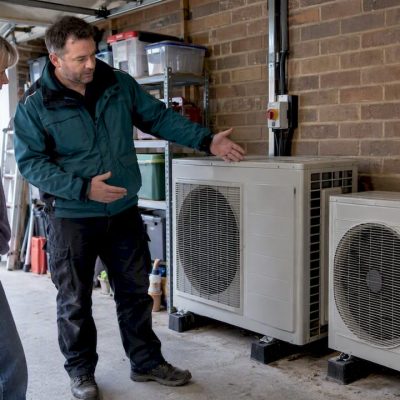
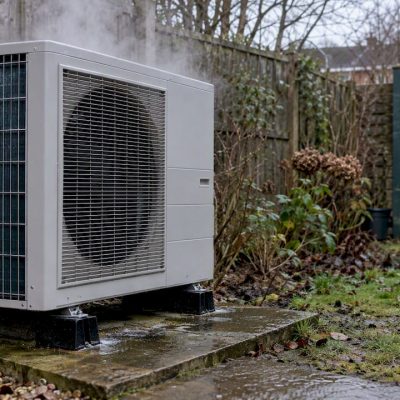
A split system separates the noisy, hot part of the job from the room you are sitting in. A slim indoor unit on the wall handles the air in the room, and an outdoor unit holds the compressor and rejects the heat outside. The two are joined by insulated refrigerant pipework that runs through a small hole in the wall.
Because the system is sealed, it is not fighting warm air leaking in through an open window. Inverter compressors speed up and slow down to hold the temperature steady rather than switching on and off. Most split systems are also heat pumps, so the same unit can heat the room efficiently in spring and autumn.
Our team installs Mitsubishi Electric and Daikin split systems, sized from a heat-load survey of the room rather than guesswork.
Running costs, noise and comfort
Running costs depend on the size of the room, how well it is insulated and how many hours you use the system, so any single figure would be a guess. What we can say is that a correctly sized inverter split system needs less electricity for the same cooling than a portable unit, because it does not leak heat back into the room and it can run gently at part load.
When you compare models, check the UK energy label. SEER shows cooling efficiency across a season and SCOP shows heating efficiency; higher numbers mean less electricity for the same comfort. Indoor noise is listed in decibels on the data sheet, and split indoor units are typically far quieter than a portable, which has its compressor in the room with you.
Which should you choose?
- Choose a portable if you rent and cannot make changes, you only need cooling for a few days a year, or you need something this week.
- Choose a split system if you own the property, the room overheats every summer, you want quiet sleep or a usable home office, or you would like efficient heating as well.
Most homes in Suffolk and Essex do not need planning permission for a single outdoor unit, but listed buildings and conservation areas have extra rules, and our team checks this at survey.
Getting a split system fitted
Our engineers are F-gas certified and Akita is REFCOM registered (REF1023379). Entry installs start from £1,750, and VAT on domestic installs is 0% until 31 March 2027, then 5%. Every install comes with a 12-month installation warranty, plus up to 5 years’ manufacturer warranty when the system has its annual service. To get a recommendation for your room, book a free survey.
Frequently Asked Questions
What are the main differences between portable and split air conditioning systems?
Portable air conditioning systems are self-contained units that can be moved around easily, while split air conditioning systems consist of an indoor and outdoor unit, providing more efficient cooling and quieter operation. To decide which is best for you, consider your mobility needs and the space where you plan to install the unit.
How do I determine the right size of air conditioning system for my room?
Size depends on more than floor area: glazing, which way the room faces, insulation and how many people use it all matter. For a split system, our team carries out a heat-load survey and recommends a unit that matches the room, so it is neither undersized nor oversized.
What are the energy efficiency ratings for portable versus split air conditioning systems?
Split systems are usually far more efficient, mainly because they are sealed and use inverter compressors that slow down at part load. Compare models on the UK energy label: SEER for cooling and SCOP for heating, where higher numbers mean lower running costs.
How do maintenance requirements differ between portable and split air conditioning systems?
Portable units require regular cleaning of the filter and drainage of the water reservoir, while split systems often need professional servicing periodically to clean coils and check refrigerant levels. Schedule maintenance for your split system at least once a year to ensure efficient performance and prolong its lifespan.
Can I install a split air conditioning system myself?
No. Installing a split system involves handling refrigerant, which in the UK must be done by an F-gas certified engineer, plus electrical work and pressure testing. Our engineers are F-gas certified and Akita is REFCOM registered (REF1023379).
What are the typical costs associated with portable and split air conditioning systems?
A portable unit is a low-cost, short-term option. A split system costs more to buy and install, but is quieter, more efficient and can heat as well as cool. Our entry split system installs start from £1,750, and VAT on domestic installs is 0% until 31 March 2027, then 5%.
Recommended
- Top 4 air conditioning for living room 2026 – Akita AC
- Top 4 Wall Mounted Air Conditioning Units 2026 – Akita AC
- Best 8 air conditioning systems for home 2026 – Akita AC
- Top 5 heat pump air conditioning systems 2026 – Akita AC
- Best Split system Air Conditioner Systems | Shop High-Efficiency AC – MiniSplitsforLess
Speak to Akita Air Conditioning
Find out more about our air conditioning installation, or see how we work with homes and businesses in Suffolk and the surrounding area.
Ready to talk about your property? Book a free survey and one of our engineers will assess your space and recommend the right system for it.