One of the first questions people ask about an air source heat pump is how much it will cost to run. The honest answer is that it depends on your home, the system design and how you use it. Rather than quote figures that may not apply to you, this guide explains the factors that really drive running costs, so you can judge what to expect and how to keep bills down. When we talk about heat pumps here, we mean air-to-water systems that heat your radiators or underfloor heating and hot water.
How a heat pump uses electricity
An air source heat pump takes heat from the outside air and upgrades it using a compressor, then transfers it into the water that circulates through your heating system. Because it moves heat rather than generating it, a well-designed system delivers several units of heat for every unit of electricity it uses. That ratio is described as the coefficient of performance (COP) at a given moment, and the seasonal performance across a year as SCOP. The higher the seasonal figure in your home, the lower your running costs for the heat you need.
The factors that matter most
1. How much heat your home needs
A draughty, poorly insulated house needs more heat than a well-insulated one, whatever the heating system. Loft insulation, cavity or solid wall insulation where appropriate, draught-proofing and decent glazing all reduce demand. In older buildings, which are common in our area, some measures are limited by the construction or by conservation rules, so the design needs to reflect the real building.
2. Flow temperature
This is the biggest single factor in efficiency. Heat pumps work most efficiently when they heat water to a lower temperature than a typical boiler. Running at a lower flow temperature means radiators need to be large enough to heat the room at that temperature. A proper heat loss calculation room by room is how the system is designed to run efficiently. In some homes, a few radiators need upgrading; with underfloor heating, low flow temperatures come naturally.
3. Correct sizing
An undersized heat pump will struggle in cold weather and may rely on backup electric heating, which is expensive. An oversized one may cycle on and off, reducing efficiency and lifespan. Sizing should come from the heat loss calculation, not a rule of thumb or the size of the old boiler.
4. Controls and how you use them
Heat pumps generally work best running steadily at a lower temperature rather than being switched hard on and off like a boiler. Weather compensation, which adjusts flow temperature to suit outdoor conditions, makes a big difference. Many people find they save more by leaving the system on a steady, sensible setting than by heating in short bursts.
5. Hot water
Heating a hot water cylinder takes a higher temperature than space heating, so hot water usage affects running costs. Cylinder size, insulation and scheduling hot water heating sensibly all help. Periodic higher-temperature cycles for hygiene are part of normal operation.
6. Your electricity tariff
The price you pay per unit of electricity directly affects running costs. Some suppliers offer tariffs designed for heat pump owners or time-of-use tariffs, which can reduce costs if the system is set up to take advantage. Tariffs change often, so compare current offers rather than relying on figures from articles.
7. Installation and commissioning quality
Pipework sizing, system flushing, correct refrigerant charge, sensible placement of the outdoor unit and proper commissioning all affect real-world efficiency. That is why we take care over design and set-up. Our own engineers install the heat pump unit and refrigeration side, and our trusted plumbing partner handles the water side, including cylinders, radiators and pipework.
Comparing with your current heating
Comparing heat pump running costs with gas, oil or LPG depends on fuel prices, the efficiency of your existing boiler and the factors above. Homes moving off oil or LPG, which are common in rural Suffolk, often have more to gain than homes on mains gas, but this is not guaranteed. We would rather give you a realistic picture based on your property than a headline number.
Keeping running costs low over time
- Have the system serviced regularly so the outdoor unit, filters, pressures and controls stay in good order.
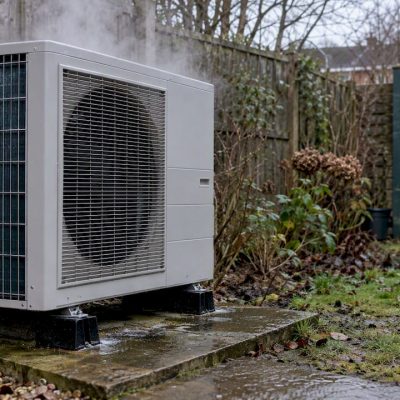
- Keep the outdoor unit clear of leaves, snow and plants so air can flow freely.
- Avoid turning the flow temperature up as a quick fix; ask us to look at the settings instead.
- Check your tariff once a year.
- Make small fabric improvements, such as draught-proofing, where you can.
Our servicing ranges from £179 to £389 depending on the system, and our Comfort Club covers routine care for £14.99 a month.
Planning and VAT
In England, installing an air source heat pump at a house is often permitted development, subject to conditions on size, siting and noise, and with restrictions in conservation areas and for listed buildings. Check the current rules or with your council before installation. Heat pump installations in homes are currently zero-rated for VAT under the energy-saving materials relief, and we confirm the position on every quote.
Find out what a heat pump would mean for your home
Read more about our air source heat pumps service, or about homes we look after around Bury St Edmunds. A survey is the best way to understand your home’s heat demand and what a heat pump would mean in practice.
Book a free survey
Ready to talk about your property? Book a free survey and one of our engineers will assess your space and recommend the right system for it.