TL;DR:
- Unusual aircon smells often indicate underlying issues like mould, refrigerant leaks, or electrical faults.
- Regular maintenance, including filter cleaning and professional servicing, prevents recurring odours and system damage.
- DIY fixes are limited; persistent or chemical smells require certified engineers for safe repair.
If you’ve switched your air conditioning on after a few months and been hit with a strange smell, you’re not alone. Many UK homeowners and business owners simply assume it will clear on its own. Sometimes it does. Often, it doesn’t. Unusual odours from your air conditioning unit are rarely just an inconvenience. They can signal anything from a clogged filter to a refrigerant leak that needs prompt attention. This article walks you through the most common causes of aircon smells, what you can safely investigate yourself, when to call a professional, and how to stop the problem coming back.
Table of Contents
- Understanding air conditioner smells: What’s normal, what’s not
- The main reasons your air conditioner smells
- How to diagnose and fix odours: DIY and professional steps
- Prevention: Maintenance routines that keep smells away
- The surprising truth about aircon smells in the UK
- Get professional help or upgrade your air conditioning
- Frequently asked questions
Key Takeaways
| Point | Details |
|---|---|
| Identify odours early | Noticing a smell quickly can prevent system damage and costly repairs. |
| Regular maintenance matters | Servicing your air conditioner annually keeps it efficient and odour-free. |
| DIY vs. professional | Simple checks are fine for mild issues, but chemical or persistent smells need a certified expert. |
| Prevention saves money | Frequent filter care and routine checks prevent expensive repairs and extend your system’s lifespan. |
Understanding air conditioner smells: What’s normal, what’s not
Your air conditioning system circulates air constantly. That means whatever is living inside your unit, whether dust, mould, or moisture, eventually ends up in the room with you. The first time you switch on after a long break is when most people notice a smell, and there’s a reason for that.
A stale or dusty smell comes from accumulated dust, pollen, and particles in dirty or clogged filters, which burn off or decay when the unit fires up after a period of inactivity. This is probably the most common call we hear in early spring, right when UK homeowners turn their systems back on after winter. In most cases, it fades within 10 to 20 minutes. If it doesn’t, the filter needs attention.
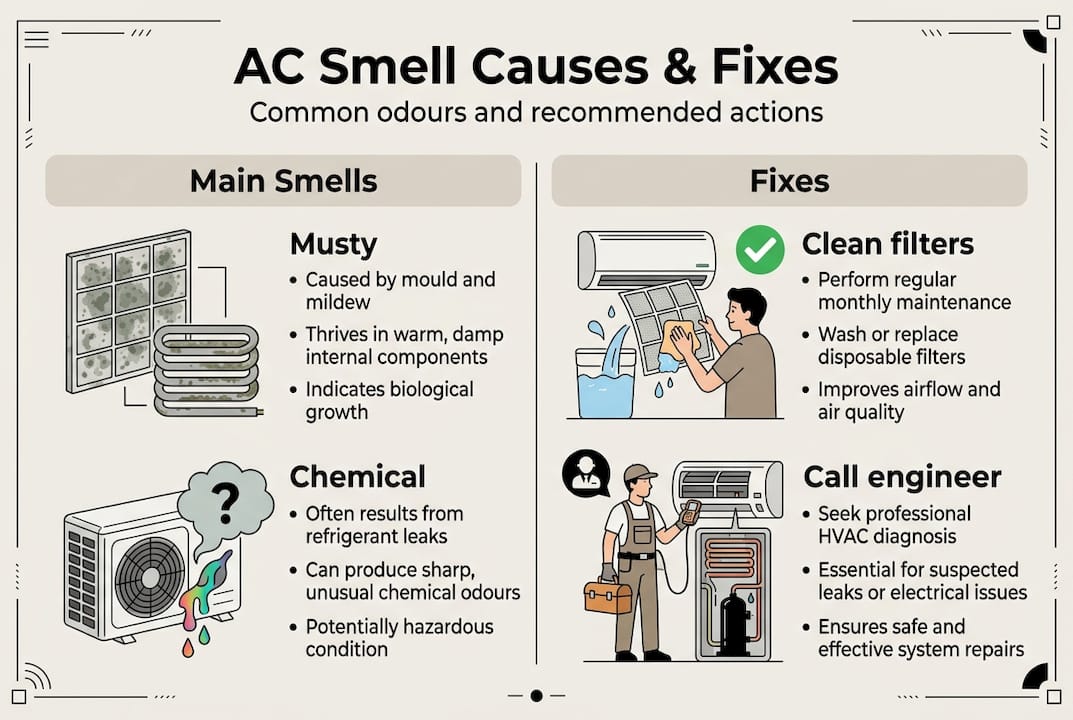
But not all smells are so straightforward. Here’s a breakdown of what to look for:
Odours that are usually harmless (short-term):
- Faint dusty or stale smell on first use after inactivity
- Mild plastic smell from a brand-new unit during its first run
- Slight earthy scent after heavy rain (temporary humidity)
Odours that need investigation:
- Persistent musty or damp smell (mould or mildew in the unit)
- Sweet or chemical smell (possible refrigerant issue)
- Burning or electrical smell (motor or wiring concern)
- Rotten or foul smell (blocked drain, dead pest, or bacterial growth)
- Sewage or ammonia scent (plumbing or contamination issue)
Worth knowing: A smell that returns repeatedly after cleaning is a sign the underlying cause hasn’t been resolved. Don’t overlook it. Checking your aircon maintenance checklist is a good starting point before anything else.
The key rule is this: a one-off, quickly disappearing smell is usually minor. A smell that lingers, worsens, or keeps coming back is your system telling you something is wrong.
The main reasons your air conditioner smells
Once you can identify the type of smell, pinpointing the cause becomes much easier. Here are the most common culprits in UK homes and businesses.
| Smell | Likely cause | Recommended action |
|---|---|---|
| Musty or damp | Mould or mildew in unit/ducts | Clean filters, drain pan, call engineer |
| Sweet or chemical | Refrigerant leak | Call F-Gas certified engineer immediately |
| Burning or hot plastic | Electrical fault or motor issue | Switch off, call engineer |
| Rotten eggs or sewage | Blocked drain, pest, bacteria | Inspect drain, call engineer |
| Perfume or grease | External air contamination | Check surroundings, improve ventilation |
A refrigerant leak produces a chemical or sweet smell and must be handled by an F-Gas certified engineer. This isn’t a job for a DIY fix. Refrigerant is a controlled substance under UK law, and only qualified engineers are legally permitted to handle it.
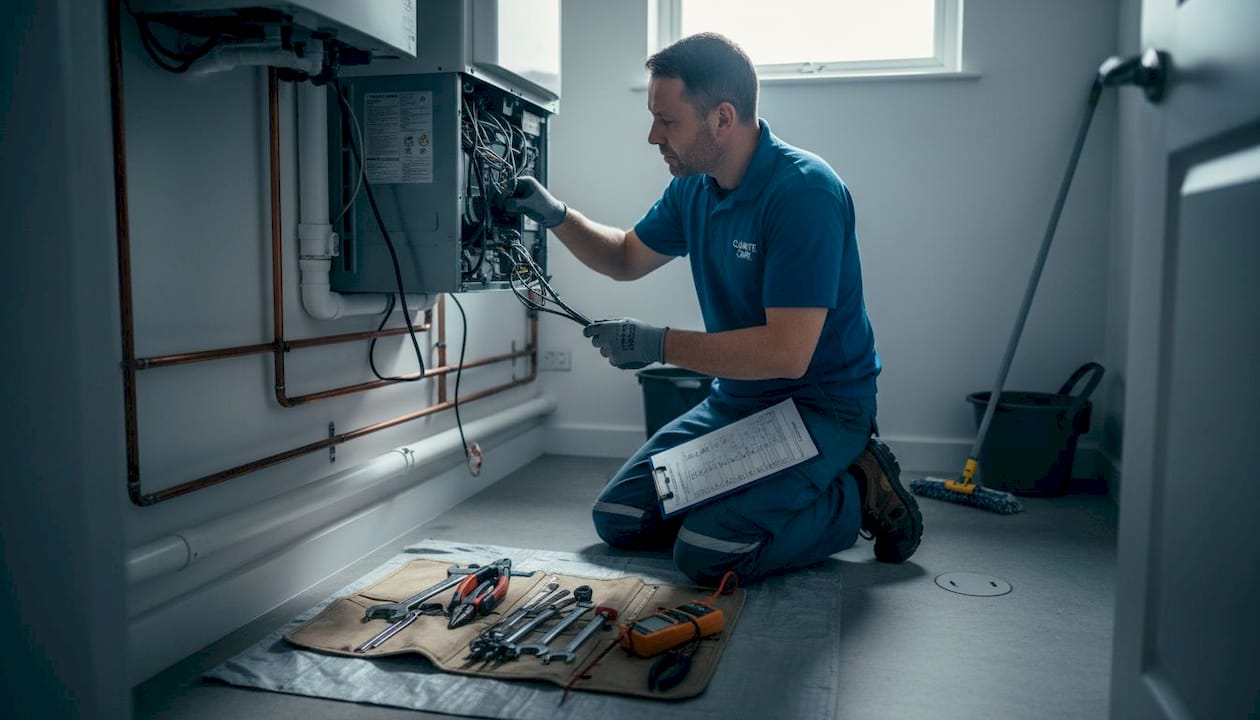
For commercial settings, the causes can be more varied. Salons accumulate airborne chemicals from dyes and treatments. Kitchen environments pull in grease-laden air. These contaminants build up inside the unit over time and create persistent odours that won’t shift without a proper clean.
Other common causes include:
- Blocked condensate drain allowing stagnant water to pool
- Poorly sealed ductwork pulling in outdoor or loft air
- Dead insects or small animals inside the unit
- Bacterial growth (biofilm) on the evaporator coil
Pro Tip: Never mask an aircon smell with air fresheners or deodorising sprays. The chemicals can coat internal components, encourage residue buildup, and make the root problem harder to diagnose later. Address the cause, not the symptom. A UK AC maintenance guide can help you understand what regular upkeep actually involves.
Mould and bacteria thrive in the damp, dark interior of air conditioning units, particularly the evaporator coil and drain pan. If you notice a smell that reminds you of a wet towel that’s been left too long, that’s almost certainly biological growth at work.
How to diagnose and fix odours: DIY and professional steps
Not every aircon smell calls for an engineer. Some are straightforward to resolve yourself. Here’s how to work through it logically.
- Switch off the unit and inspect the filter. Pull it out, hold it to the light. If it’s visibly grey, clogged, or covered in dust, clean or replace it before running the system again.
- Check the drain pan and outlet pipe. Look for standing water, slime, or discolouration. A blocked condensate drain is one of the most common causes of musty smells and is easy to clear with warm water and a small brush.
- Look around the unit for signs of moisture. Damp patches on walls or ceilings near the indoor unit could mean a leak. This needs professional attention.
- Smell test before you restart. After cleaning the filter and drain, run the unit for five minutes with windows open. If the smell clears, you’ve solved it. If it persists or smells chemical or electrical, stop the unit immediately.
- Call an F-Gas engineer for chemical, sweet, or burning smells. These require specialist equipment and legal certification to address safely.
Pro Tip: Annual professional servicing is recommended by engineers across the UK, and more frequently for systems under heavy use, or in homes with pets or allergy sufferers. It prevents smells before they start and keeps efficiency high, which directly affects your energy bills.
Electrical smells are particularly serious. A burning odour from an aircon unit could indicate a failing capacitor, overheating motor, or wiring fault. Do not continue running the unit. Switch it off at the wall and call a qualified engineer. For a broader overview, our aircon maintenance steps guide covers the full picture of what regular care involves, while boosting AC efficiency explains how proper servicing connects directly to lower running costs.
Prevention: Maintenance routines that keep smells away
Fixing a smell is satisfying. Stopping it from coming back is better. A consistent maintenance routine is the only reliable way to keep your air conditioning system fresh year-round.
Filters should be cleaned every one to three months depending on usage, and annual servicing costs typically range from £80 to £300, which prevents between £40 and £2,000 in energy waste and repair costs, with well-maintained systems lasting 10 to 15 years. That’s a significant return on a relatively modest investment.
Essential maintenance habits:
- Clean or replace filters every one to three months
- Clear the condensate drain line twice a year
- Wipe down the indoor unit casing monthly
- Book a professional service annually (or twice yearly for commercial units)
- Keep the outdoor unit clear of leaves, debris, and overgrowth
- Check for unusual smells each time you switch the system on seasonally
| Task | DIY | Professional |
|---|---|---|
| Filter cleaning | Easy, low cost | Included in service visit |
| Drain pan cleaning | Manageable with guidance | Thorough clean with specialist tools |
| Coil inspection | Not recommended | Essential for efficiency and hygiene |
| Refrigerant check | Not legal for DIY | F-Gas engineer required |
| Electrical checks | Not safe | Specialist equipment needed |
| Full system report | Not possible | Included in annual service |
For ongoing savings and system health, incorporating habits from an energy saving aircon routine makes a real difference to your annual bills. The comparison above shows clearly where DIY ends and professional care begins. Most homeowners can handle filters and basic cleaning with confidence. Beyond that, you need someone qualified.
The surprising truth about aircon smells in the UK
Here’s something we’ve noticed consistently: most UK homeowners treat aircon smells as a minor irritation rather than a signal. There’s a cultural tendency to assume that if something isn’t broken in an obvious way, it can wait. With air conditioning, that thinking regularly leads to avoidable repair bills.
The DIY filter approach works well enough for mild, dust-related smells. But professionals consistently warn that using masking sprays worsens residue buildup inside the unit, making the next engineer visit more expensive. And when it comes to refrigerant or electrical issues, UK regulations are clear: only F-Gas certified engineers can legally carry out that work. Attempting to self-diagnose or using unqualified tradespeople puts you at financial and legal risk.
What actually works is boring but effective: regular filter cleaning, annual servicing, and treating unusual smells as early warnings rather than background noise. The homeowners and business owners we work with who invest in prevention consistently spend far less over a five-year period than those who wait until something fails. Comfort and energy savings are the natural result of a system that’s properly cared for, not an optional extra.
Odours are your system communicating. The question is whether you listen early or late.
Get professional help or upgrade your air conditioning
If you’ve worked through the steps in this article and the smell persists, or if you’re dealing with anything chemical, electrical, or persistent, it’s time to bring in a qualified engineer.

Frequently asked questions
Is it dangerous if my air conditioner smells sweet or chemical-like?
Yes. A sweet or chemical smell often points to a refrigerant leak, which must be assessed and repaired by an F-Gas certified engineer without delay.
How often should air conditioner filters be cleaned or replaced in the UK?
Filters should be cleaned every one to three months, depending on usage. Annual servicing benchmarks recommend full professional maintenance once a year as a minimum.
Do home remedies like air fresheners work for aircon smells?
No. Masking sprays worsen residue buildup inside the unit and do nothing to address the underlying cause of the smell.
What is the typical cost of a professional aircon service in the UK?
A routine service typically costs between £80 and £300, depending on system size and location, and can prevent significantly larger repair or energy costs down the line.
Recommended
- Solving air conditioner blowing warm air: UK guide – Akita AC
- Why your AC isn’t cooling properly: troubleshooting guide – Akita AC
- 7 Steps for a Residential HVAC Maintenance Checklist – Akita AC
- AC repair workflow for reliable, efficient performance – Akita AC
- Why Your Aircon Smells Musty: A Cape Coral Homeowner’s Guide to Fresh Air – Ultra Air Heating and Cooling
Speak to Akita Air Conditioning
Find out more about our air conditioning repairs, or see how we work with homes and businesses in Suffolk and the surrounding area.
Ready to talk about your property? Book a free survey and one of our engineers will assess your space and recommend the right system for it.